Over 150 government, academic and industry figures attend
Forum seeks cooperation amid supply chain shifts, tech rivalry
Co-organized with UNSW Korea Research Institute
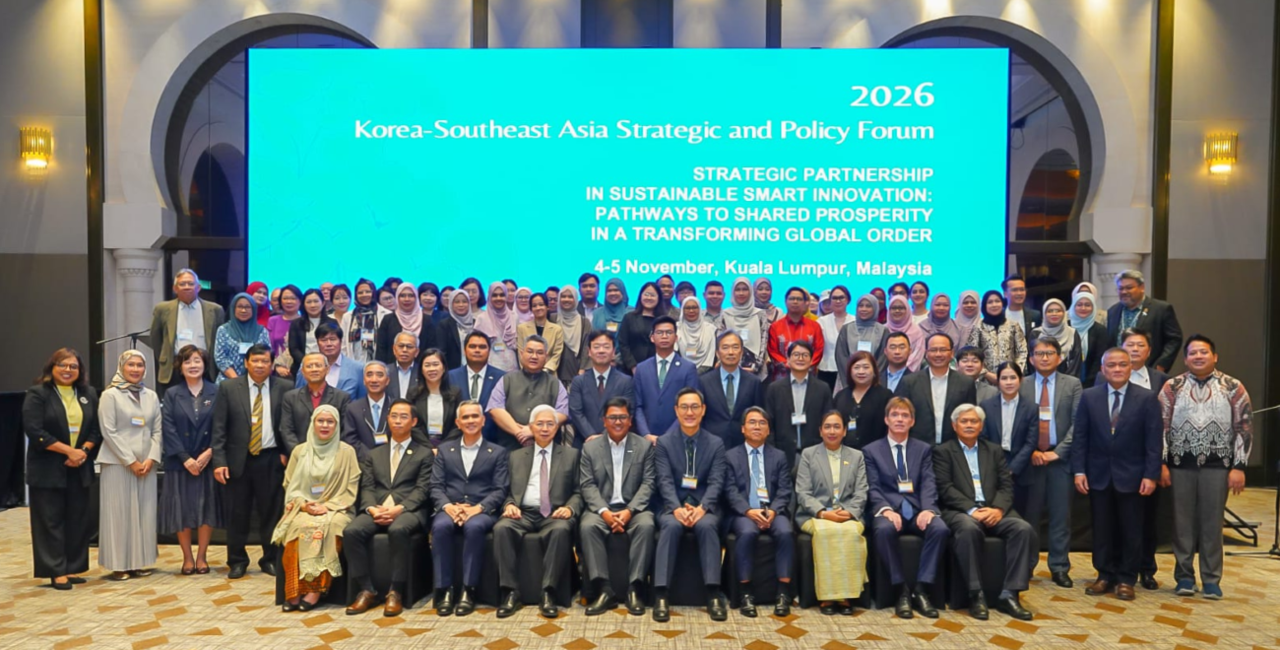
The Hyundai Motor Chung Mong-koo Foundation announced Friday that it held the 2026 Korea-Southeast Asia Strategic Policy Forum at the Sheraton Imperial Hotel in Kuala Lumpur, Malaysia, on Wednesday and Thursday.
The foundation organized the forum to extend the cooperative base it has built through talent development and international exchange in Southeast Asia into the policy and industry spheres. Last year, the foundation co-supported the 2025 Korea-ASEAN Policy Exchange Community International Public Policy Symposium with the Korea Foundation. This year, it co-organized a separate strategic policy forum with the Korea Research Institute at the University of New South Wales (UNSW) in Australia. The Institute of Postgraduate Studies and Research in Public Administration and Management at the University of Malaya participated as a local partner. More than 150 senior government officials, academics and industry experts from Korea, Southeast Asia and Australia attended.
The forum's theme was "Strategic Partnerships for Sustainable Smart Innovation in a Changing Global Order: A Path to Shared Prosperity." Participants examined common challenges facing Korea and Southeast Asia amid the reshaping of global supply chains and intensifying competition in advanced technology, and explored directions for sustainable growth and cooperation centered on smart innovation industries.
The forum opened with a welcome dinner on Wednesday, followed by the main program on Thursday, which comprised four sessions. After opening remarks by Choi Jae-ho, secretary-general of the Hyundai Motor Chung Mong-koo Foundation, presentations and discussions covered four topics: challenges and opportunities for Korea-Southeast Asia cooperation in advanced industry development in an era of geoeconomic realignment; innovation in advanced industries for national growth; sustainable smart innovation industry development; and strategies for building a strategic partnership toward Korea-Southeast Asia shared prosperity. Participants shared their countries' industrial development experiences and discussed cooperation approaches suited to each nation's circumstances.
Notable attendees included Meas Soksensan, undersecretary of state at Cambodia's Ministry of Economy and Finance; Rushdi Abdul Rahim, chief executive of Malaysia Industry-Government Group for High Technology (MIGHT); Alfredo Pascual, former secretary of the Philippines' Department of Trade and Industry; Wa Wa Maung, former minister of Myanmar's Ministry of Investment and Foreign Economic Relations; and Michael O'Donnell, deputy vice-chancellor of UNSW. So Hoon-seop, a World Bank sector director for South Asia, also attended and shared views on Korea-Southeast Asia industrial cooperation.
Shin Jae-hyuk, director of the ASEAN Center at Korea University's Asiatic Research Institute and a professor of political science and diplomacy, and Piti Srisangnam, secretary-general of the ASEAN Foundation — both longtime project partners of the foundation through the CMK ASEAN School — also took part. The forum also featured presentations on Hyundai Motor Group's Saemangeum project and the Ministry of SMEs and Startups' smart factory Official Development Assistance program.
The foundation nurtures talent in Southeast Asia through its Global Scholarship and the CMK ASEAN School, and has been expanding its partnerships with local institutions across Asia this year. In August, it signed a multilateral MOU with 10 institutions across five countries — including the ASEAN Studies Centre at the National University of Singapore and the ASEAN Foundation — to strengthen education and exchange cooperation under the CMK ASEAN School.
In September, the foundation led a session at Asia Impact Nights 2026 in Kobe, Japan, where participants discussed the role of public-interest foundations and impact investment. In October, it co-hosted the 2026 CMK Impactpreneur Climate Tech Demo Day with Co-Axis, an impact platform created by Singapore's Temasek Trust, to support Korean impact startups entering Asian markets.
"The foundation, which has long nurtured future talent based on the social contribution philosophy of Honorary Chairman Chung Mong-koo, is now expanding its role to become a partner in discussing social innovation and policy cooperation across Asia," Choi said. "We will contribute to the sustainable shared prosperity of Korea and Southeast Asia through trust and a cooperative network built at the private level."
eyre@heraldcorp.com