US firm Chef Robotics produces over 100 million items using robot technology
AI and sensors used to sort food, improve quality control and cut waste
Government to expand R&D support and push for international standardization
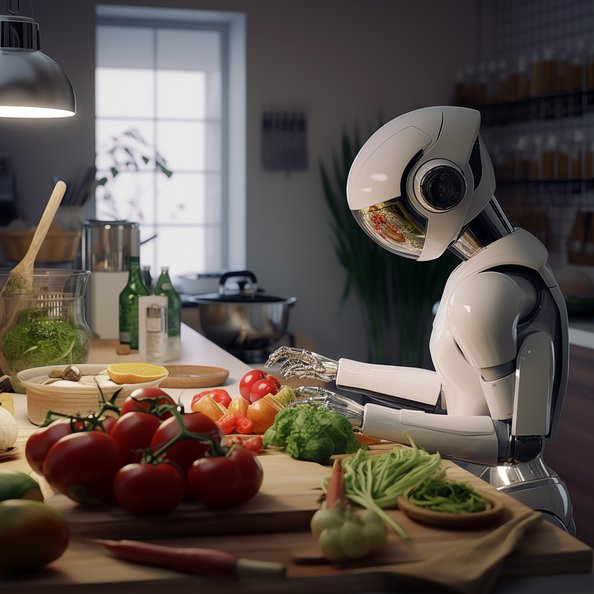
Intelligent automation is spreading across food manufacturing, with AI and robots now handling tasks such as portioning ingredients and identifying defective products. A US food robotics company has used robots to process irregularly shaped and textured ingredients, producing more than 100 million items. The government plans to support automation in food manufacturing processes and pursue international standardization of related technologies.
The Ministry of Agriculture, Food and Rural Affairs held the 2026 Global Foodtech Technology Standardization Symposium at COEX in Seoul on Friday, drawing about 400 domestic and international experts and industry officials. The event, held for the third time this year, focused on case studies of AI- and robot-driven smart factory construction in the food sector and the direction of technology standardization.
Among the highlights was a presentation by US-based Chef Robotics. CEO Rajat Bhageria introduced how the company trained robots on data covering the shapes and textures of various ingredients and applied that technology to production. Output using the technology has surpassed 100 million items.
Food manufacturing poses particular challenges for automation because ingredients vary widely in size, shape and texture, making it difficult for robots to handle consistent portions. Chef Robotics presented its approach of using robots trained on ingredient data to automate such tasks. The technology improves productivity and quality consistency in food manufacturing environments that have traditionally relied heavily on manual labor.
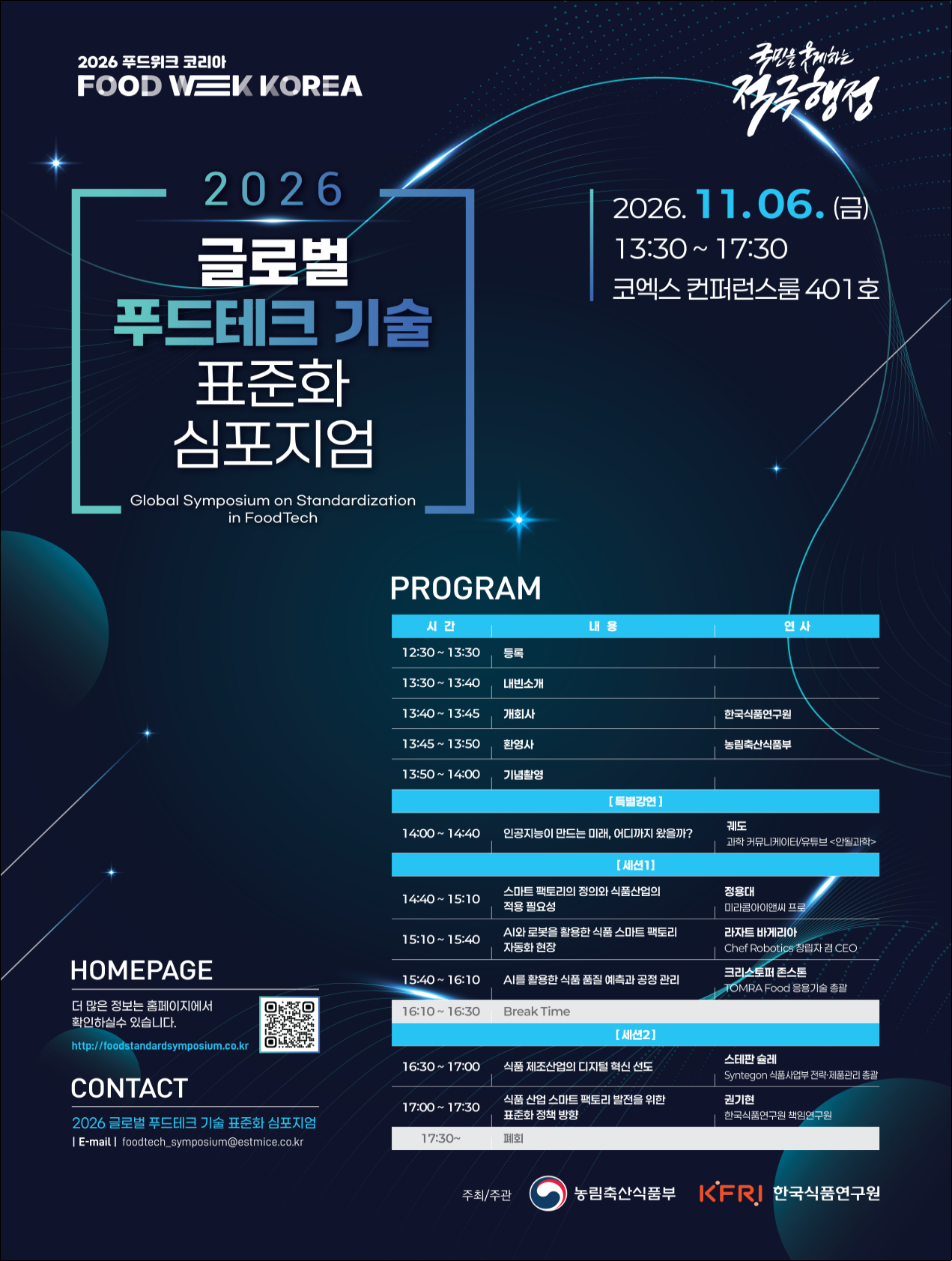
New Zealand's TOMRA Food showcased a food-sorting technology that combines sensors with AI. Christopher Johnston, head of applied technology, presented the company's system for detecting foreign matter during manufacturing and predicting product quality. The technology can also reduce food waste, Johnston said.
Automation in packaging processes was also discussed. Stefan Schule, head of strategy and product management at Switzerland's Syntegon, presented technologies for fast and precise food packaging alongside intelligent automation case studies. Kwon Ki-hyun, a senior researcher at the Korea Food Research Institute, outlined design principles for AI-based food smart factories and strategies for technology standardization.
As AI and robots enter food factories, standardization — needed to connect different equipment and technologies and maintain consistent quality — is growing in importance. The symposium addressed not only individual companies' automation technologies but also technical benchmarks and international standardization directions applicable across the industry.
The government is also supporting the smart transformation of food manufacturing. The Ministry of Agriculture, Food and Rural Affairs enacted the Act on Promotion of the Food Tech Industry in December last year and subsequently established the first basic plan for fostering the food tech industry. The plan covers support for technology development, investment, talent cultivation and overseas expansion.
In June, the ministry launched the K-Food Smart Manufacturing Alliance together with the Ministry of SMEs and Startups and the Ministry of Food and Drug Safety. The alliance is expanding its membership to cut costs and improve production efficiency in food manufacturing.
Kim Jeong-wook, director general for agro-industry innovation policy at the Ministry of Agriculture, Food and Rural Affairs, said smart factories using AI and robots "are opening new possibilities for the food industry's AI transformation, including high-efficiency, high-precision and customized production." Kim added that "as technologies become more intelligent and sophisticated, the role of standardization in ensuring trust among businesses and consumers will become ever more important."
Kim said the ministry plans to "expand R&D support for AI and automation in the food sector and actively pursue international standardization that takes into account food tech developments and export priorities."
adastra@heraldcorp.com