'Blue wave' batters markets as data center fears persist
Philadelphia Semiconductor Index plunges 12%
Top market-cap stocks fall sharply in premarket trading
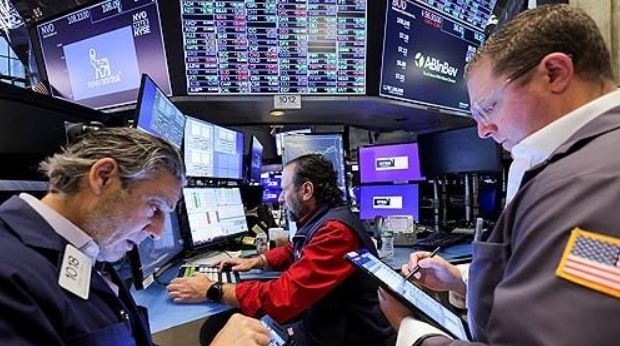
Samsung Electronics and SK hynix shares are tumbling in premarket trading, dragged down by a sharp selloff in US semiconductor stocks.
As of 8:23 a.m. Friday, all top market-cap stocks were posting steep losses in premarket trading, according to Korea Exchange.
Samsung Electronics was down 11.41% at 178,500 won ($133), while SK hynix had fallen 13.84% to 1.089 million won.
SK Square (-14.09%), LG Energy Solution (-7.08%), Samsung Electro-Mechanics (-15.15%), Samsung Biologics (-5.33%) and Hyundai Motor (-8.18%) were all posting heavy losses.
Wall Street fell sharply overnight as concerns over delays in data center construction persisted in the wake of a Democratic Party landslide — a so-called "blue wave" — in the US midterm elections, sending shockwaves through domestic markets as well.
On Thursday, the Dow Jones Industrial Average fell 3.44% from the previous session, while NASDAQ and the S&P 500 tumbled 5.52% and 4.36%, respectively.
The declines in NASDAQ and the S&P 500 were the steepest since April last year, when Wall Street was rattled by US President Donald Trump's announcement of reciprocal tariffs.
Major memory chip makers led the selloff — SanDisk fell 22.26%, Micron dropped 17.46% and SK hynix's American depositary receipts slid 13.40% — while AI-related stocks also posted double-digit losses, with AMD down 17.26%, Intel off 10.33% and Broadcom falling 10.43%.
The Philadelphia Semiconductor Index plunged more than 12%, dropping 12.25% for its largest single-day loss since the early days of the COVID-19 pandemic in 2020.
Seo Sang-young, a researcher at Mirae Asset Securities, said the selloff deepened as news of Microsoft's review of its NeoCloud contracts came to the fore amid lingering concerns over data center construction regulation. "The market priced in data center construction delays, return-on-investment risks and financing risks more heavily than actual AI demand," Seo said, adding that a supply-demand imbalance in the options market amplified the decline.
Some analysts, however, view the sharp drop as an oversold condition. Han Ji-young, a researcher at Kiwoom Securities, noted that Texas — which accounts for about 27% of all data center construction in the United States — opposes data center regulation, meaning any restrictions in those areas could have negative ripple effects.
Han added that the relevant regulations are expected to have a relatively greater impact on projects slated for 2028 than for next year. "The specific scope of the regulations has yet to be confirmed, which suggests the AI stock selloff on Wall Street goes beyond overselling," Han said. "It should also be remembered that concerns over 2028 earnings have already been substantially priced in."

jiyun@heraldcorp.com