- Professor Jang Kyung-in selected for European Research Council's Synergy Grant 2026
- Team to build 'brain map' by analyzing primate neural signals and behavior
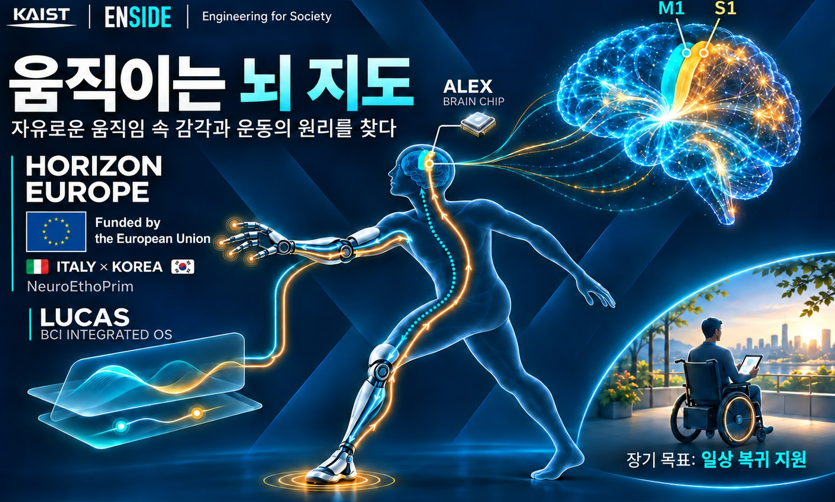
Could a tiny chip implanted in the brain one day let people control a smartphone or move a wheelchair using thought alone?
KAIST announced Friday that NeuroEthoPrim, an international joint research project co-led by mechanical engineering Professor Jang Kyung-in, has been selected for the European Research Council's Synergy Grant 2026.
It marks the first time a researcher affiliated with a South Korean university has been named a principal investigator on an ERC Synergy Grant.
The project will receive about 9.68 million euros ($10.54 million) over six years, of which approximately 5 billion won has been allocated to KAIST.
The ERC Synergy Grant is a large-scale basic research program through which the EU supports two to four world-class researchers working together to tackle scientific challenges that no individual researcher could solve alone.
The project brings together Luca Bonini, a professor at the University of Parma in Italy; Silvestro Micera, affiliated with the Sant'Anna School of Advanced Studies in Italy and the Swiss Federal Institute of Technology Lausanne (EPFL); and KAIST's Jang.
At the heart of the research is understanding how the brain functions while a subject moves freely.
The team will build an experimental space called the NeuroEthoRoom, where monkeys can walk and forage freely. There, researchers plan to simultaneously collect brain activity data, whole-body movement data and tactile information to analyze how the brain translates sensory input into real-world action.
The vast dataset gathered will be used to develop an AI foundation model that learns the relationship between neural signals and movement. Jang will oversee the development of a wireless neural interface — a device that reads brain signals or delivers electrical stimulation to specific regions of the brain — as part of the project.
The team plans to develop technology that bridges the physical mismatch between soft brain tissue and rigid semiconductors, enabling stable recording of brain signals and precise stimulation of target areas even during free movement.
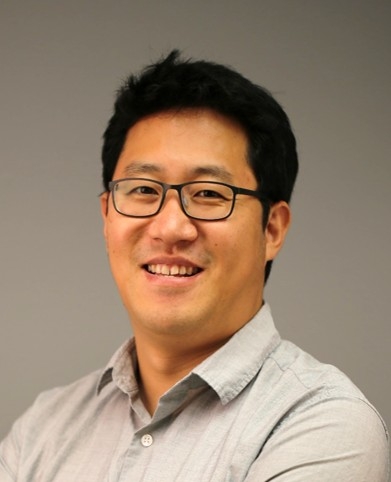
The team's ultimate vision is a "Brain-to-X" platform — a single brain interface that connects to smartphones, prosthetic limbs, wheelchairs, hospital beds and residential spaces.
The long-term goal is to allow patients to move a wheelchair or operate a smartphone by thought alone, and to receive tactile feedback while grasping objects with a robotic prosthetic hand.
However, applying the technology to actual patients will require primate validation, human-subject research, safety and efficacy assessments, and regulatory approval.
"Understanding how the brain links sensation and movement during free motion is the starting point of this research," Jang said. "We will do our utmost to ensure that the findings from this basic research help people living with neurological damage return to their daily lives."
nbgkoo@heraldcorp.com