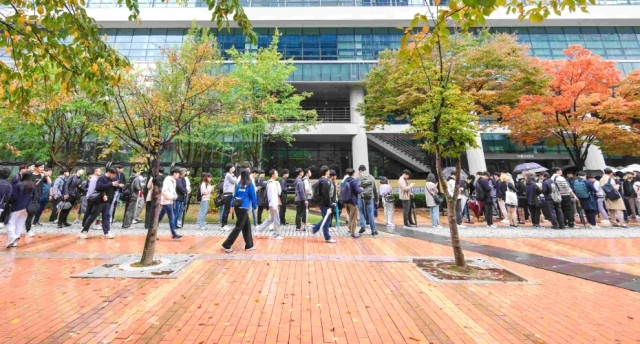
"Winners will receive a total purse of 83.5 million won ($62,300), and all finalists will be given the opportunity to interview for a position." — NHN, describing its AI hackathon NAN 2026
As a hiring freeze grips the IT industry, AI hackathons are emerging as a new gateway into the job market. These corporate competitions set aside academic credentials and work history, judging participants solely on their ability to solve real-world problems using AI. With prize pools ranging from tens of millions of won to 100 million won — and job interview opportunities attached — applicants are flooding in.
Industry observers say the trend reflects a deeper battle among companies to dominate the AI development ecosystem. Firms are using hackathons not only to scout talent but also to draw developers into their own AI platforms and tools.
NHN, Krafton and SK hynix are among the companies that have launched employment-linked AI hackathons in the second half of this year, according to industry sources Thursday. The competitions are filling a void left by a broader hiring slowdown — Naver and Kakao, two of South Korea's largest IT companies, have not held open recruitment drives this year.
NHN held its employment-linked AI hackathon, NAN 2026, in September at its Pangyo office in Seongnam, Gyeonggi Province, offering a total purse of 83.5 million won along with hiring benefits. All members of the top three winning teams received a final-round interview opportunity at NHN, and those who ultimately join the company receive an additional bonus tied to their length of service. The competition drew 59 applicants for every spot in the final round.

Krafton co-hosted an employment-linked AI hackathon called Copathon with CJ Olive Young in July. The event carried a total purse of 10 million won, and standout participants were exempted from the document screening stage for field deployment engineer positions at Krafton and AI engineer roles at CJ Olive Young. Contestants tackled actual workplace problems from each company using AI, with their capabilities assessed through Krafton's proprietary evaluation tool, Copa Probe.
SK hynix has also tied its hackathon to hiring. The finals of its SK hynix AI Hackathon 2026 are set for Wednesday at COEX in Seoul, with a total purse of 100 million won. Top performers will be exempt from both the document screening and the SK hynix aptitude test, known as the SKCT, in future recruitment rounds.
As AI hackathons gain recognition as a path into employment, participants are increasingly wrestling with which competitions to enter. Scheduling conflicts have already emerged: the online qualifying round for AI Top 100 — organized by Kakao Impact and sponsored by Kakao — and the second online qualifying round for the SK hynix AI Hackathon were both scheduled for Saturday.
Kakao's AI Top 100 does not lead directly to a job offer, but it carries a total purse of 125 million won along with certificates. Each of the 100 finalists receives a 500,000 won AI tool subsidy, an official certificate and a digital card.
A 27-year-old job seeker who ultimately chose to enter the Kakao competition said the decision was not straightforward. "Even without a direct hiring link, I considered whether hackathon participation and awards could serve as portfolio evidence of my skills," the person said. "I chose Kakao because I want to build a career in the software industry rather than semiconductors."
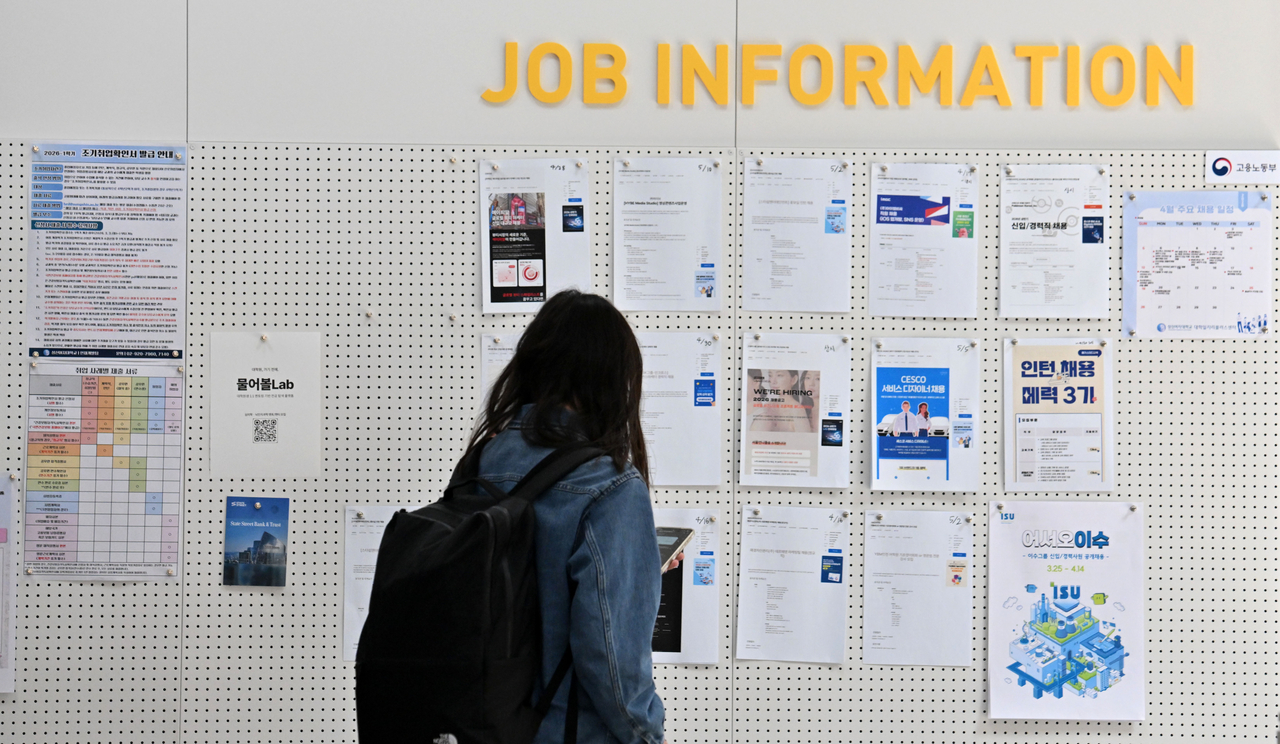
Industry analysts say the hackathon boom reflects an intensifying race among companies to control the AI development ecosystem. The competitions serve a dual purpose: identifying talent while pulling developers into the technical orbit of specific platforms — much as global tech giants have done.
The Krafton–CJ Olive Young Copathon offers a clear example. OpenAI participated as a technology partner at the event, introducing its AI coding tool Codex and ChatGPT-based workflows and encouraging participants to adopt them — effectively locking developers into the OpenAI ecosystem, analysts say.
SK hynix also used Copa Probe — Krafton's AI assessment tool developed in partnership with OpenAI — as one of its evaluation instruments during the hackathon's qualifying rounds. An AI technology seminar featuring staff from SK hynix, OpenAI and Krafton is also planned for Wednesday's finals.
Kakao, meanwhile, is focused on building a developer ecosystem around its own platform. Participants in AI Top 100 are required to use KakaoTalk during the problem-solving process. In a separate competition announced in June, called Agentic Player 10, participants must register AI tools they have built on PlayMCP, Kakao's open development platform.
Large-scale open recruitment at major domestic IT firms has broadly contracted. Naver and Kakao are the most prominent examples of companies that have not held open hiring drives this year. Naver is reassessing the regular recruitment system it maintained for seven years, looking to adapt it to the AI era, while Kakao has shifted its focus to rolling, position-by-position hiring.
chami@heraldcorp.com