- Budget up 173.9 billion won from this year, covering 18,516 projects
- About 1,000 slots reserved for regional researchers; 30% of new projects for early-career scientists
- Quantitative paper and patent counts dropped from performance evaluations
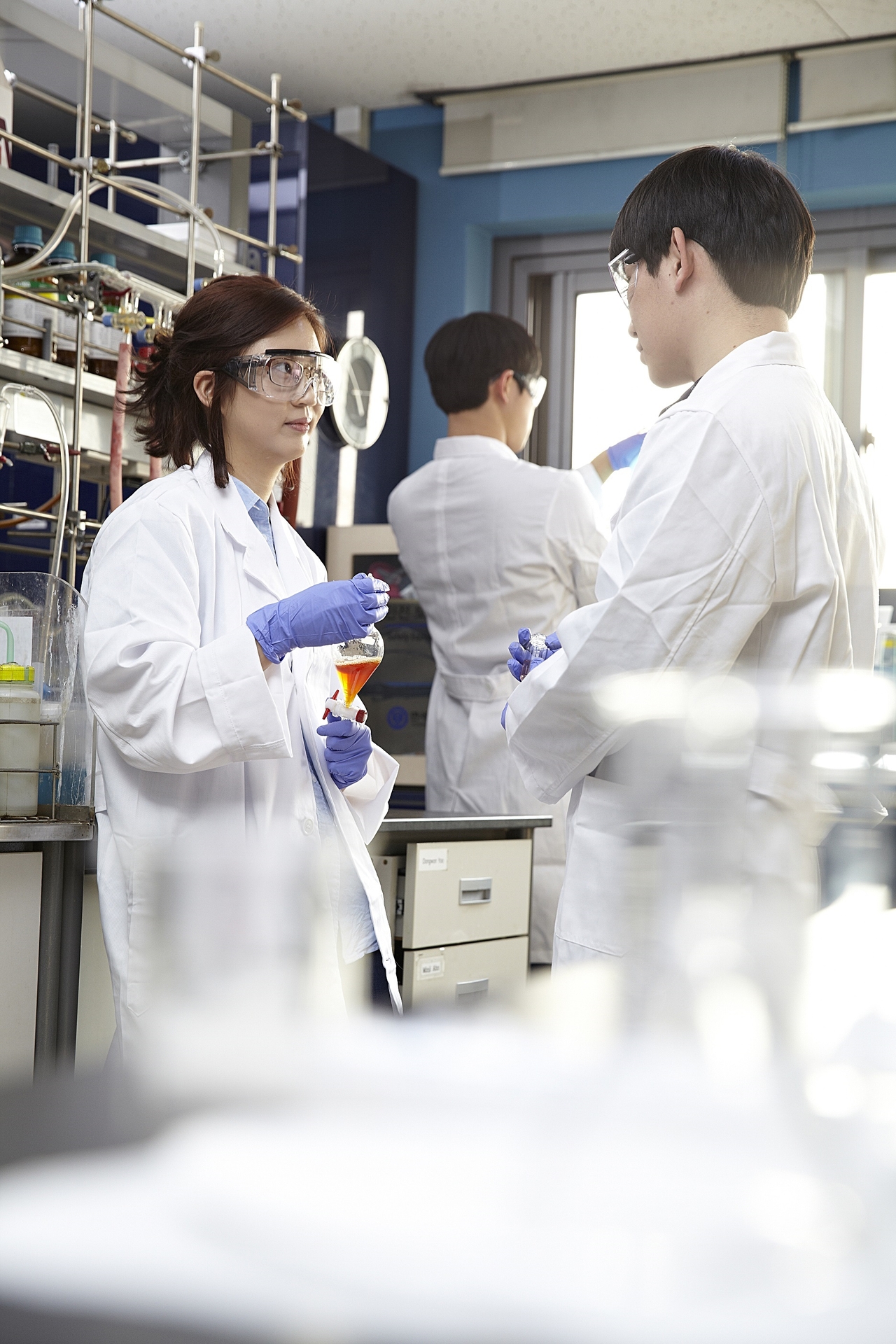
The government plans to invest a record 2.91 trillion won ($2.17 billion) in basic research next year, with a focus on spreading research capacity beyond the greater Seoul area and giving early-career scientists a larger share of new projects.
The Ministry of Science and ICT said Thursday it had finalized the "2027 Basic Research Project Implementation Plan" and would begin accepting first-round applications for new individual basic research projects starting Thursday.
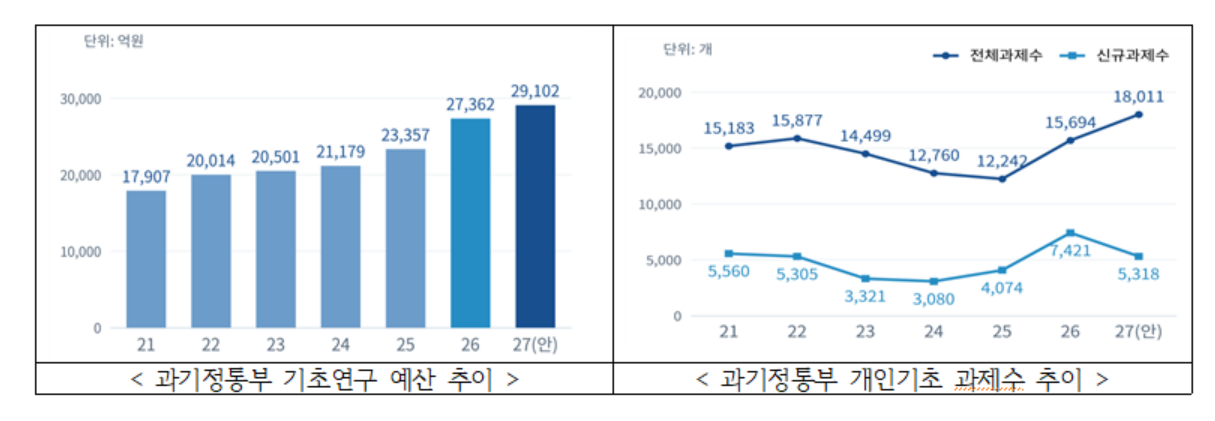
The 2027 basic research budget stands at 2.91 trillion won under the government's budget proposal, up 173.9 billion won from this year. The total number of supported projects — 18,516 — marks a record high in both funding and project count. New individual basic research projects also increased to 5,318, recovering to levels similar to 2022, before cuts to research and development spending.
The centerpiece of the plan is strengthening regional research capacity and expanding support for young researchers.
About 1,000 of the 5,460 new projects will be reserved for researchers outside the greater Seoul area. Under the individual basic research program's Type A and Type B categories, regional researchers will be guaranteed at least 40 percent of slots — a minimum of 300 and 480 projects, respectively.
A new "regional long-term research" program will also be launched to help promising early-career researchers at regional universities focus on their work with greater stability. A total of 100 projects will be selected, with each receiving about 300 million won in the first year to build research infrastructure, followed by roughly 150 million won annually for nine years — providing a stable research environment for up to a decade.
In the group research category, at least five Regional Leading Research Centers and 26 or more basic research labs will be selected from outside the capital region. The number of new center projects will grow from one in 2025 and zero this year to five next year. The ministry plans to develop regional universities into research hubs aligned with the government's balanced national development policy.
Support for early-career and postdoctoral researchers will also be significantly expanded.
At least 1,600 of the 5,318 new individual basic research projects — roughly 30 percent of the total — will be allocated to early-career and postdoctoral researchers.
The breakdown includes 460 slots under the Early-Career Research Type A category, 600 under Type B, 70 for early-career researcher infrastructure support, 100 for the regional long-term research program, 170 for the domestic track of the Sejong Science Fellowship, and 200 for the return and recruitment track. The aim is to help researchers build an independent research foundation from the earliest stages of their careers.
The way research outcomes are evaluated will also change.
The government will scrap the requirement to submit quantitative metrics — such as the number of papers published and patents filed — in interim and final project reports. Evaluations will instead weigh the ambition and creativity of the research, its academic contribution, and the potential applicability of its findings.
Presentation-based evaluations will be introduced for the selection of basic research labs. Final assessments for flagship research and leading research centers will also shift from the existing discussion-based format to presentations, strengthening the verification of research outcomes.
The ministry will also pilot a program to monitor how researchers use AI when writing research proposals, as part of efforts to foster a research culture that ensures accountability and transparency while making effective use of AI tools.
To encourage more overseas degree holders and foreign researchers to conduct research in South Korea, the ministry will expand the option to submit research proposals in English, prioritizing projects with significant foreign researcher involvement or a need for international peer review.
The ministry will hold an online information session Wednesday, followed by in-person regional briefings starting in the greater Seoul area on Nov. 23, the Honam region on Nov. 24, the Chungcheong region on Nov. 30, and the Yeongnam region on Dec. 1.
"Following this year's bold investment to revitalize the basic research ecosystem, next year we are placing the greatest emphasis on providing robust support for regional and early-career researchers — the core research talent of the future," First Vice Minister of Science and ICT Koo Hyeok-chae said. "We will steadfastly pursue long-term, stable support so that researchers can continue to pursue creative and ambitious work."
nbgkoo@heraldcorp.com