Vice Chairman Jang Jae-hoon attends Democratic Party's Saemangeum field forum
Investment progress and policy support needs discussed
Hyundai Motor Group pursuing roughly 9 trillion won in Saemangeum investment
400 billion won earmarked for robot manufacturing and parts cluster
Dedicated organization and field office to strengthen execution
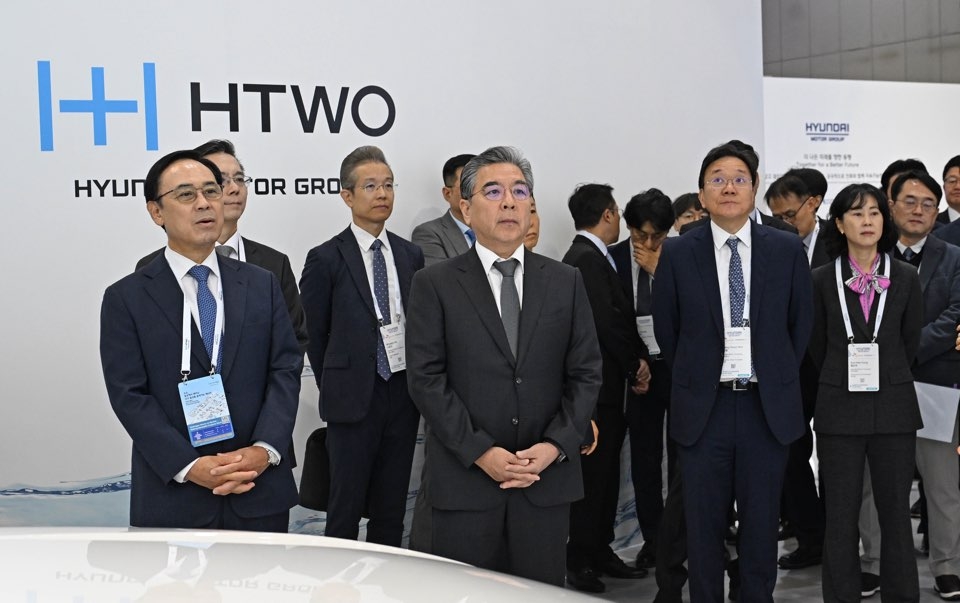
Hyundai Motor Group is picking up the pace on its roughly 9 trillion won ($6.71 billion) Saemangeum investment, which includes the construction of a robot factory. Vice Chairman Jang Jae-hoon personally attended a field forum to outline the project's progress and call for government and National Assembly support, giving fresh momentum to the group's push to establish a future industrial hub centered on robots, renewable energy and hydrogen.
According to Hyundai Motor Group, Jang attended the "North Jeolla Province Saemangeum Field Forum" on Oct. 29 at the Saemangeum Energy Convergence Complex's general support center. The forum was organized by the Democratic Party of Korea's mega-growth special committee and covered the group's investment progress at Saemangeum, along with key tasks including policy support and infrastructure development needed for the project's success.
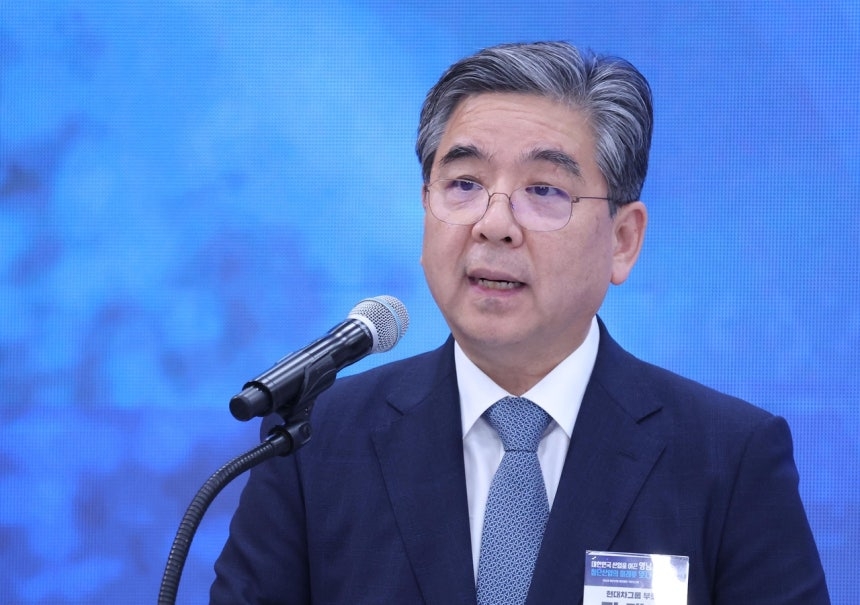
"Since announcing the 9 trillion won Saemangeum investment, Hyundai Motor Group has been advancing all planned projects without disruption," Jang said. "We will turn Saemangeum into a future industrial hub for South Korea — one where renewable energy, AI data centers, robotics and hydrogen industries grow together."
Jang added that with backing from the government and the National Assembly, more companies would channel investment into Saemangeum, creating new jobs and an industrial ecosystem that would ultimately strengthen South Korea's future industrial competitiveness.
Hyundai Motor Group announced in February a plan to invest roughly 9 trillion won across a 1.12 million-square-meter site in the Saemangeum area. The investment breaks down across five areas: 5.8 trillion won for data centers, 400 billion won for a robot manufacturing and parts cluster, 1 trillion won for a water electrolysis plant, 1.3 trillion won for solar power facilities and 400 billion won for an AI hydrogen city.
The robot manufacturing and parts cluster is the core investment area tied to the robot factory construction. Hyundai Motor Group plans to integrate robot production infrastructure, technology development facilities and energy supply systems as part of its transformation into a "future technology company centered on robotics, AI and energy solutions."
The future industrial hub that Jang envisions at Saemangeum goes beyond building individual facilities. The central idea is to create an industrial ecosystem where the robot factory, research and development infrastructure, and renewable energy and hydrogen facilities work in concert — enabling production, technology development and energy supply to advance together.
The group is also laying the groundwork for advancing its robotics technology. Hyundai Motor Group plans to use the high-performance computing resources of its data centers to train robot behavior models in virtual environments, refining the technology that enables robots to make autonomous decisions and carry out tasks, as well as precision joint control capabilities.
This technology development is expected to reinforce the Saemangeum robotics industry base alongside the robot factory construction. The group aims to build up the technical capabilities needed across fields such as service and mobile robotics, and to secure future competitiveness by linking manufacturing with research and development.
Since the investment announcement, Hyundai Motor Group has established a dedicated internal organization and reorganized its project management structure by sector, covering areas such as robotics and hydrogen. The group has also joined the government-led "Saemangeum and North Jeolla Province Grand Innovation TF," working with the task force on permitting, policy support and infrastructure development.
In September, the group established a special-purpose company for a 200-megawatt solar power project. For the data center project, it is also moving to set up a separate entity to handle infrastructure construction and computing service operations, based on investment decisions by participating group affiliates, laying the execution groundwork for these linked businesses.
Hyundai Motor Group also opened the "HMG Saemangeum Office" in Gunsan, North Jeolla Province, on Friday. Staffed by dedicated full-time personnel, the office handles site permitting and ground-breaking related work, manages ongoing issues and supports real-time communication with relevant agencies. It serves as the on-the-ground hub for managing the schedule and key tasks of the entire Saemangeum investment, including the robot factory and other linked projects.
Alongside Jang's field activities, discussions are also under way on cultivating local talent. Hyundai Motor Group is in talks with Jeonbuk National University on establishing a contract-based academic department, and with the North Jeolla Province Office of Education and others on converting Meister high school and specialized high school programs, to prepare a workforce pipeline for future industries.
The government, for its part, is pursuing revisions to the Saemangeum master plan to expand industrial land, establish a 10-gigawatt renewable energy base and improve conditions for corporate investment through power and water supply improvements. Hyundai Motor Group said it will strengthen cooperation with relevant agencies through its field office and press ahead with the Saemangeum investment projects, including the robot factory, without disruption.
Meanwhile, Jang had earlier outlined the group's hydrogen business direction at a press briefing following the completion ceremony for Hyundai Motor's new Pune factory in Talegaon, Maharashtra, India, last month.
"We plan to first apply hydrogen production infrastructure using renewable energy such as solar power to the mobility sector, then expand into the industrial and energy sectors," Jang said at the time. "We will extend the use of hydrogen beyond passenger cars to commercial vehicles such as buses and trucks, and even to locomotives."
likehyo85@heraldcorp.com