Launched in 2013 on a philosophy of technology-first management
1.2 trillion won in support for 916 projects and 17,000 researchers
10 outstanding researchers honored across basic science, materials and ICT
Winners to receive technical advisory services and industry exchanges
Program pursues 'reciprocal CSR' beyond simple financial support
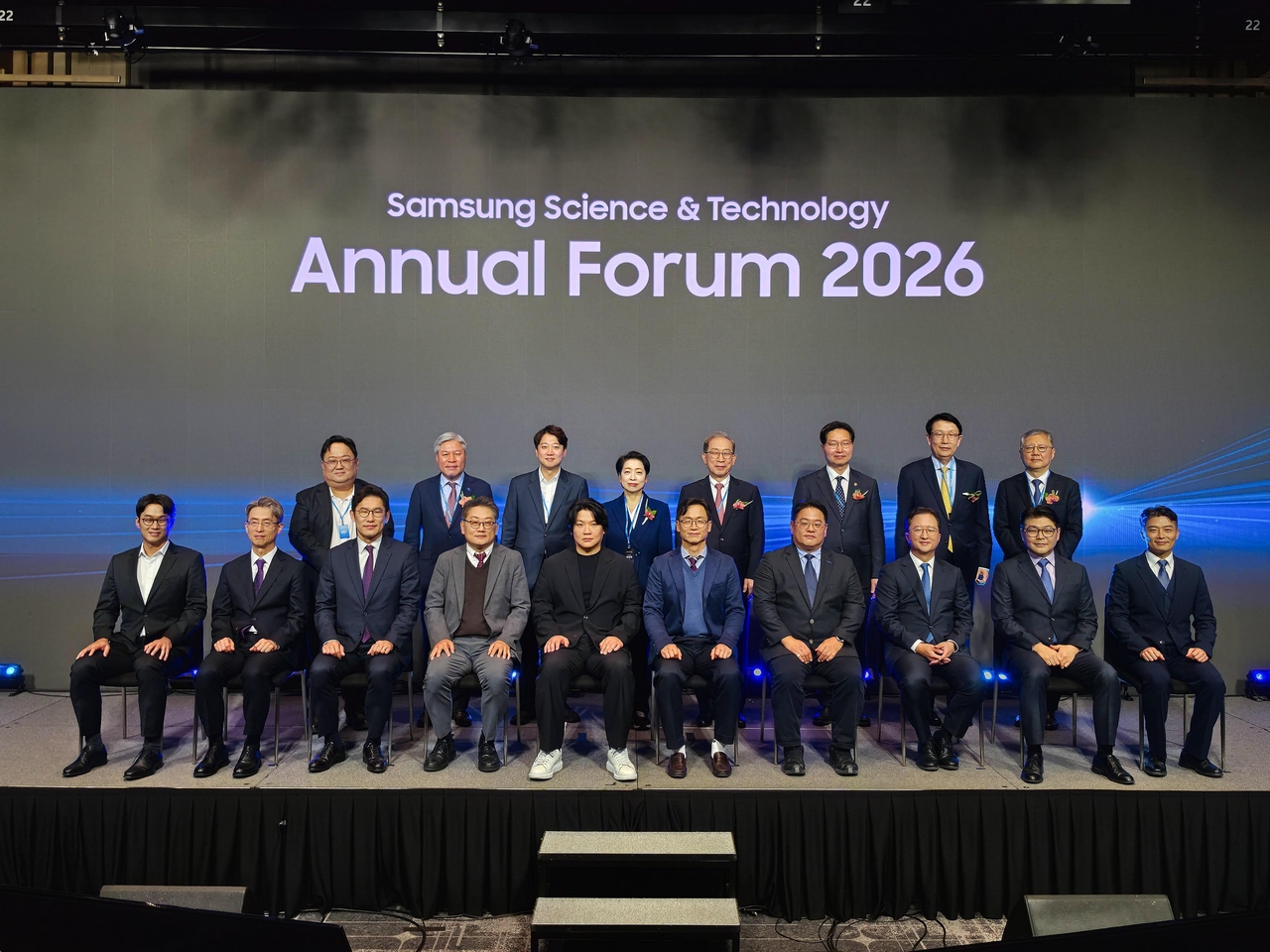
Samsung Future Technology Incubation Program Forum
"For years, our lab had no results to show while building a computer system — but the Samsung Future Technology Incubation Program waited patiently for the research to bear fruit. Seeing the actual computer we built, I decided to start a company to prove its worth in the market." — Kim Jang-woo, Seoul National University professor and CEO of Mangobost
Samsung Electronics held the Samsung Future Technology Incubation Program 2026 Annual Forum on Thursday at the Westin Josun Seoul in Gangnam-gu, Seoul, marking the first awards ceremony in the program's 14-year history. The forum brought together more than 450 researchers from South Korea's science and technology community.
Attendees included Koo Hyeok-chae, first vice minister of the Ministry of Science and ICT; Democratic Party of Korea lawmaker Hwang Jeong-a; People Power Party lawmaker Park Chung-kwon; Rebuilding Korea Party lawmaker Seo Wang-jin; Reform Party lawmaker Lee Jun-seok; Park Hong-keun, president of Samsung Electronics' Samsung Advanced Institute of Technology; and Jang Seok-hun, president of Samsung's corporate social responsibility division.
The Samsung Future Technology Incubation Program was launched in 2013, grounded in a management philosophy that places technology at the center. It is Samsung's flagship corporate social responsibility initiative, identifying and supporting research projects that push beyond existing limits and pursue sustainable advancement for industry and society.
The program has provided 1.2 trillion won ($895 million) in research funding to date, with a total of 916 projects involving more than 17,000 science and technology professionals.
Since 2014, Samsung has held an annual forum for academics and industry experts to share research findings and discuss ongoing projects. The forum was opened to the public last year.
This year's forum was particularly notable for introducing, for the first time since the program's founding, an awards ceremony recognizing outstanding researchers. Ten researchers — one representing each of 10 fields — received awards for pioneering new areas and making meaningful contributions among completed projects in basic science, materials and ICT supported by Samsung. A panel of leading scholars in each field conducted the selection process over four months.
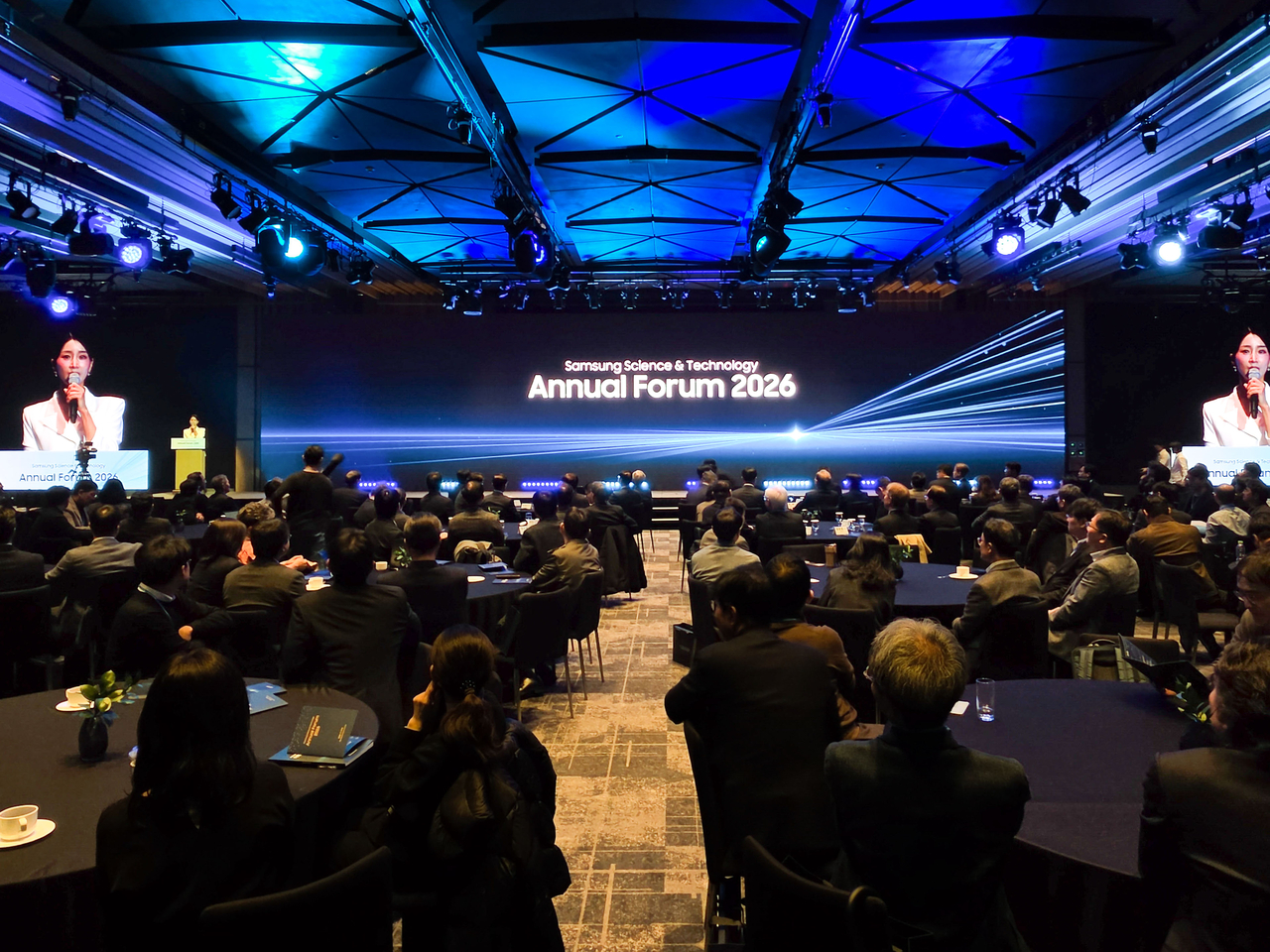
The 10 outstanding researchers selected this year include four in basic science and six in materials and ICT.
In basic science, the honorees are Oh Sung-jin, a professor at UC Berkeley and the Korea Institute for Advanced Study, in mathematical sciences; Lee Hyun-woo of Postech in physics; Park Jeong-won of Seoul National University in chemistry; and Jeong Won-seok of KAIST in life sciences.
In materials and ICT, the winners are Kim Bong-su of UNIST in electronic materials; Yoo Chang-sik of Sungkyunkwan University in electronic devices; Choi Jang-wook of Seoul National University in energy and environment; Yoo Hong-ki of KAIST in biomedical research; Kim Jang-woo of Seoul National University in communications and computing; and Hwang Sung-ju of KAIST in AI robotics.
Researchers who attended the ceremony expressed gratitude for Samsung's sustained support over the years. Beyond research funding, Samsung has provided symposiums for exchanges among leading scholars and programs to support technology startups.
Lee Hyun-woo of Postech said that when he was pursuing unconventional research that ran counter to prevailing academic trends and drawing considerable skepticism, interactions with fellow researchers at a conference organized by the Samsung Future Technology Incubation Foundation helped confirm he was on the right track.
Kim Jang-woo, the communications and computing award winner from Seoul National University, founded DPU startup Mangobost with the support of Samsung's research funding. A DPU, or data processing unit, is a chip that coordinates the operation of networks, storage devices and AI accelerators inside a data center to improve server efficiency.
The company's flagship prototype, the MBDPU-1, is said to more than triple data center performance compared with conventional server architectures while cutting server CPU usage by more than 50 percent. Mangobost is currently expanding into the broader data center infrastructure market.
Samsung plans to confer the honorary title of "Samsung Future Technology Incubation Program Outstanding Researcher" on the winners and provide them with a structured package of benefits tailored to their needs — including technical advisory services, industry technology exchanges, startup and intellectual property mentoring, and follow-on research support. Through these efforts, Samsung aims to share the researchers' findings and insights across academia and industry.
Samsung's corporate social responsibility activities are framed not as charity but as a reciprocal endeavor aimed at mutual growth. The company pursues this through employee-led CSR initiatives that are planned and carried out by its own staff.
Kook Yang, chairman of the Samsung Future Technology Incubation Foundation, said that over the past 14 years, the accumulation of creative and ambitious research by scientists has produced meaningful results that are driving a leap forward in South Korea's science and technology capabilities. "We will continue to provide strong backing so that researchers can freely explore new possibilities and expand the frontiers of future science and technology," he said.
jeongwan@heraldcorp.com