Overseas investment drive in China set for Nov. 16–20
Potential investors identified at Seoul expo last month
Regulatory and administrative incentives expanded; local business network tapped
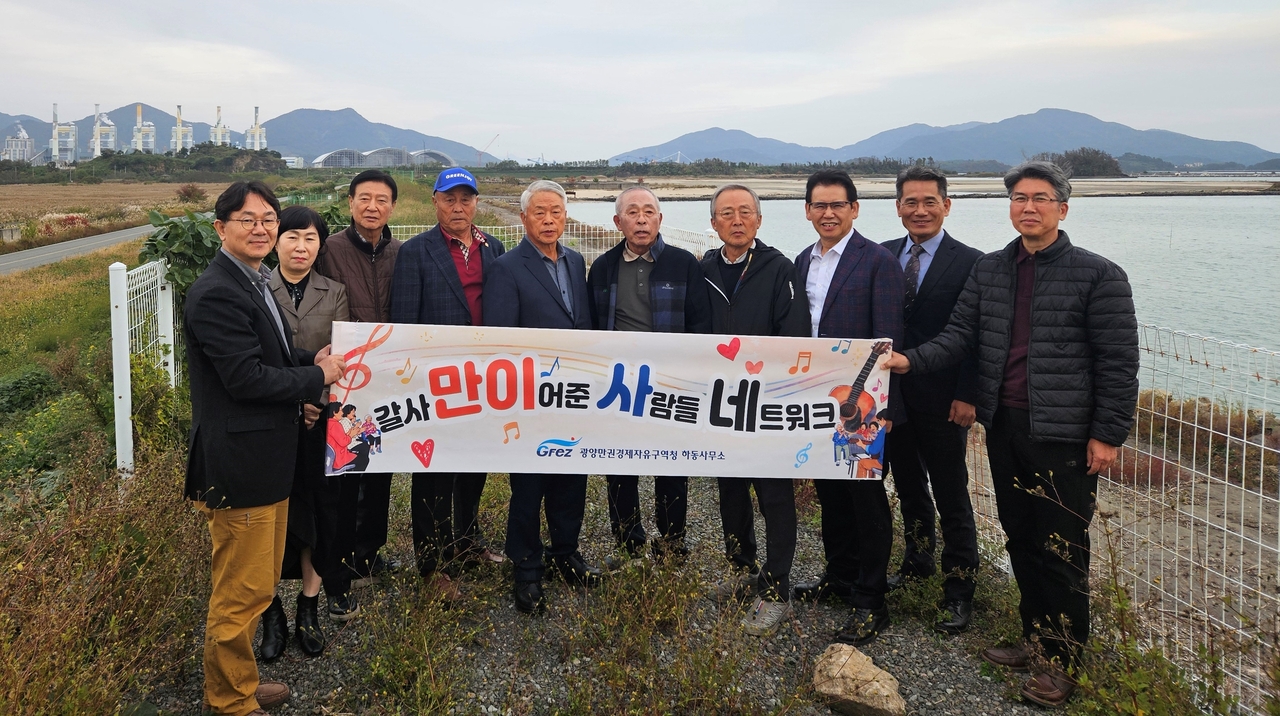
The Hadong office of the Gwangyang Bay Area Free Economic Zone Authority is staking everything on a diversification strategy to revitalize the Hadong district, pursuing a cluster of advanced materials and eco-friendly aquaculture feed industries, courting promising Chinese companies, and mobilizing a network of business leaders with roots in the region.
The office will kick off an overseas investment drive in Shanghai and Zhejiang Province, China, from Nov. 16 to 20, targeting industrial complex tenants for the Hadong district. The team plans to build ties with local partner organizations — including the Overseas Korean Traders Association and the South Gyeongsang Province and South Jeolla Province–Gwangju Shanghai offices — and hold an investment briefing for about 30 local business leaders. Officials will also visit companies on-site, including Shanghai Xianban Machine and an electric wind power group, to promote the locational advantages of the Daesong and Galsa industrial complexes and explore opportunities for attracting foreign capital.
The push to attract domestic companies is equally intense. At the 2026 International Advanced Materials Technology Exhibition held at COEX in Seoul through Oct. 2, the office identified five potential investors in areas including semiconductor ceramics, secondary batteries and unmanned aerial vehicles, and follow-up talks are underway. The office has also secured site-demand commitments from two anchor companies in the aquaculture feed sector — each requiring roughly 39,600 to 56,100 square meters — within the Daesong complex, and is working to establish a research-and-development-based feed industry cluster as it broadens its target industries.
Institutional and administrative support has also been significantly strengthened. The Daesong complex's designation as an opportunity development special zone entitles tenants to a full 100 percent exemption from corporate and income taxes for five years, and an amendment to Hadong-gun's local ordinance raised the land purchase subsidy rate from 70 to 80 percent. Buoyed by these measures, the office has this year received letters of intent from four companies representing a combined 199 billion won ($148 million) in planned investment.
Public-private cooperation and the network of business leaders with ties to Hadong are also taking shape. Through the coordination of Lee Yang-ho, head of the economic subcommittee of "Galsaman-i Ieojun Saramdeul" — a public-private cooperation platform known by the short name Manisane — the office hosted visiting Hadong-born entrepreneurs for an on-site briefing at the Galsa Bay and Daesong complexes on Tuesday. The office has also been reaching out to local residents, recently inviting about 50 villagers from Gopo village in Geumseong-myeon to a briefing on the current status of the Duu leisure complex.
Choi Yun-jong, head of the Gwangyang Free Economic Zone Authority's Hadong office, said the extension of the Galsa Bay industrial complex's operational period has provided an opportunity to fundamentally reorient both the Daesong complex and the broader Hadong district toward future new industries. "We will do everything in our power to deliver tangible investment results, backed by bold incentives and the invaluable bridge role played by business leaders and residents with ties to this region," Choi said.
ook967@heraldcorp.com