Pre-sales exceed 30% as 21 of 64 lots secured by tenant companies
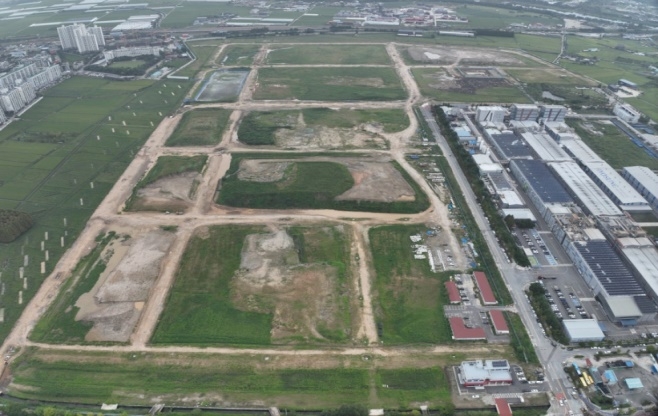
Construction of the Jeonju Carbon Materials National Industrial Complex, set to become a key hub for South Korea's carbon industry, has surpassed 70% completion and is on track for delivery.
According to Jeonju city, the project — spanning 660,000 square meters and backed by a total budget of 240 billion won ($179 million) — is currently in active construction, with earthwork and stormwater and sewage pipeline installation under way. The complex is on course to be completed by the end of next year.
Located in the Dongsan-dong area of Deokjin-gu, the complex has secured contracts for 21 of its 64 lots through private negotiation, achieving a pre-sale rate of more than 30%.
The Jeonju Carbon National Industrial Complex is designed to consolidate the carbon fiber and carbon composite industries that North Jeolla Province has been cultivating as a flagship sector.
The site is particularly well positioned for synergies, as a carbon fiber production factory operated by HS Hyosung Advanced Materials sits directly adjacent to the complex.
Jeonju city has broadened the range of eligible tenants to include carbon machinery, carbon electronics, other carbon manufacturing, research and development, as well as drone and defense companies, and inquiries from prospective tenants have been gradually increasing.
To ease traffic congestion, a new access road to the complex — Palgwajeong-ro, a key piece of transportation and logistics infrastructure — is also nearing completion, with a year-end finish expected.
"We will do our best to build the necessary infrastructure on time so that companies in the carbon materials national industrial complex can grow on a stable footing, creating jobs and injecting vitality into the local economy," a Jeonju city official said.
The carbon materials industry involves manufacturing products in which carbon is the primary component. Carbon is lightweight, high-strength and excels in heat resistance, electrical conductivity and chemical stability, making it widely used across sectors including automobiles, aerospace, semiconductors, secondary batteries, hydrogen energy and defense.
parkds@heraldcorp.com