- Korea Institute of Machinery and Materials spinoff develops 1.3 kg ultra-lightweight robotic suit
- Repetitive lifting reduces lower-back muscle use by over 40%
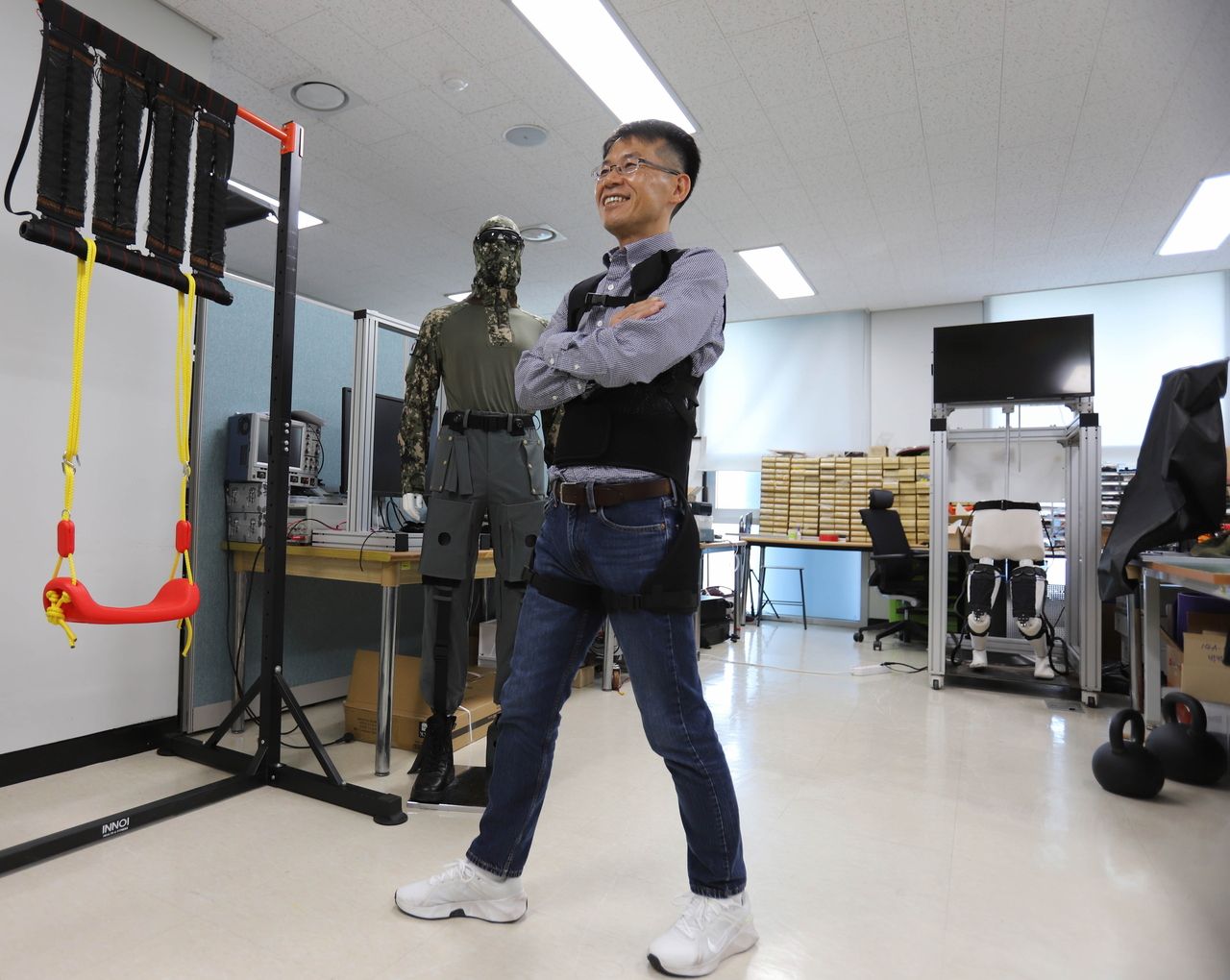
A "robot suit" that reduces strain on a wearer's lower back when lifting heavy objects has arrived — and it works without motors or rigid metal frames. Instead, the fabric itself contracts like muscle tissue to assist the wearer's movements.
The Korea Institute of Machinery and Materials announced Thursday that Sartexo, a startup spun off from the institute, has begun commercializing the Bionic Suit — a third-generation garment-type wearable robot built on the company's proprietary "muscle fabric" technology.
Sartexo was founded by Park Chul-hoon, a principal researcher at the institute's Advanced Robotics Research Center. Park has been developing shape-memory alloy artificial-muscle technology since 2012, and the Bionic Suit applies that research to address the weight and wearability problems that have long plagued conventional wearable robots.
The key innovation is fabric that generates force on its own.
Shape-memory alloy wires thinner than a human hair are twisted into coiled threads and then woven like ordinary fabric. When an electric current passes through them, the coiled threads contract like muscle fibers, generating force.
Conventional wearable robots rely on motors and mechanical components to assist bodily movement. The muscle fabric approach differs in that the textile itself acts as an artificial muscle.
Just 10 grams of the muscle fabric can lift up to 10 to 15 kilograms — generating force up to 1,500 times its own weight.
The waist-assist model, the Bionic Suit Waist, weighs just 1.3 kilograms including its battery and controller. An integrated version that simultaneously supports the lower back, shoulders and elbows comes in at under 1.8 kilograms.
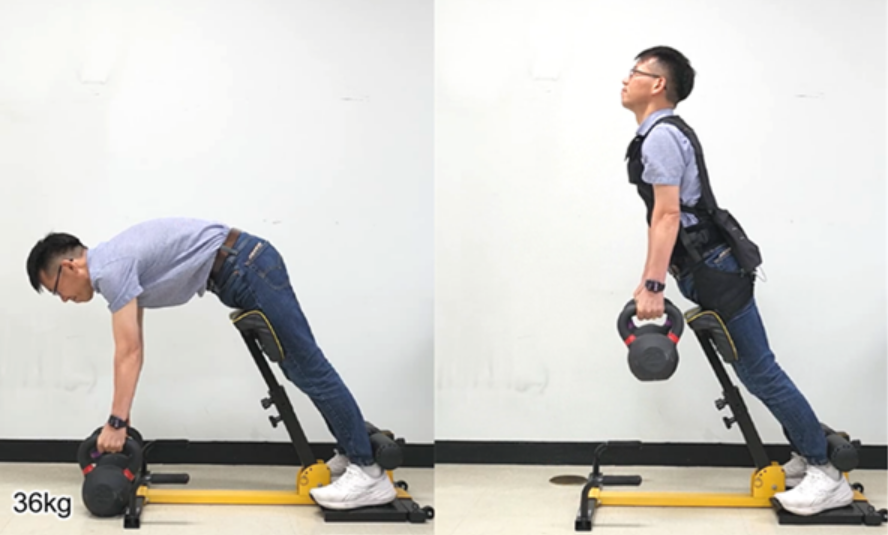
In tests involving repetitive lifting, lower-back muscle use fell by more than 40 percent. The suit is expected to ease the physical burden on workers in logistics, construction and manufacturing who handle heavy loads for extended periods.
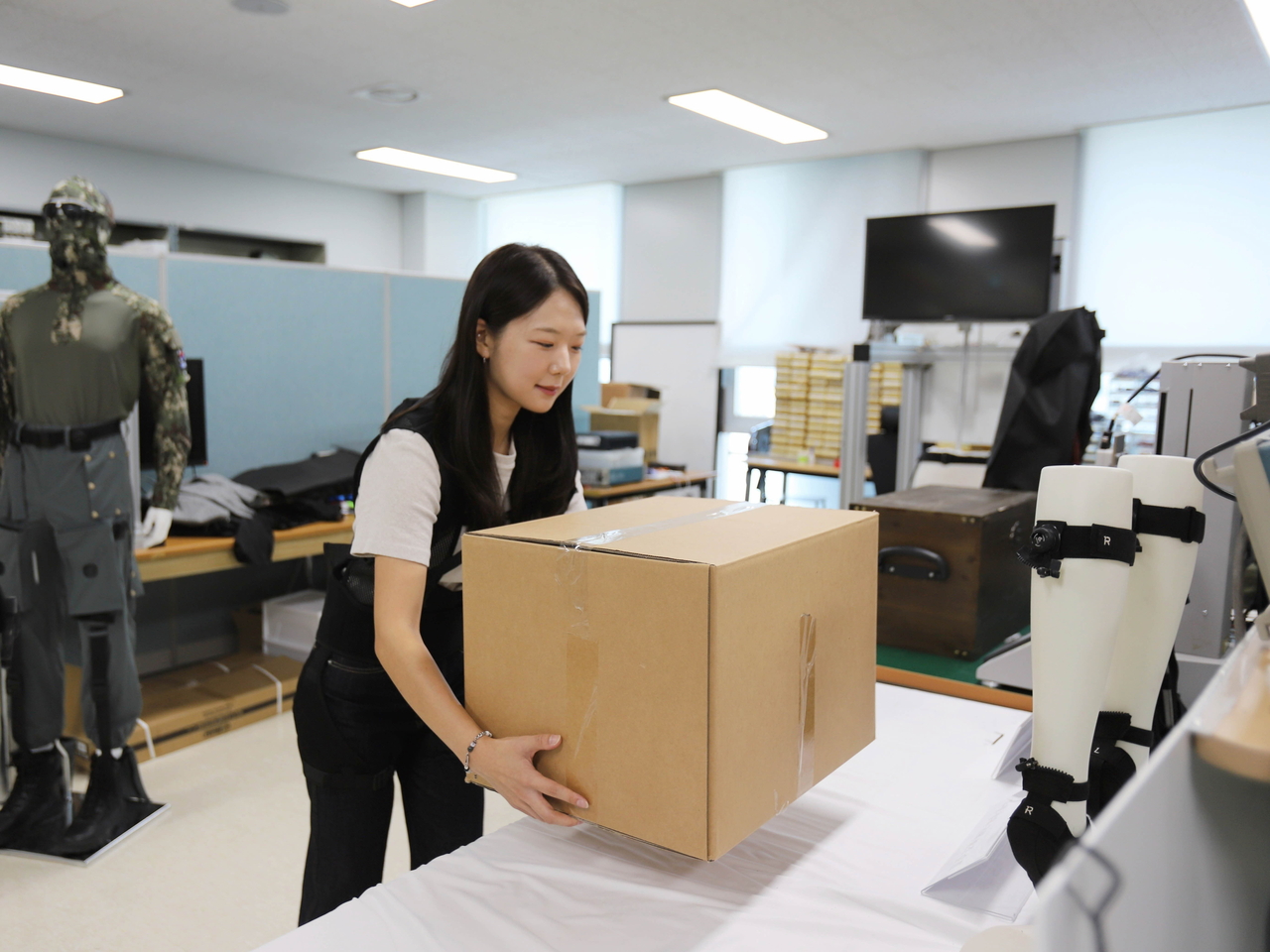
Sartexo also unveiled the Bionic Suit Full, which it describes as the world's first integrated wearable robot to simultaneously support three joints — the lower back, shoulders and elbows — in a single garment.
The company plans to expand the suit's applications beyond logistics and manufacturing into caregiving, rehabilitation, daily life and defense.
Sartexo has also secured the production infrastructure needed for mass manufacturing, developing an automated weaving process that continuously produces muscle fabric and replaces the largely manual methods used previously.
The company is considering pricing the waist-assist model at anywhere from under 1 million won ($746) to the mid-1 million won range, depending on performance specifications and the body areas supported.
"If first-generation wearable robots required the body to conform to a mechanical frame, and second-generation devices strapped equipment onto the body, the Bionic Suit is a third-generation wearable robot where the garment itself augments human strength," Park said.
Park added that the company intends to "translate the research that began at the institute into real products, and develop a robot that anyone can easily wear — not just on the factory floor, but in everyday life."
nbgkoo@heraldcorp.com