Vice minister attends local startup festival, presents ministerial commendations
Visits Seogwipo commercial district to hear small business concerns
Checks consumer trends at Dongmun Market, presents local commerce awards
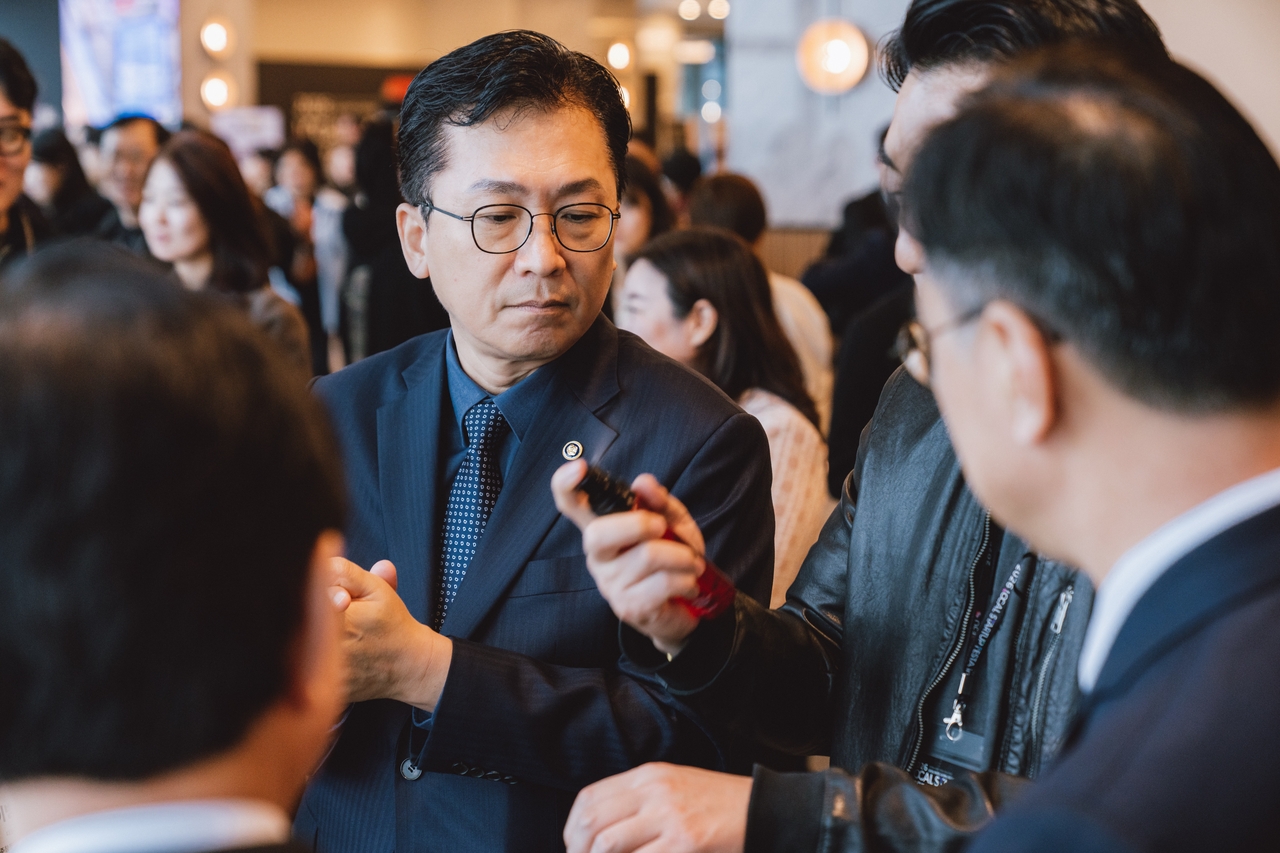
Lee Byung-kwon, second vice minister of the Ministry of SMEs and Startups, visited local businesses and traditional markets across Jeju on Thursday, exploring ways to revitalize the regional economy. The visits aimed to support the growth of local companies that draw on the region's distinctive resources and spread that momentum to commercial districts and traditional markets throughout the area.
Lee arrived in Jeju on Wednesday to attend the opening ceremony of the first Local Startup Festa in Jeju, and went on to visit the Seogwipo Glocal commercial district, Jeju's Dongmun Market and a local commerce performance-sharing event.
The field visits were organized to examine cases in which local companies leveraging regional resources have grown into competitive brands and contributed to the regional economy through investment and expanded distribution channels. The visits also focused on checking consumer trends and the business sentiment of small merchants and traditional markets during the Korea Grand Festival period.
At the opening ceremony of the Local Startup Festa on Wednesday, Lee presented ministerial commendations from the Ministry of SMEs and Startups to three representatives of outstanding local companies and one individual recognized for contributions to their development. Lee then said the ministry would continue to support locally rooted companies in growing into competitive brands capable of entering global markets.
Held for the first time this year under the slogan "From local to global, regional values into the future," the Local Startup Festa brought together about 140 local companies from across the country, 11 domestic and foreign investment firms, five major brand and retail companies, and 13 overseas buyers to explore opportunities for attracting investment, expanding sales channels and entering international markets.
Following the opening ceremony, Lee visited the Glocal commercial district in central Seogwipo, touring key shops and startup spaces — including Jeju Aeppongdang, Mangwu Yakbang and Badaboseok — to examine cases of commercial district revitalization linking local cultural and tourism resources with local businesses.
At a roundtable attended by commercial district planners and local small business owners, participants heard about the progress of Jeju's Glocal commercial district initiative and local startup cases, and discussed ways to strengthen the district's competitiveness by drawing on the region's distinctive culture and content.
Earlier Thursday morning, Lee visited Jeju's Dongmun Market to encourage merchants and hear their concerns firsthand. The visit focused on gauging consumer trends and merchants' sense of business conditions at traditional markets during the Korea Grand Festival, which has been running since Oct. 29, while also reviewing policy tasks to strengthen traditional markets and boost the regional economy.
That afternoon, Lee attended a local commerce performance-sharing event held at LPP (Local Player Platform), a multi-purpose local hub in the old downtown area of Jeju.
At the event, the Jeju LPP commercial district and the Juksan-myeon commercial district in Gimje, North Jeolla Province — selected as outstanding local commercial districts through a public vote — were announced and recognized with awards. Growth cases from each district and the results of commercial district-based crowdfunding were also shared.
The Jeju field visits centered on connecting the growth of individual local companies to broader competitiveness gains across regional commercial districts. Supporting the spread of growth effects — from brand development, investment attraction and expanded sales channels for local companies to neighboring shops and traditional markets — was identified as a key priority.
"It is important that the growth of local companies, which start from regional resources and ideas, does not stop at the level of individual businesses but spreads as vitality across the broader regional economy, including surrounding commercial districts and traditional markets," Lee said.
"Going forward, we will step up field-centered support to discover and nurture competitive local companies, and to ensure their growth leads to changes in local commercial districts and traditional markets, the creation of new jobs and the sustainable development of the region," Lee added.
boo@heraldcorp.com