The manual spells out step-by-step procedures covering incident reporting, power restoration, rescue operations and resident support. It also defines the responsibilities of Korea Electric Power Corporation, fire departments and building management offices to speed up on-site response and minimize harm to residents.
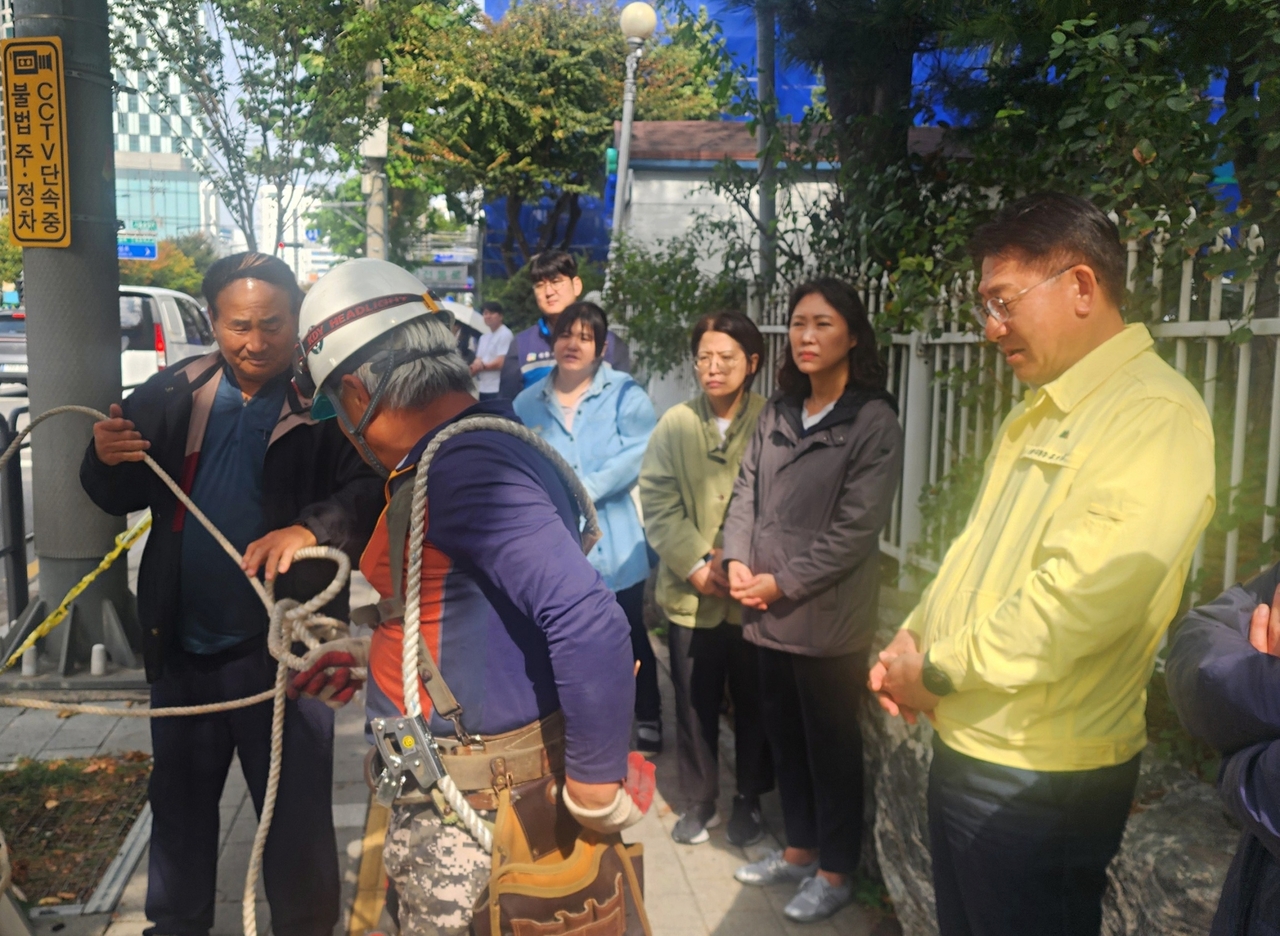
Seongdong-gu in Seoul has developed a power outage response manual for apartment complexes, aiming to minimize harm to residents through swift, coordinated action when blackouts occur.
The manual was prompted by a power outage that struck an apartment complex in the district in October. Working through operational consultations with relevant departments and the Seongdong Fire Department, the district government drew up step-by-step response procedures ready for immediate use on site — covering everything from initial incident reporting through power restoration, rescue operations and resident support.
The manual addresses six core areas: the roles of each party responsible for restoring power and the emergency restoration procedure; backup power management; a cooperative rescue framework for elevator entrapment and other life-safety incidents; links to temporary evacuation shelters and accommodation; resident guidance and complaint handling; and accurate information dissemination.
To reduce confusion during the power restoration process, the manual draws a clear line between the responsibilities of Korea Electric Power Corporation and apartment management offices. Korea Electric Power Corporation handles the external distribution network and power supply equipment up to the point of supply, while management offices are responsible for in-complex wiring, transformers and other substation equipment, and the electrical supply installations serving individual units — an arrangement designed to ensure rapid restoration based on the cause of the outage and the scope of each party's facilities.
The response framework for elevator entrapment incidents has also been spelled out. Management offices are to quickly gather information needed for rescue — including the number of trapped passengers and the elevator's location — and relay it to the fire department, which handles rescue operations and emergency patient transport. Elevator maintenance companies are assigned the role of emergency dispatch and technical support.
The manual also includes advance measures to ensure that residents whose health could be seriously endangered by a power cut — such as those who rely on electric medical devices — receive the necessary rescue and transport assistance.
For prolonged outages, the manual sets out support measures to minimize inconvenience and secondary harm. These include linking residents to temporary evacuation shelters and accommodation and providing drinking water and relief supplies. Management offices will use in-building announcements, notices and, where necessary, emergency text alerts to keep residents promptly informed of the situation and response measures. Resident inquiries will be channeled through management offices as the central point of contact to reduce confusion in information delivery.
Alongside this, the district has strengthened its preparedness by updating emergency contact networks and electrical facility records for apartment complexes in the area, and by compiling a list of backup generators and electrical contractors capable of emergency repairs — laying the groundwork for rapid coordination among relevant agencies when an incident occurs.
"A power outage in an apartment complex directly affects residents' safety and daily lives, so a swift initial response and close cooperation among relevant agencies are essential," Seongdong-gu District Mayor Yoo Bo-hwa said. "We will continuously review our response framework to ensure this manual is used effectively in the field, and do our utmost to minimize harm to residents in the event of an emergency."
seouldream01@heraldcorp.com