The special prosecutor's team investigating the ballot shortage during the June 3 local elections has uncovered evidence that the National Election Commission falsified voting records and launched a forced investigation.
The special prosecutor's team suspects more than 10 NEC employees conspired to alter voting records after the fact and has booked them as suspects, expanding its investigation.
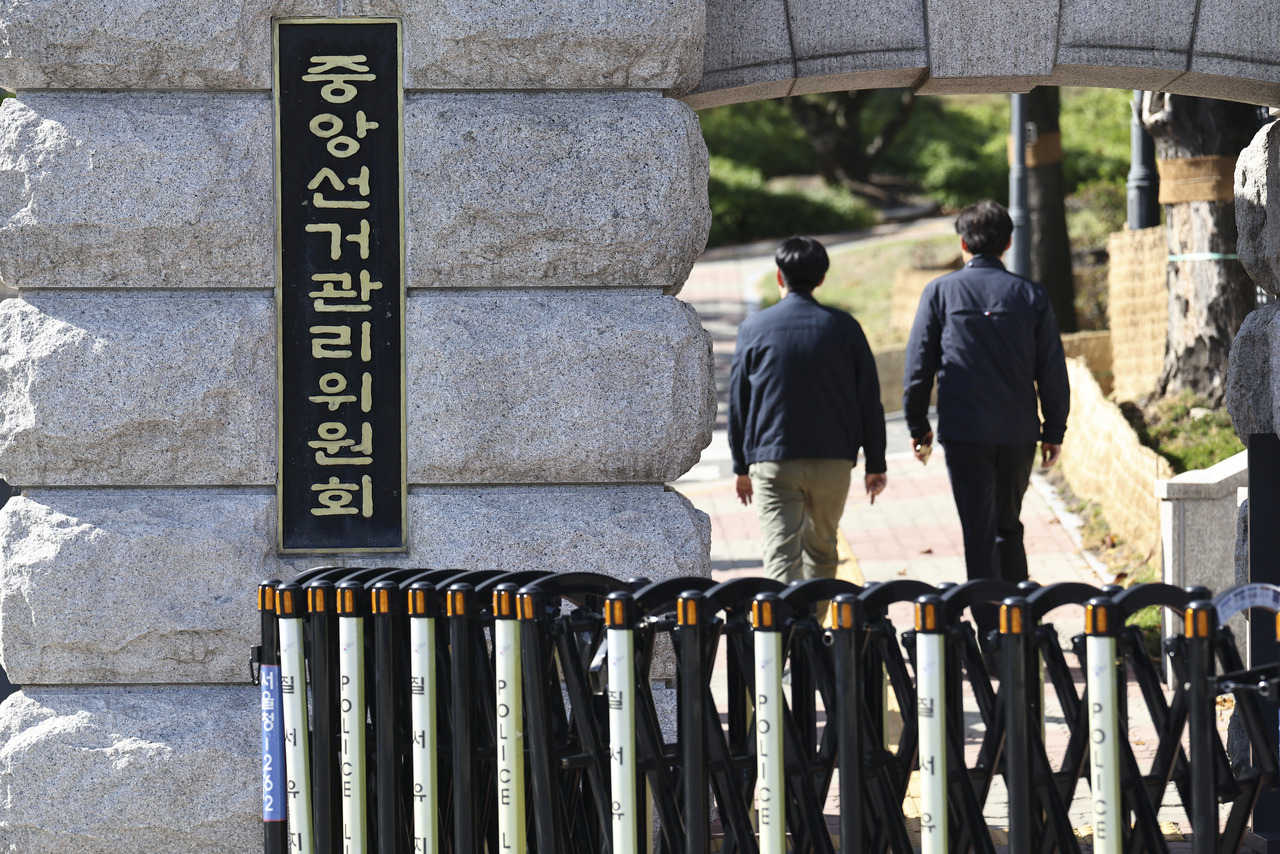
The team determined that voting records from polling stations affected by the ballot shortage had been falsified after the election on the NEC's orders, and on Wednesday raided both the NEC and the Seoul Metropolitan Election Commission.
The search and seizure warrants cited charges including forgery of official documents, uttering of forged official documents and dereliction of duty.
A voting record is an official document completed at each polling station on election day, logging how voting was conducted, including the management and distribution of ballots and the overall voting situation.
Local government civil servants acting on behalf of the NEC at polling stations — in roles such as voting manager — are required to complete the voting record, which must then be sealed after vote counting and preserved until the end of the elected official's term.
The special prosecutor's team found that during this year's local elections, unnumbered ballots — ballots printed without serial numbers due to the shortage — were distributed to more than 140 polling stations and actually used.
Under the Public Official Election Act, ballots must carry printed serial numbers.
While unnumbered sheets may be used as replacements by manually writing in a serial number when a ballot is damaged or defaced, there is no legal basis for using them when ballots simply run short.
The team suspects that, anticipating legal liability and lawsuits over the use of unnumbered ballots, the NEC directed lower-level election commissions to add entries to voting records after the election and then collected the results.
Two days after the election, on June 5, the NEC reportedly issued instructions to provincial and metropolitan election commissions to retroactively supplement and organize any poorly completed voting records because the relevant materials were expected to be released publicly.
As a result, election commissions at various levels were found to have retrieved voting records four to five days after voting ended and arbitrarily added serial numbers to unnumbered ballots or inserted notes in the remarks section — such as statements that they had anticipated a ballot shortage and requested countermeasures from the NEC.
The special prosecutor's team noted that a separate procedure existed for correcting completed voting records but was not followed, and that the NEC itself appears to have received reports on the alterations.
The team said falsified voting records have been found at a minimum of about 40 of the more than 140 polling stations nationwide that received unnumbered ballots due to the shortage.
The falsified records were subsequently collected by the NEC and are believed to have been submitted as-is to the National Assembly and other bodies even after the ballot shortage became a public issue.
In connection with this, the special prosecutor's team is understood to have booked more than 10 people on charges of dereliction of duty and forgery of official documents, including the head of the NEC's election management division and staff from the election divisions of the Seoul, Gyeonggi Province and Incheon election commissions.
The falsification of voting records was not uncovered during the earlier joint police-prosecution investigation. The special prosecutor's team discovered it while analyzing materials obtained from nine election commissions nationwide where the ballot shortage occurred.
On Wednesday, the team simultaneously raided the offices of the NEC chairperson, secretary general, deputy secretary general, director of election policy, director of the first election bureau, the election management division, the planning and finance division, the Seoul Metropolitan Election Commission's secretariat chief, and its election and general affairs divisions.
The investigation appears focused on tracing the chain of approval for the record falsification from the bottom up, in order to establish whether senior NEC leadership was organizationally involved.
Separately, the special prosecutor's team also identified signs of bid-rigging in a project to produce early voting ballot printers, and on Wednesday raided the NEC's election infrastructure division and the offices of Company A, a ballot printer manufacturer, seizing related materials on charges including breach of trust.
The team found evidence that the NEC gave preferential treatment to Company A in a project to produce 2024-model early voting ballot printers and purchase consumables — including leaking the project plan to the company before the public tender was announced.
After a performance evaluation, Company A unilaterally modified the ballot printers to accept only its own proprietary ink, in breach of contract, yet the NEC turned a blind eye.
The NEC also changed internal guidelines to require election commissions at all levels nationwide to purchase consumables such as ink — originally designated for procurement from small businesses and small merchants — exclusively from Company A through sole-source contracts.
The special prosecutor's team believes the NEC created a monopoly supply structure that allowed Company A to sell not only the ballot printers but also consumables such as ink throughout the machines' 10-year service life.
The total value of the contracts amounts to 45.9 billion won ($34.2 million).
Earlier, on Monday and Tuesday, the special prosecutor's team had raided 18 NEC divisions — including the chairperson's office — in connection with allegations of improper payments of clean-election promotion activity funds to the NEC chairperson and non-standing commissioners.
husn7@heraldcorp.com