OE supplier to 30-plus brands, 120-plus models
Daegu PG test track feeds Changnyeong factory
Robots carry, AI inspects — 11 million tires a year
Premium brand sales up 80% in a year
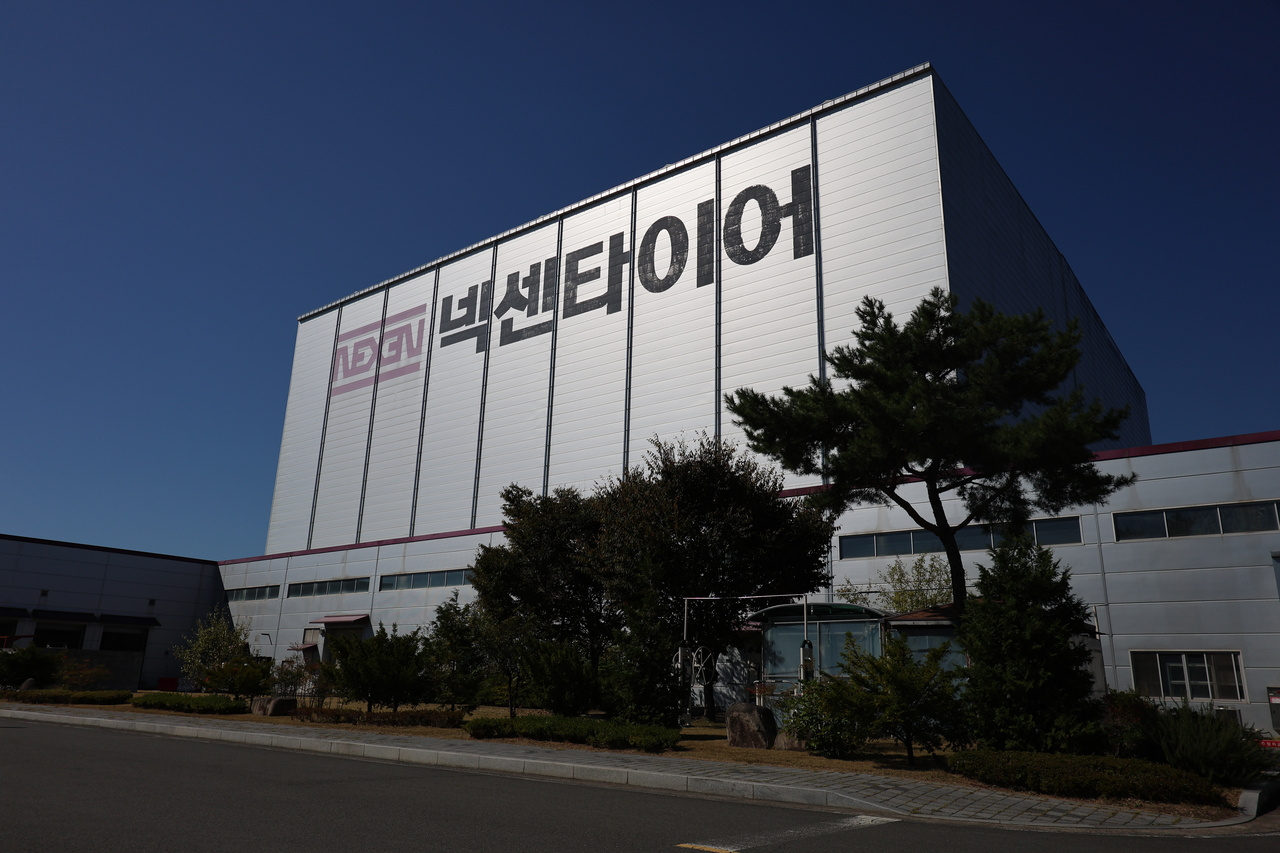
A car traveling at 100 kilometers per hour swerved sharply to the right, then immediately back to the left. Even with advance warning, the sudden lateral force drew an involuntary gasp. Then the speed climbed to 120 kph and the car crossed two lanes at once — the faster pace and wider arc sending the chassis into an even more pronounced sway.
At Nexen Tire's Driving Performance Evaluation Center — known as Daegu PG — on Oct. 22, vehicles from a range of brands were circling the high-speed oval, putting premium tires through their paces. The center serves as the final verification stage for premium tire performance, where ride comfort and handling characteristics are locked in during the last phase of development.
Tires that clear those tests are then produced at the Changnyeong factory in South Gyeongsang Province, just 6 kilometers away. The plant uses AI and automation technology to manufacture tires destined for European premium brands including Porsche, Mercedes-Benz, BMW and Audi.
Raw materials to shipment along 1 km — building a tire layer by layer
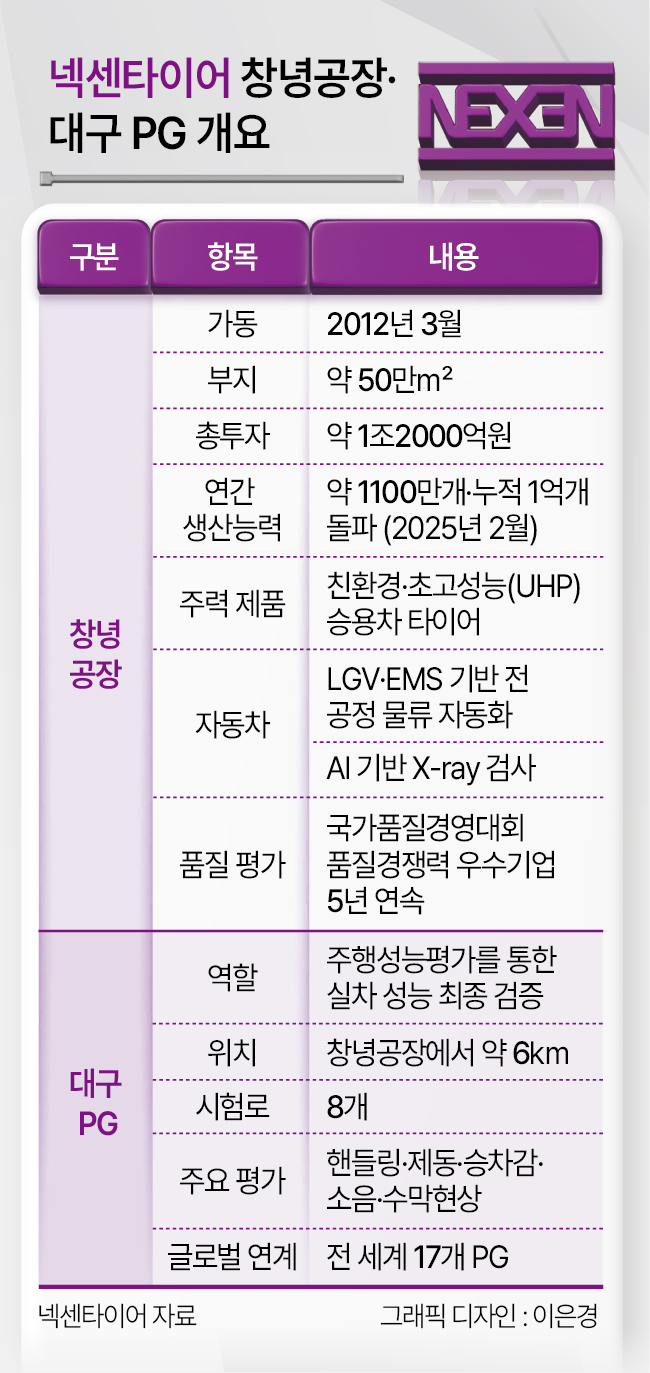
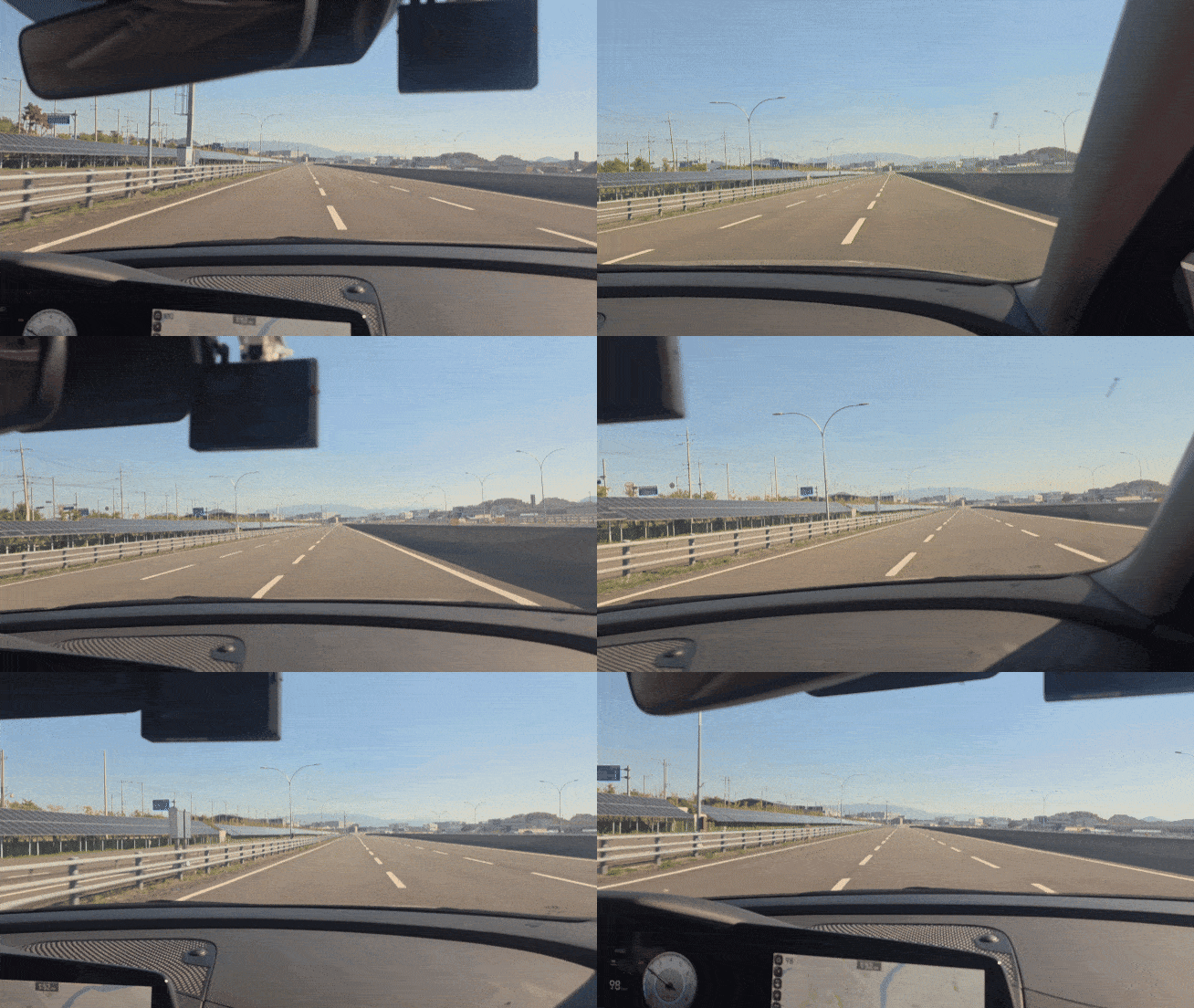
The Changnyeong factory, Nexen Tire's third production base, began operation in March 2012. The site spans about 500,000 square meters and required an investment of 1.2 trillion won ($895 million). Annual production capacity stands at about 11 million tires, with 31,000 to 32,000 units rolling off the line each day. Last February, cumulative output surpassed 100 million tires.
Inside the plant, two production lines each stretching about 1 kilometer run in sequence, arranged in the order of the manufacturing process. The layout was designed so that everything — from receiving raw materials to producing finished tires and loading them into containers — flows in a single direction, minimizing movement between processes.
Stepping into the compounding building, the first stop on the line, the sharp smell of chemicals was immediately noticeable. Compounding is the process of mixing rubber — the primary raw material — with various chemical agents. Though the resulting material may look uniform, the tread that contacts the road and the sidewall are compounded differently from this very first stage. Workers on the upper floor feed black natural rubber, white synthetic rubber and chemical agents into the system; mixing equipment blends them and sends the compound down to the ground floor, where it moves on to the calendering process.
Calendering produces four types of semi-finished components that go into each tire. Working inward from the outer tread, the layers stack in order: cap ply, steel belt, carcass and inner liner.
The carcass forms the tire's basic skeleton, while the inner liner is a rubber layer that replaces the traditional tube and keeps air from escaping. The steel belt is a strip of rubber-coated steel wire that firmly supports the tread to maintain stable ground contact and prevents damage from nails or stones from spreading into the tire's interior. The cap ply, a rubber-coated nylon fabric layer, sits between the steel belt and the tread.
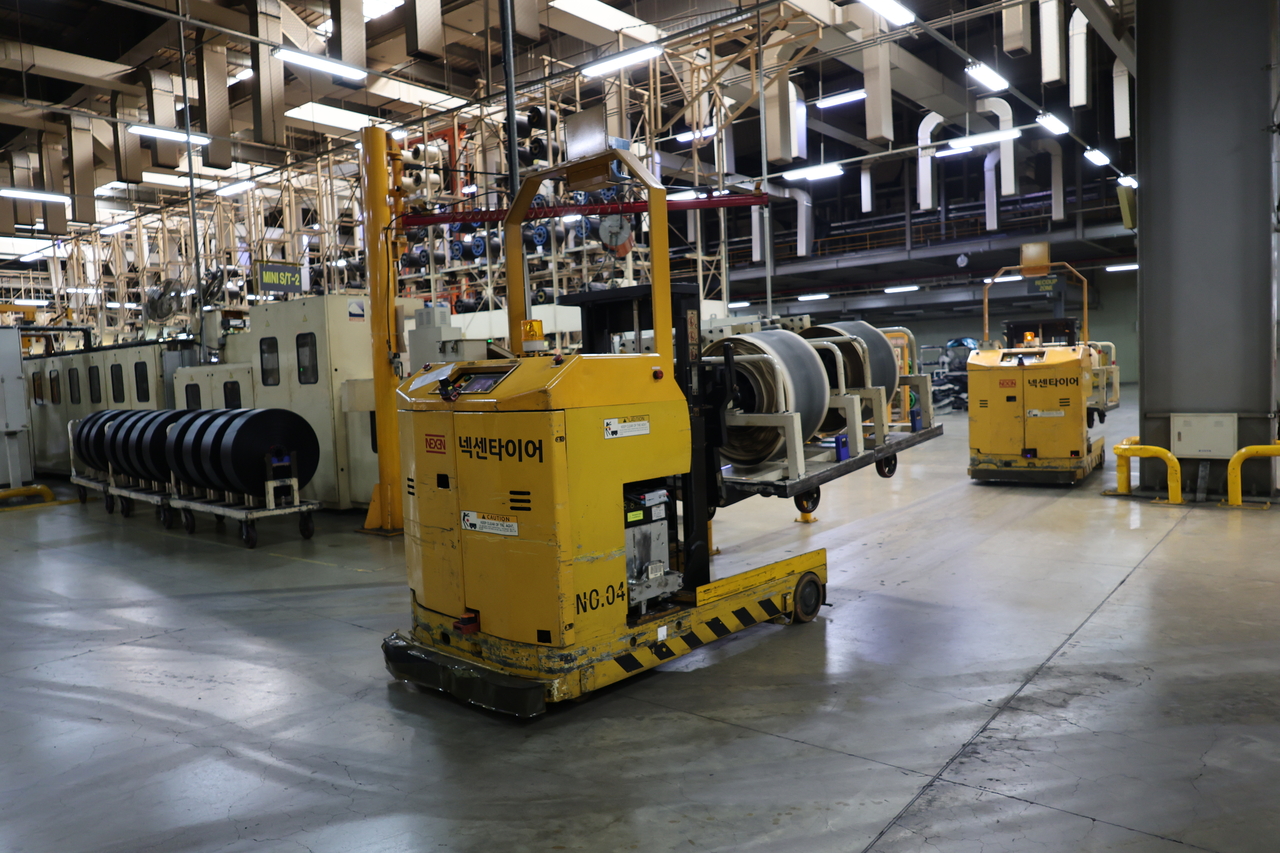
Once produced, the semi-finished components are automatically cut to the specifications of each tire size. Between processes, yellow laser-guided vehicles — LGVs — ferry the components back and forth. Front and rear sensors allow the vehicles to stop automatically when they detect a person or obstacle; when two LGVs' paths overlap, one yields to keep the line moving smoothly.
Riding the ceiling rail — 10 minutes in the 'waffle iron' to finish
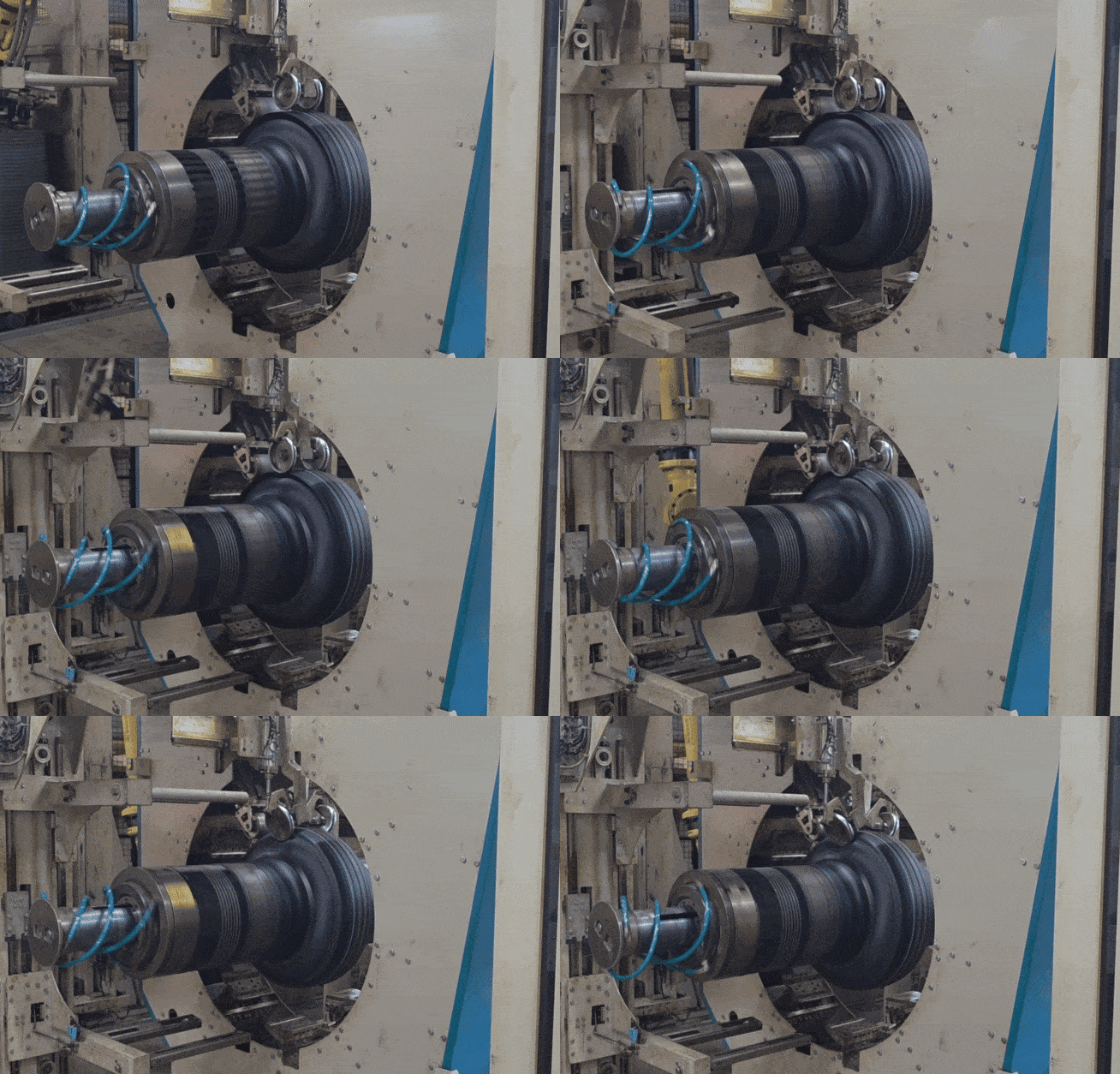
In the building process, semi-finished components are wrapped around a drum in sequence to form a "green tire" — the uncured tire before vulcanization. The area is kept as clean as possible, since any foreign matter at this stage can cause defects.
Assembly is fully automated. Two forming drums on either side rotate independently, each wrapping its components before the two halves come together in the center to create the tire's shape. The steel belt, cap ply and tread wind on one after another.
From the green tire stage onward, a barcode is attached to each unit so the system can track when and as what product it was made. The green tire is then loaded onto an electric monorail system and carried along the ceiling to the curing press.
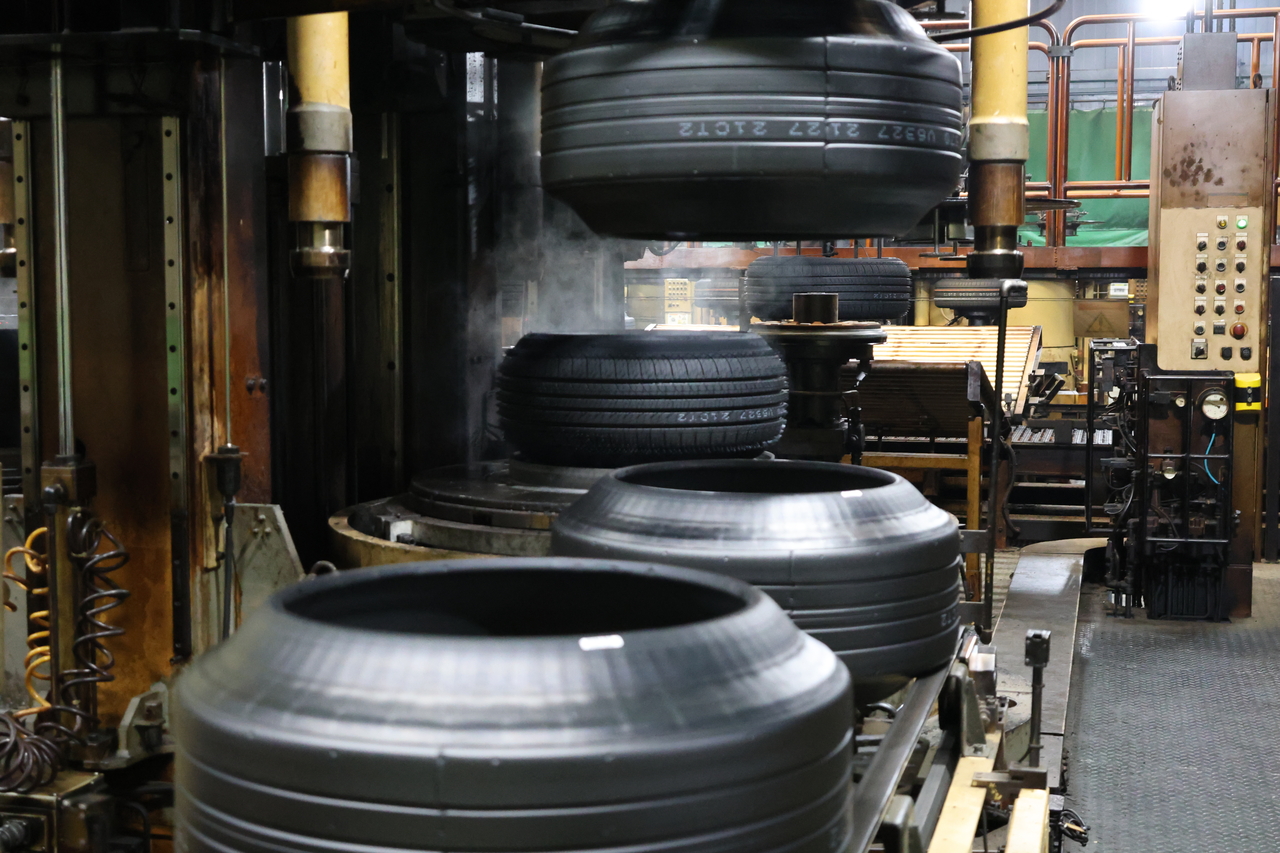
Curing applies heat and pressure to the green tire to alter its chemical properties. Inside a metal mold, the tire is pressed for about 10 minutes — similar to pouring batter into a waffle iron — during which the tread pattern and sidewall lettering are imprinted. When the press opened, steam rose from the freshly cured tire; automated equipment removed it and inserted the next green tire.
A separate sound-absorbing foam line serves the shift toward electrification. A yellow robotic arm reaches inside the tire, attaches a sponge-type acoustic absorber and rotates the tire to finish the job. The entire process — from cutting the foam to bonding it — is automated.
AI reads defects at 99.56% accuracy — robots handle the 50-meter warehouse
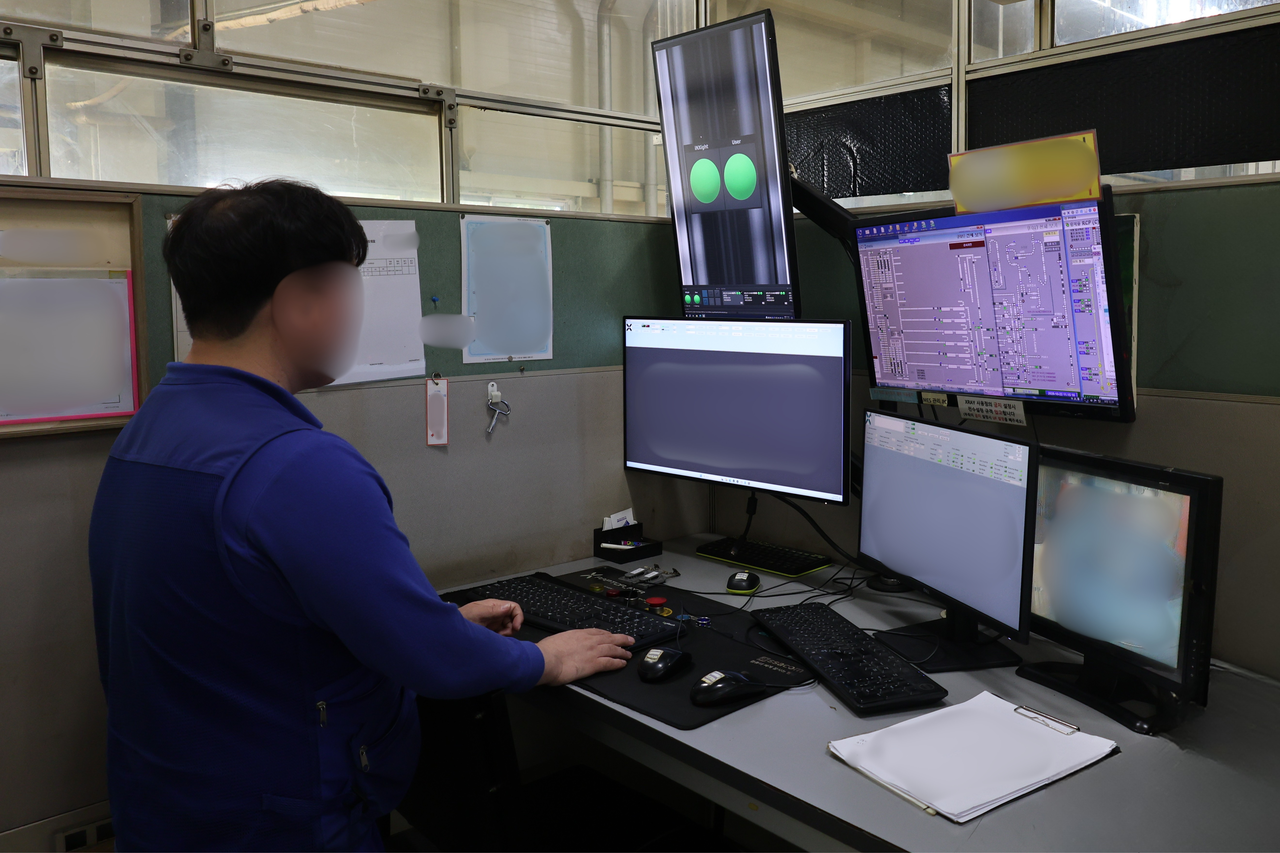
Finished tires go through a three-stage inspection. First, inspectors examine the exterior by eye and by hand. Next, the tire is inflated and spun as it would be on a vehicle to measure uniformity — an imbalance would cause noise, steering-wheel vibration and uneven wear once mounted. Finally, the interior is examined with X-rays, much like a medical scan.
The X-ray inspection is conducted jointly by human inspectors and AI. The AI uses a vertical monitor mounted above, while the inspector reads a lower screen and makes the final call. A green result on both means the tire passes. The AI system, introduced in 2024, was trained on judgment data from experienced inspectors and achieves a detection recall rate of 99.56 percent. It has since been deployed across all four of Nexen Tire's domestic and overseas factories.
After inspection, tires are scanned by barcode and automatically sorted by specification. They are then moved into an automated warehouse about 50 meters tall, where cranes handle both inbound storage and outbound retrieval. What once required 20 to 30 workers doing the job by hand is now managed entirely by robots, which the company says has also eliminated errors that previously arose from failing to distinguish the subtle differences in inch size and width between tire models.
Stepping outside after the factory tour, containers from global shipping lines — HMM, Evergreen and Maersk — were lined up in the yard. About 40 percent of the Changnyeong factory's output consists of original equipment tires, which are shipped to premium automakers and markets around the world.
Volkswagen and Porsche came to see for themselves — all four European premium brands secured
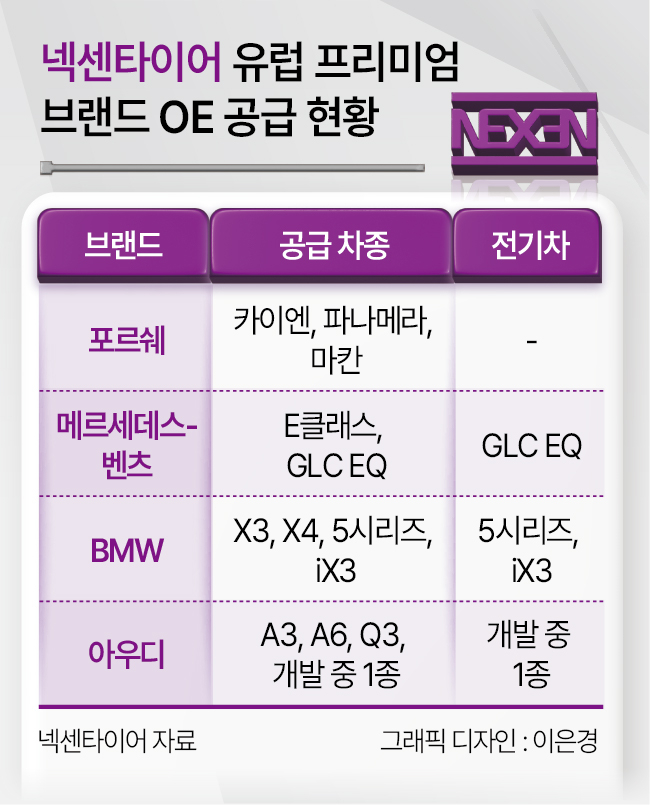
A company official said Volkswagen and Porsche each visited the factory in person before deciding to place orders. The fully integrated logistics automation system developed at Changnyeong was replicated at Nexen Tire's European plant in Zatec, Czech Republic, which cost about 900 million euros ($1.01 billion) to build. Europe accounts for 46 percent of Nexen Tire's sales as of the second quarter.
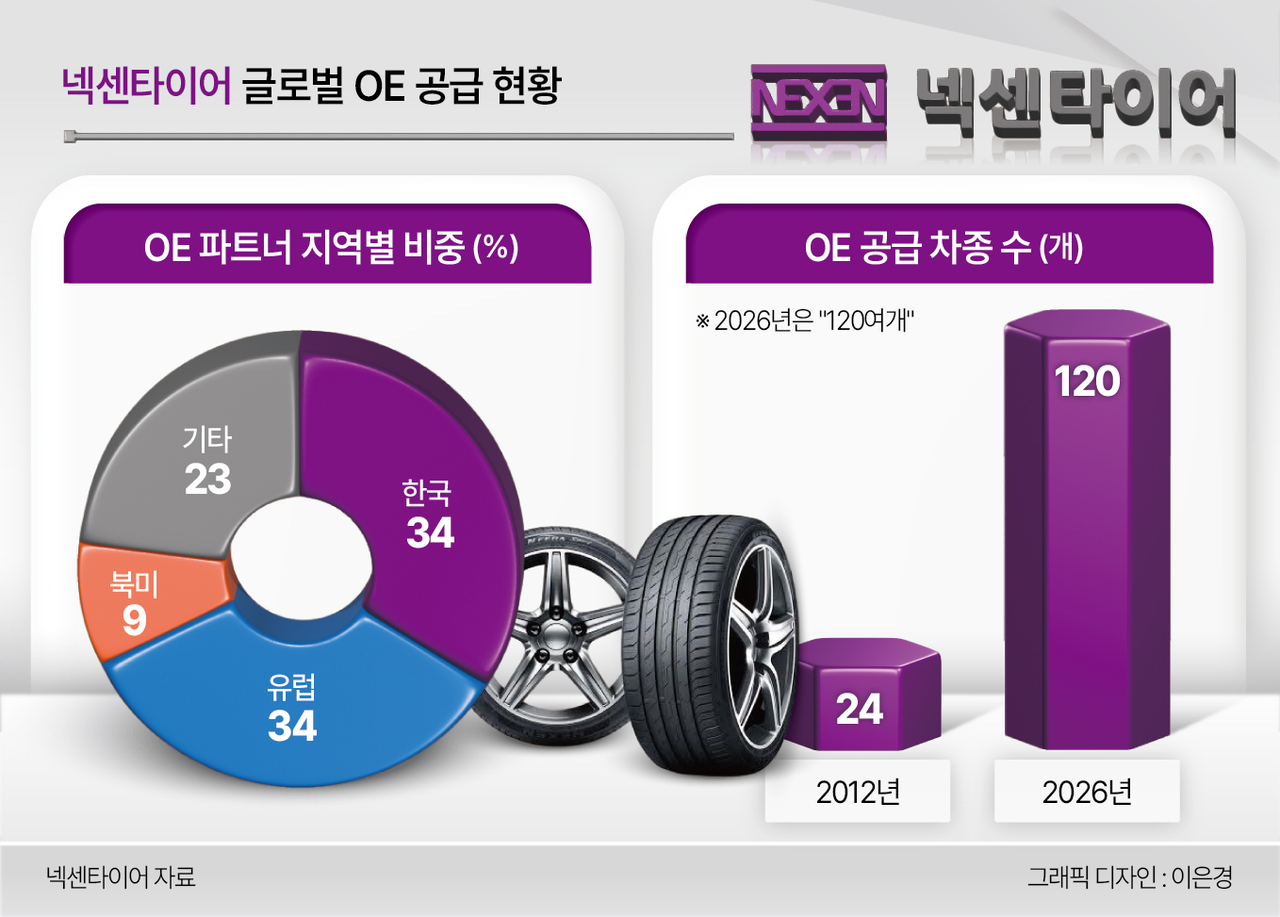
Nexen Tire currently supplies original equipment tires to more than 30 automaker brands across about 120 models — five times the 24 models it served when it made its first overseas OE delivery in 2012. Starting with Porsche in 2016, the company expanded its roster to include Mercedes-Benz, BMW and Audi, and was also named the first tire partner for BMW's Neue Klasse lineup.
Sales to those four premium brands in the first half of this year rose about 80 percent from the same period last year. In the second quarter, Nexen Tire also began supplying OE tires to China's BYD for the first time.
The company's overall scale has grown as well. Last year's sales reached 3.19 trillion won, up 12.0 percent from the previous year and surpassing 3 trillion won for the first time. Operating profit, however, slipped 1.1 percent to 170.3 billion won. In the first half of this year, sales came to 1.73 trillion won, up 9.8 percent year on year, while operating profit rose 6.2 percent to 88.5 billion won.
Pushing to 160 kph — 'developing the tire that fits each vehicle perfectly'
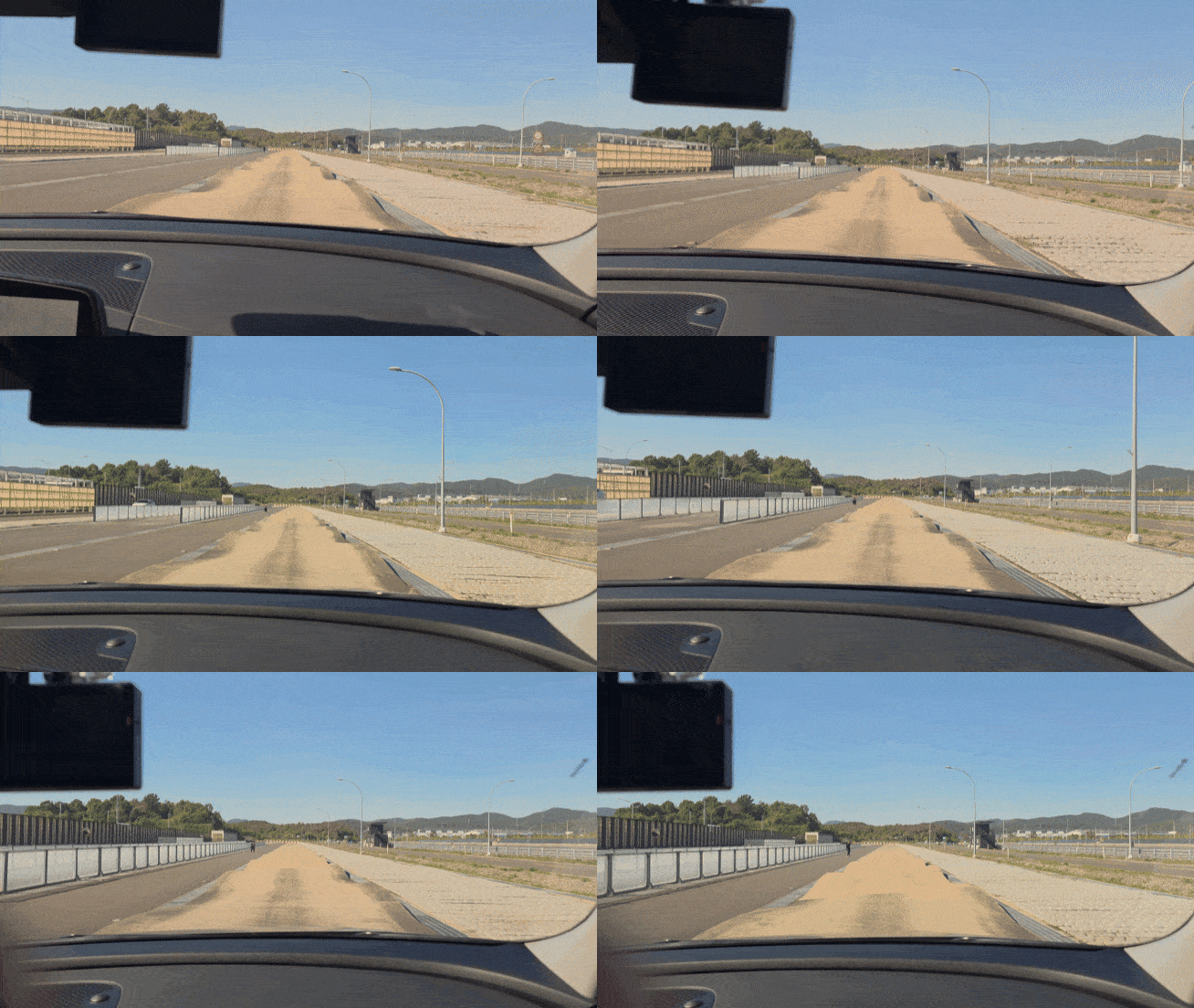
Daegu PG is the final verification hub for high-performance tire development. Located a five-minute drive from the Changnyeong factory, it has eight test tracks and is used exclusively by Nexen Tire and Renault Korea. The center's proximity to the production plant means test results can be fed back into manufacturing almost immediately. It also links with 17 test facilities worldwide, centered on Nexen Tire's overseas technical centers.
When an automaker designates a test vehicle, engineers mount one reference tire alongside three or four prototype tires with different internal structures, rotating through the combinations to find the optimal match.
The test drive began with a "ride" evaluation focused on comfort. The car ran over a cement surface at 60 kph and then over a long undulating wave road at 30 kph, testing how well the tire filtered out minor vibrations. Tires absorb impact like a spring, and that stiffness must align with the vehicle's suspension to prevent vibrations from amplifying.
Next came a "handling" evaluation on the high-speed oval. Banked curves of about 30 degrees on either side allow the car to maintain speed through corners. Testing starts at 100 kph. The first exercise is an "on-center" assessment, in which the steering wheel is turned through very small angles to check whether the carcass — the tire's core structure — responds correctly.
Moving into the "off-center" lane-change evaluation, a senior research engineer advised imagining the car divided into four quadrants — front, rear, left and right — and feeling how each section moves. When the wheel is turned, the front tire on the turning side responds first. The evaluation tracked how much that tire compressed and how quickly it rebounded, along with the car's fore-and-aft pitching, lateral rolling and rotational yawing. In actual assessments, speeds climb to 160 kph for all-season tires.
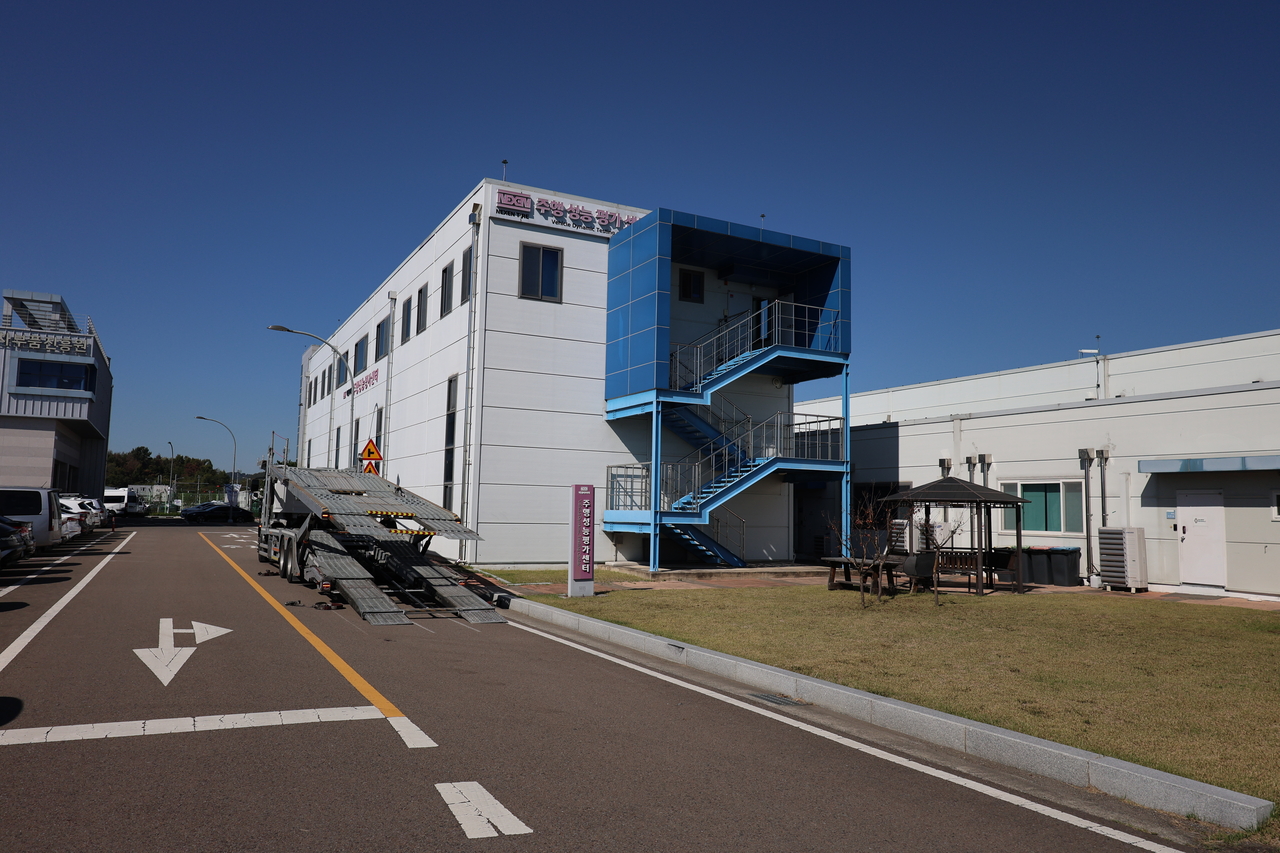
Evaluations are divided into subjective assessments — where the evaluator drives and scores the tire — and objective measurements taken with instruments. On the subjective scale of 10, OE tires must score at least 7.2 and replacement tires at least 6.5. Objective measurements compare the test tire against a reference tire across three criteria: braking distance on dry and wet surfaces, noise and vibration (NVH), and the speed at which hydroplaning occurs. Certification tests that determine tire label ratings — including wet-grip braking performance and pass-by noise — are also conducted at the center.
"It's not that a tire becomes good just because one area is strong — the overall balance has to be right," the senior research engineer said. "Even a small change in the internal structure completely alters performance, which is why we carry out such meticulous testing."
eyre@heraldcorp.com