Sales reach 4.5 trillion won, operating profit 552.3 billion won
Both figures up 13.1% and 1,040% year-on-year, respectively
Wireless business rebounds; company eyes largest AI ecosystem in South Korea

SK Telecom posted strong third-quarter earnings by advancing on two fronts simultaneously — its core telecom business and AI ventures — signaling that the company has shaken off the fallout from last year's hacking incident and returned to its normal performance trajectory.
SK Telecom said Wednesday its consolidated sales for the third quarter of 2026 reached 4.5 trillion won ($3.35 billion), with operating profit coming in at 552.3 billion won.
Sales rose 13.1% from a year earlier, driven by growth in both wired and wireless telecom services. Operating profit surpassed 500 billion won for the third consecutive quarter, up 1,040% year-on-year, as the company continues to recover from the hacking incident.
On a standalone basis, sales reached 3.16 trillion won, operating profit 413.5 billion won, and net profit for the period 298.9 billion won. The quarterly dividend was set at 830 won per share, unchanged from the first and second quarters of this year.
The telecom business served as a solid earnings anchor during the quarter.
On the wireless side, SK Telecom topped all three major domestic customer satisfaction surveys this year — the National Customer Satisfaction Index, the Korean Standard-Service Quality Index (KS-SQI) and the Korean Customer Satisfaction Index — demonstrating a recovery in consumer trust. Wireless revenue has also shown a gradual upward trend.
Fixed-line telecom sales grew 7.4% year-on-year, supported by an increase in high-speed internet subscribers.
Progress on the AI business front is also becoming visible. The AI data center business gained full operational footing with the launch of SK Hyper in July and SK Horizon in August.
SK Horizon is building new data centers with a combined capacity of about 180 megawatts in Ulsan and Seoul. The company also plans to expand its submarine cable business in stages.
SK Hyper is in discussions with prospective customers in the Ulsan area over terms and conditions. Once agreements are finalized, the company plans to move quickly on infrastructure development using secured sites.
On the AI services side, SK Telecom is focused on broadening the application of its proprietary AI foundation model across its A. (Eidot) consumer AI service and enterprise AI offerings. Through its participation in the "Modoo's AI" initiative, the company aims to combine its telecom and AI capabilities to build the largest AI service ecosystem in South Korea.
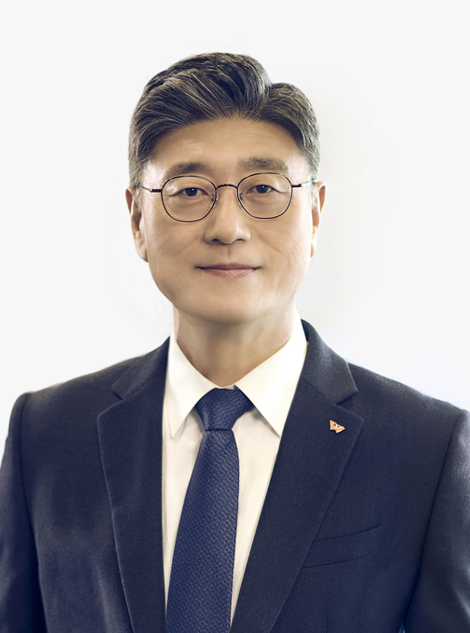
"We were able to achieve results in both recovery and growth, anchored by our two pillars of telecom and AI," said Park Jong-seok, SK Telecom's chief financial officer. "Going forward, we will work to connect our telecom and AI businesses as a single growth strategy and amplify the synergies between them."
Meanwhile, academics have credited SK Telecom with making meaningful progress in rebuilding trust through customer protection measures, compensation programs and information security investment following the hacking incident.
According to statistics presented by Shin Min-su, a professor at Hanyang University, at a seminar on "Corporate Management Crises and Responses" held at the Korea Press Center in Jung-gu, Seoul, on Oct. 28, SK Telecom's average monthly churn rate climbed to 1.6% in the second quarter of last year — immediately after the incident — but fell back to 0.8% in the second quarter of this year, close to the pre-incident level of 0.7% recorded in the first quarter of last year.
After hitting a low in the fourth quarter of last year, the number of mobile subscribers posted a net gain of 156,842 in the number-portability market from January through July of this year.
sjpark@heraldcorp.com