Cheongna media complex project gains momentum
Songdo bio cluster to expand R&D, startup and workforce functions
New free economic zone designation sought for southern Ganghwa
3.1 trillion won to be invested through 2035
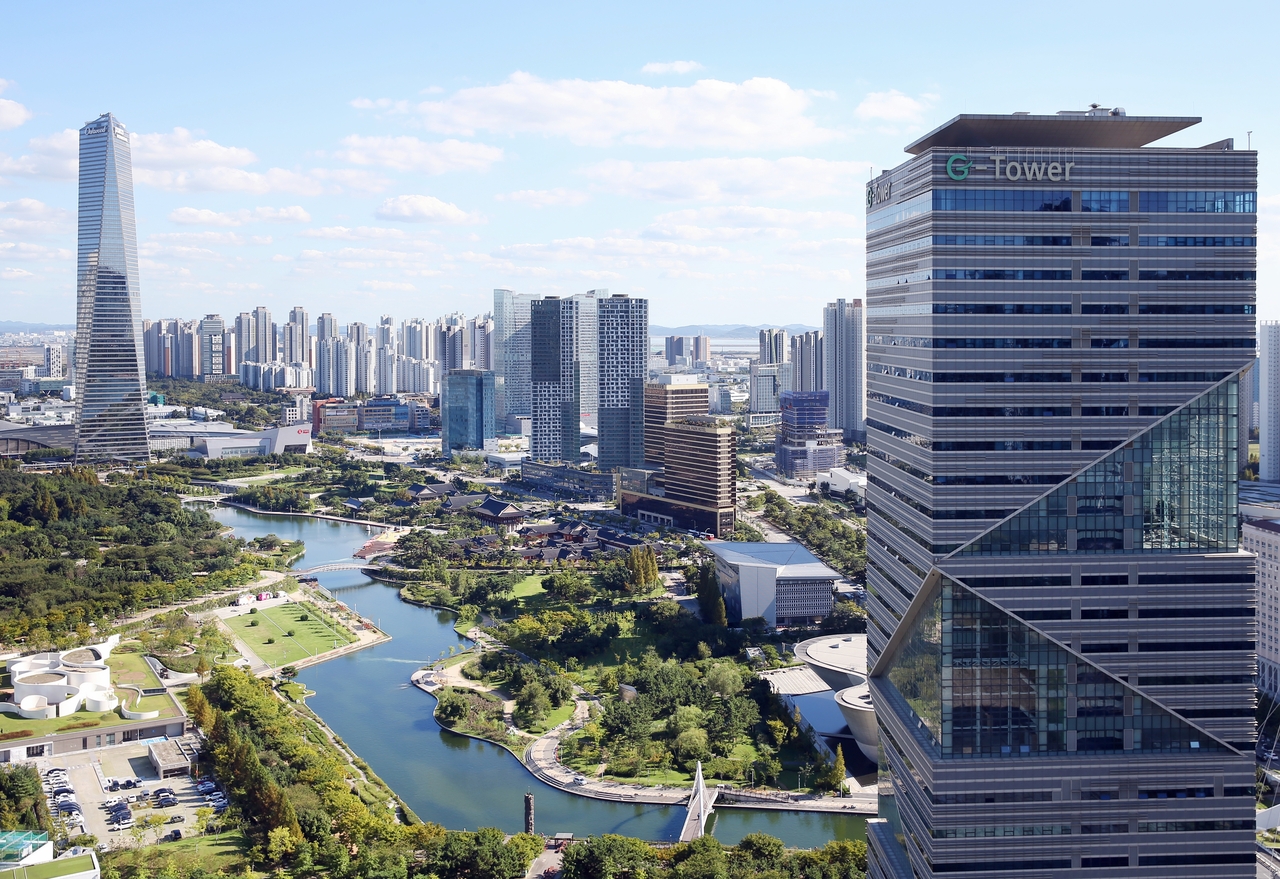
The Incheon Free Economic Zone is pushing to transform itself into a hub for future industries combining K-content, biotechnology and advanced technology.
The strategy calls for upgrading the industrial base already established in Songdo, Cheongna and Yeongjong while extending the development axis to southern Ganghwa-gun to sharpen the zone's competitiveness in attracting global investment.
The Incheon Free Economic Zone Authority said Wednesday it plans to strengthen investment attraction around strategic industries in alignment with Incheon city's "ABC+E" future industry development strategy, and to build industry ecosystems tailored to the characteristics of each district.
The authority aims to cultivate the cultural content industry as a new growth engine for Cheongna, and to add research and development, startup support and professional workforce training to the Songdo bio cluster to lift its industrial competitiveness.
The long-delayed project to build a media and cultural complex in Cheongna International City has secured fresh momentum. The development plan amendment for "SOM City," the Cheongna media and cultural complex project, was approved as submitted at the 149th Free Economic Zone Committee meeting held in October, laying the groundwork for the project's normalization.
The core of the plan is to concentrate film and video production facilities — including indoor and outdoor shooting studios, open sets and a media center — along with cultural and tourism facilities leveraging content intellectual property rights, on a roughly 188,282-square-meter site within Cheongna International City.
Through the revised development plan, the land-use scheme has been reorganized around the content industry, and the target completion date has been adjusted to December 2031.
The authority intends to develop the Cheongna media and cultural complex into an industrial hub capable of drawing domestic and international content companies and investment capital.
It plans to build an integrated industrial ecosystem combining film production, culture, tourism and consumption by linking the complex with the nearby Shinsegae Starfield Cheongna. The complex is also drawing attention as the Cheongna anchor site for Incheon city's "K-Culture Eum" initiative.
If connected with local cultural assets such as Jemulpo and Munhak, the project is expected to drive broader expansion of Incheon's cultural tourism industry.
Songdo International City is seeking to evolve from a world-class biopharmaceutical production base into a global biotech hub that also encompasses research and development and startup incubation.
Two major projects are being advanced to support that ambition: the K-Bio Lab Hub and a WHO Global Biotech Workforce Training Hub.
A groundbreaking ceremony for the K-Bio Lab Hub — a national biotech startup support facility — was held in September at Yonsei University's international campus.
Targeting completion in 2029, the facility is modeled on LabCentral, a biotech startup support organization in Boston.
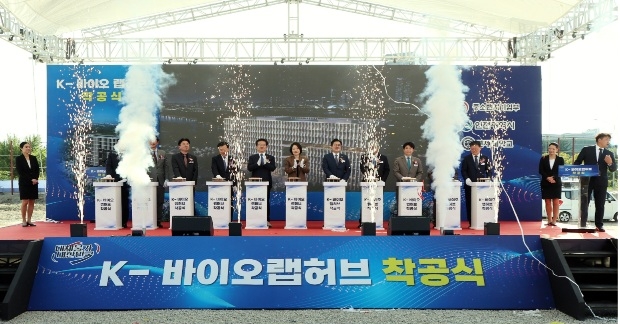
The facility is designed to support biotech startups at each stage of growth — from research and development through to technology commercialization — broadening the industrial base of the Songdo bio cluster.
Last month, a WHO Global Biotech Workforce Training Hub practical training center spanning about 2,492 square meters opened at Yonsei University's international campus. Equipped with facilities for hands-on instruction in biopharmaceutical production processes and quality control, it will support the training of vaccine and biopharmaceutical specialists from low- and middle-income countries.
The growth potential of Incheon's biotech industry is also reflected in production figures. According to data from the Bank of Korea's Incheon branch, Incheon's pharmaceutical and biotech industry output reached 7.7 trillion won ($5.74 billion) in 2024, accounting for 61.8 percent of national production.
The Songdo bio cluster's production capacity stands at 1.16 million liters, the largest of any single city in the world.
The authority plans to leverage that production strength by linking it to research and development, startup support and workforce training to raise the industry's added value.
It is also pursuing plans to develop part of the reserved land in phase three of Yeongjong Sky City as a biotech-specialized complex, extending the biotech functions currently concentrated in Songdo.
The authority is also giving concrete shape to a plan to develop southern Ganghwa-gun as a new industrial growth axis.
The proposed site for a new free economic zone designation in southern Ganghwa-gun covers 6.32 square kilometers across the Gilsang-myeon and Hwado-myeon areas of Ganghwa-gun.
The authority is pursuing a plan to invest about 3.1 trillion won through 2035 to develop the area into a future industry hub combining green and blue biotech, physical AI and complex tourism.
The intent is to add biotech, advanced technology and tourism functions from southern Ganghwa-gun to the existing industrial base in Songdo, Cheongna and Yeongjong, simultaneously expanding both the geographic scope and industrial role of the Incheon Free Economic Zone.
The authority is also preparing a second IFEZ development plan that consolidates all of these initiatives. It will include revised district-level development plans to respond to global supply chain restructuring and shifts in the industrial environment, as well as strategies for upgrading the innovation ecosystem and building a global future city.
The plan is to be submitted to the Ministry of Trade, Industry and Energy after a final review in December.
Kim Jong-cheol, commissioner of the Incheon Free Economic Zone Authority, said upon taking office that the zone must shift from development-project-driven investment attraction to a strategic approach that responds to national industrial strategy and changes in global supply chains. The goal, he said, is to build an innovation ecosystem that connects corporate technology and capital with universities, research institutions and startups to generate new industries and quality jobs.
The Incheon Free Economic Zone, designated as South Korea's first free economic zone in 2003, has grown by attracting advanced industries and global companies.
As of end-2024, the zone was home to 3,860 businesses employing 122,832 workers, with combined sales of 113.26 trillion won. Cumulative foreign direct investment filings reached $17 billion as of end-2025.
gilbert@heraldcorp.com