Democrats projected to win 242 House seats, 53 Senate seats
Some analysts see a 'blue tsunami' landslide in the making
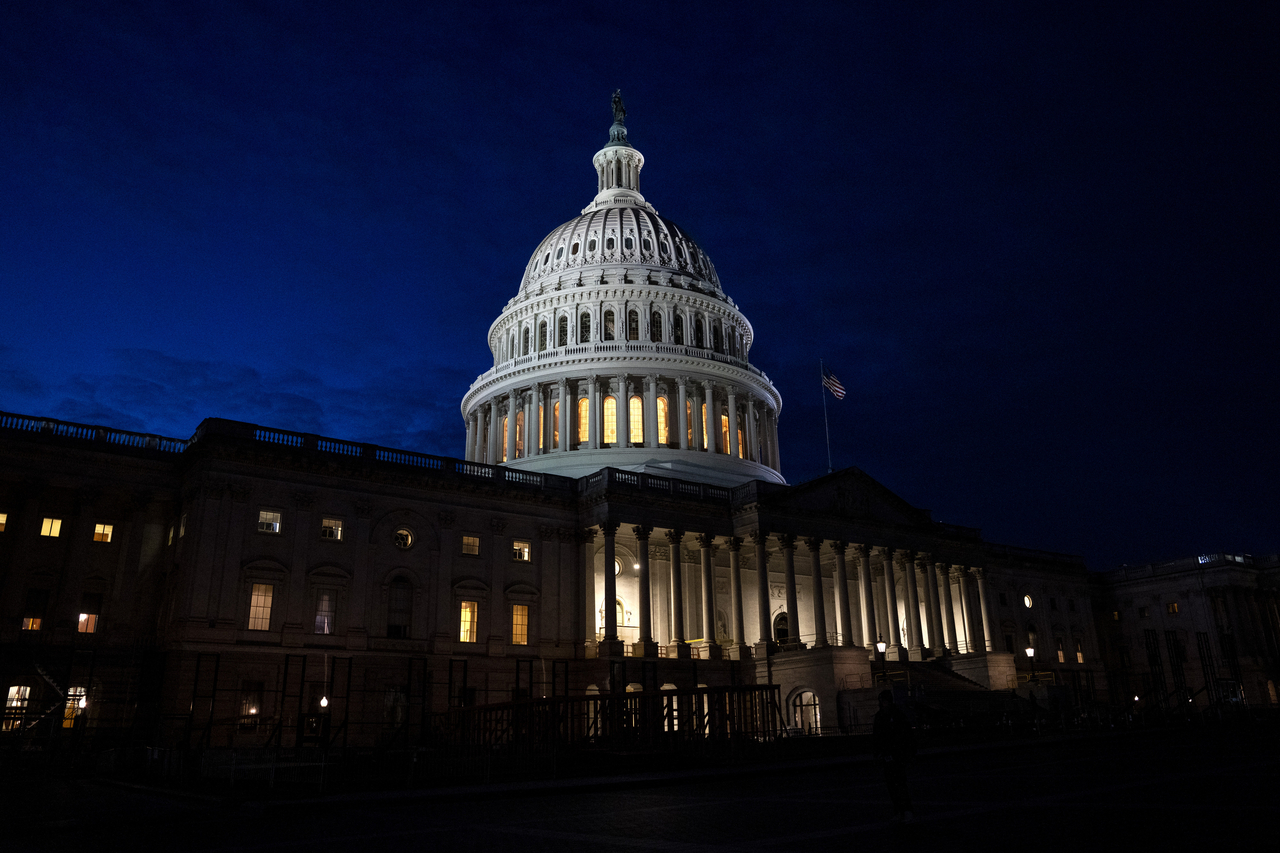
Harvard University's election model gives Democrats a 96 percent chance of winning the House and a 78 percent chance of taking the Senate in Tuesday's midterm elections.
Harvard projected Tuesday (local time) that Democrats have a 96 percent chance of recapturing the House majority, winning as many as 242 of 436 seats. The university said the odds of a Republican House victory were comparable to rolling a 20 on a 20-sided die, describing the contest as "a typical midterm election in which the party in power loses seats."
In the Senate, Harvard put Democratic odds at 78 percent, forecasting the party would win 53 of 100 seats to reclaim the majority.
Of the seven competitive Senate races, Harvard rated Texas, Ohio, Kansas and Alaska as leaning Democratic, while South Carolina and Nebraska were seen favoring Republicans. Iowa was rated a toss-up — a characterization backed by late polling that showed the two parties tied there.
Some analysts went further, suggesting Democrats could deliver not just a "blue wave" but a "blue tsunami" — a sweeping landslide victory.
Election forecaster Nate Silver said a blue tsunami was within reach, basing his assessment on a poll released Sunday by The New York Times and Siena College. Silver gained national recognition after correctly predicting the winner in 49 of 50 states in the 2008 presidential election.
The New York Times poll showed Democrats leading in six of the seven competitive Senate races. Only Iowa was tied; Democrats held an edge in Texas, Kansas, Maine, Ohio, Alaska and Michigan. If those results hold, Democrats would not only defend their existing seats but pick up four or more, enough to reclaim the majority.
A Democratic House takeover has long been widely expected — the question now is by how wide a margin.
Midterm elections typically serve as a referendum on the party in power, putting the ruling party at a structural disadvantage. This cycle, key issues driving voters include high inflation stemming from the war with Iran, a tariff war that has strained alliances, and hardline immigration policies.
kate01@heraldcorp.com