Rising ridership and expanded eligibility strain local finances
Subsidy rate for non-Incheon residents may fall from 70% to 50%
Emigrants and family ties to islands to see broader coverage
City to push central government for more funding for island residents
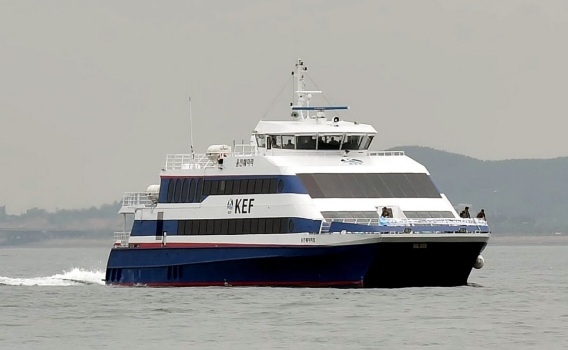
Incheon city is conducting a comprehensive review of its ferry fare support system for island residents and passengers.
The city aims to preserve its existing policy of reducing maritime transportation costs for residents while rationalizing eligibility criteria to ease fiscal pressure and ensure the program's long-term sustainability.
The core framework of the "Incheon i Bada Pass" — which lowered the standard one-way ferry fare for Incheon residents to 1,500 won — will remain intact. However, the city is considering reducing the subsidy rate for residents of other cities and provinces and requiring passengers to cover concessions such as terminal fees and fuel surcharges out of pocket.
Incheon city announced Tuesday that it is developing a revised set of eligibility standards, targeting implementation in 2027, to ensure the stable operation of its ferry fare support program.
The overhaul is driven by growing pressure on local finances as ferry ridership has increased and the pool of eligible beneficiaries has expanded.
The central challenge is adjusting the fiscal burden on the local government to a manageable level while still protecting island residents' right to mobility and their living conditions.
The city introduced the Incheon i Bada Pass in January 2025, cutting the one-way ferry fare for Incheon residents to 1,500 won — roughly equivalent to a city bus fare.
It also raised the subsidy rate for residents of other cities and provinces from 50 percent to 70 percent, aiming to boost island tourism and improve access to maritime transport.
The scope of support has since been expanded in stages.
From July 2026, the city changed the fare support for emigrants from island communities — previously set at 70 percent of the standard fare — to the flat 1,500-won rate, and extended the same fare to family members with ties to the islands who had previously been excluded.
In September of the same year, military personnel, civilian military employees, police and fire department civil servants, and public health doctors working on islands within Incheon were also brought under the 1,500-won fare.
The problem is that as the program's coverage and benefits have grown, so too has its scale — and the strain it places on local finances.
In response, Incheon city is drawing on research from the Incheon Research Institute, recommendations from its fiscal reform task force, and input from island residents to chart a course for reform to take effect in 2027.
The standard one-way ferry fare for Incheon residents will remain at 1,500 won, the city said.
However, the city is considering a more flexible cost-sharing arrangement for concessions outside the base fare, such as terminal fees and fuel surcharges.
Support for emigrants and those with family ties to the islands is under discussion for expansion. The city is considering adding spouses of lineal ascendants and descendants — such as daughters-in-law and sons-in-law — to the list of eligible beneficiaries.
By contrast, the subsidy for residents of other cities and provinces is expected to be scaled back.
The city is reviewing a plan to lower the support rate from the current 70 percent of the standard fare to around 50 percent.
Incheon city is also pushing for greater financial support from the central government to help relieve the burden on local finances.
It plans to petition the government to increase national funding for the island residents' ferry fare support program and to revise current implementation guidelines to ease the fiscal load on local governments.
The city intends to pursue these requests on an ongoing basis starting in January 2027.
"Reforming the ferry fare support system is a process of strengthening the program so that it can operate on a sound financial footing while protecting island residents' right to mobility and their living conditions," said Park Gwang-geun, director of Incheon city's maritime and aviation bureau.
gilbert@heraldcorp.com