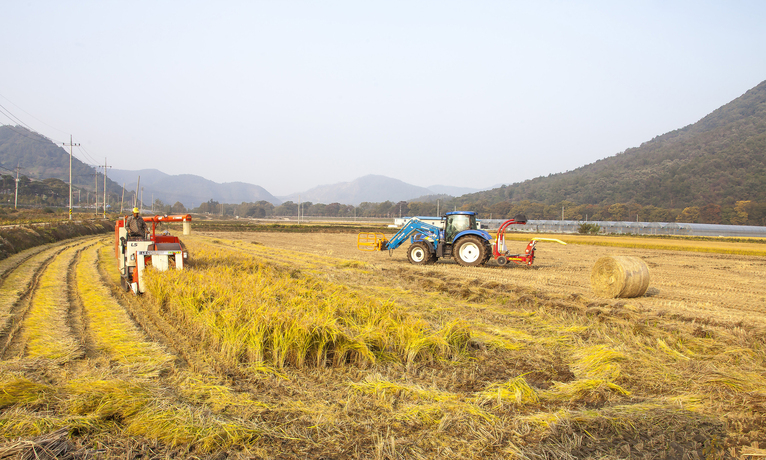
The South Jeolla-Gwangju Integrated Special City has begun purchasing 3,180 tons of public reserve rice in the Gwangju area, the city announced Tuesday.
Starting in Donggok-dong, Gwangsan-gu, the purchases will proceed sequentially across 21 neighborhoods in the Gwangju area through Nov. 26.
The procurement covers 2,947 tons of dried paddy and 233 tons of bulk paddy, with purchases limited to two varieties: Sindongjin and Saecheongmu.
Starting this year, the interim payment for public reserve rice purchases has been raised sharply — from 40,000 won ($30) to 60,000 won per 40-kilogram bag — to ease the financial burden on farming households during the harvest season.
The interim payment will be disbursed immediately after purchase. The final purchase price will be set in December based on the national average farm-gate rice price during the harvest season, with the remaining balance to be paid by year's end.
Farming households supplying public reserve rice must thoroughly familiarize themselves with purchase standards and precautions to secure high-quality rice and avoid penalties.
Dried paddy must have a moisture content between 13 and 15 percent at the time of delivery. Submitting paddy not grown by the supplier will result in the immediate cancellation of that year's purchase contract.
Delivering a variety other than the designated purchase varieties will disqualify the supplier from the public reserve rice program for three years.
Bae Gwi-suk, head of the urban agriculture division at the South Jeolla-Gwangju city government, said the city would assign dedicated civil servants to each neighborhood conducting purchases to ensure safety. "We will work closely with the National Agricultural Products Quality Management Service, agricultural cooperatives and other relevant agencies to ensure the purchase schedule proceeds safely and without disruption," Bae said.
sij@heraldcorp.com