KIST team creates knottable neutron-shielding fiber, raising hopes for next-generation Korean spacesuit
South Korean researchers have developed what they say is the world's first ceramic thread that can bend and even be tied in knots like ordinary fabric while blocking space radiation. Just 1.62 millimeters thick, the material blocks about 99 percent of thermal neutrons, potentially opening a new path toward next-generation spacesuits for lunar exploration and long-duration space missions.
The Korea Institute of Science and Technology (KIST) said Tuesday that a research team led by Kim Dae-yoon of its Space Composite Materials Research Center had developed a neutron-shielding fiber based on boron nitride nanotubes, or BNNTs, that combines high tensile strength, flexibility and heat resistance.
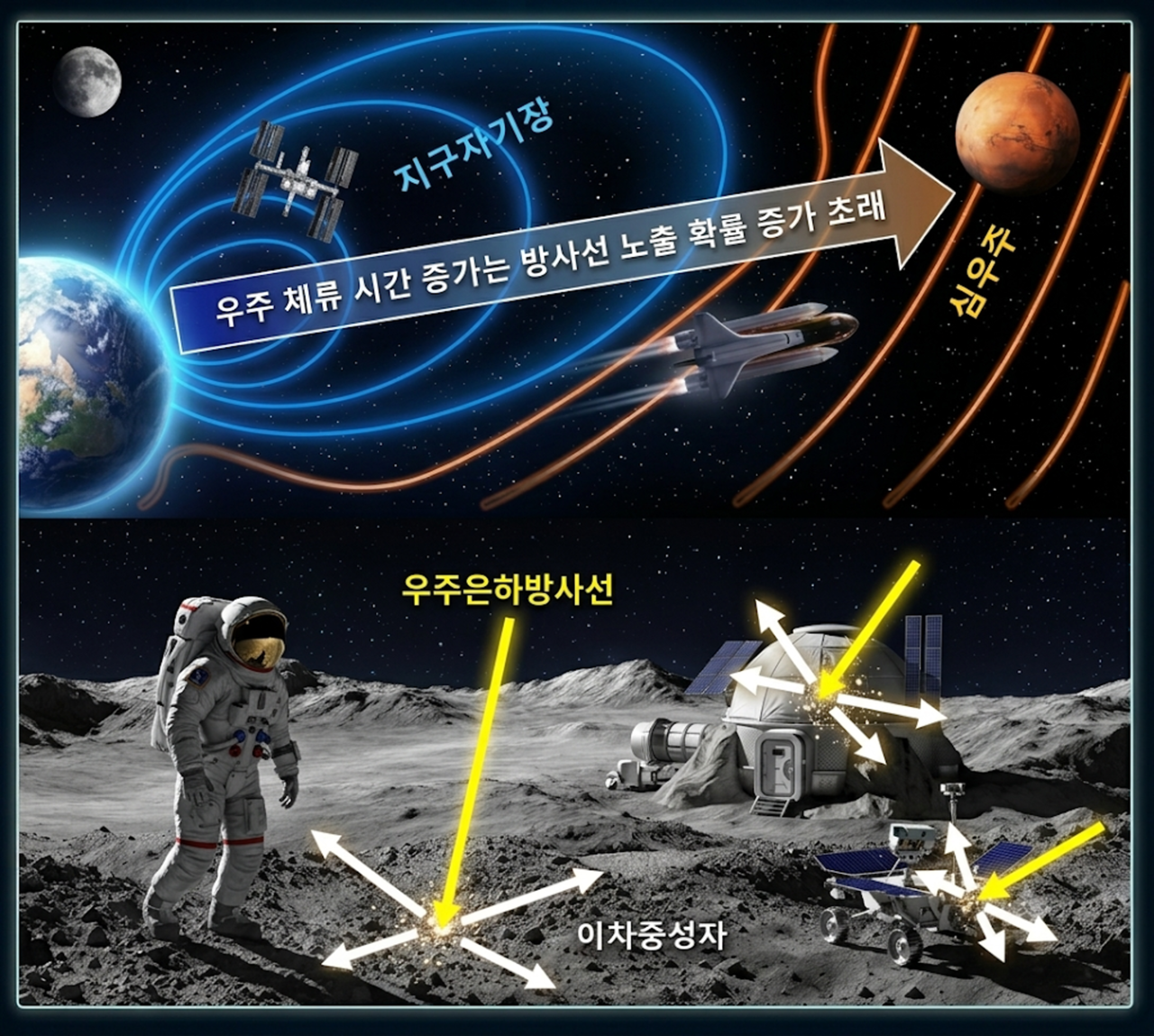
Space is an extreme environment bombarded by radiation lethal to the human body. Secondary neutrons — produced when high-energy radiation collides with spacecraft hulls or surrounding materials — are particularly dangerous, threatening astronaut health and causing electronic equipment to malfunction.
Existing radiation-shielding materials have been too heavy or rigid for use in equipment requiring free movement, such as spacesuits. In space, where weight and volume are tightly constrained, lightweight and flexible materials that can still block radiation effectively are essential.
The research team focused on BNNTs, which contain boron — an element with exceptional neutron-absorbing properties. Although BNNTs offer outstanding heat resistance and mechanical performance, they tend to clump, fracture easily and resist melt processing, making it difficult to spin them into actual fibers.
To overcome this, the team developed a new manufacturing technique that uniformly mixes BNNTs with carbon nanotubes and aligns them in a single direction by passing the mixture through a narrow nozzle. The process raised the BNNT content to about 80 percent while preserving both strength and flexibility.
The resulting fiber achieves a tensile strength of more than 1 gigapascal and thermal stability above 1,000 degrees Celsius. Notably, despite being a ceramic material, it is flexible enough to be tied in knots like ordinary thread.
Radiation-shielding performance proved equally impressive. When the team wove the fiber into fabric and tested it, a thickness of about 1.62 millimeters blocked roughly 99 percent of thermal neutrons — a level the researchers said is the best thermal-neutron shielding performance in the world.
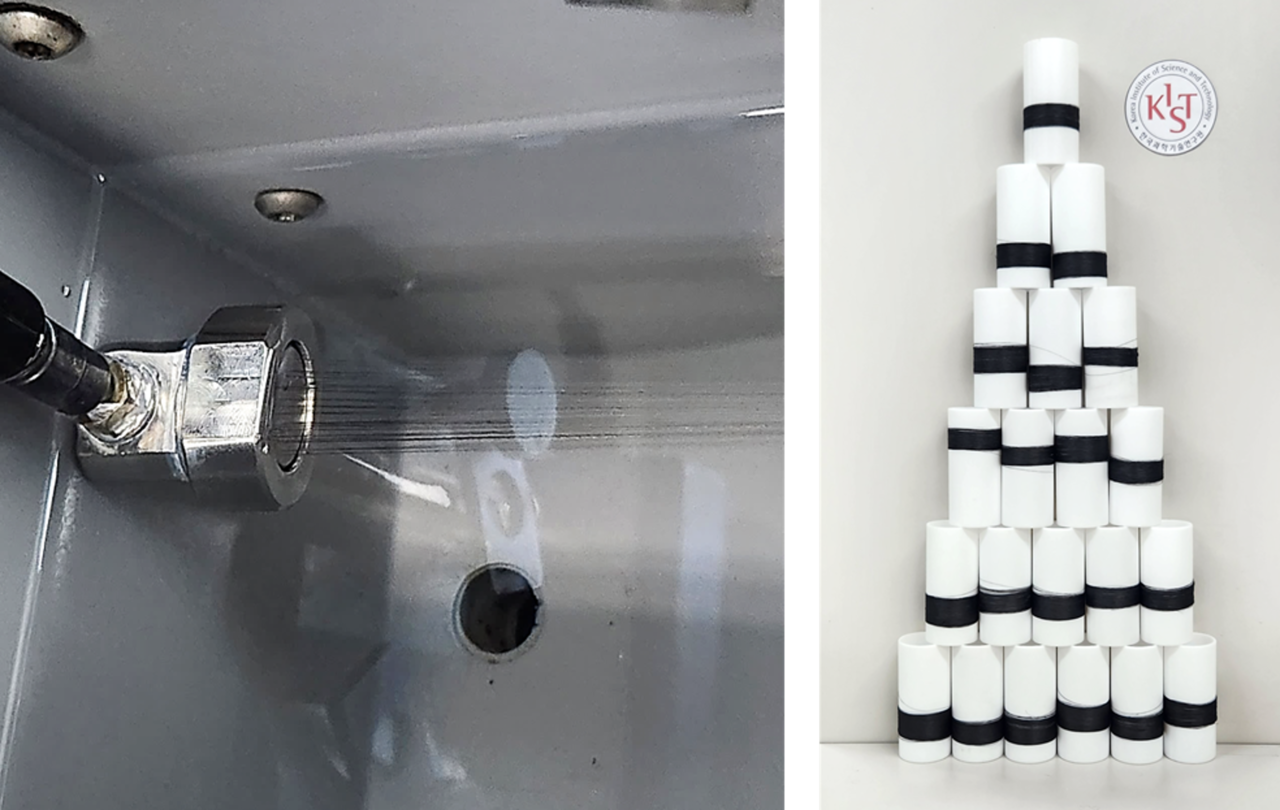
The team also confirmed the fiber can be produced in quantities sufficient for actual spacesuit manufacturing. Researchers produced more than 3.5 kilometers of fiber and used standard industrial weaving equipment to create both flat woven fabric and cylindrical knitted fabric.
Because the process works with existing fiber manufacturing equipment without requiring specialized machinery, the team expects it will be well suited to large-area radiation-shielding fabric production and eventual commercialization.
The technology is particularly significant because it can be applied to high-movement joint areas of spacesuits, such as elbows and knees. Stacking multiple layers of the fabric can also boost shielding performance further.
Beyond spacesuits, the material is expected to find use as a protective material in a range of high-radiation environments, including spacecraft interiors, crewed space habitats, nuclear facilities and radiation treatment rooms.
The team plans to establish a continuous, large-scale production process for wide-area fabric manufacturing and to verify the material's long-term stability and reliability in actual space conditions using CubeSats or external exposure platforms on space stations.
"This work is significant because we have secured, through domestic technology, a foundational material for protecting the human body in extreme environments — an essential capability for the era of long-duration space habitation," Kim said. "We will accelerate the development of an independent Korean spacesuit after validating the material in actual space conditions."
The findings were published in the online edition of Nature Communications.
nbgkoo@heraldcorp.com