Ministry of Economy and Finance met with construction firms late last month to gather input
Industry calls for abolition or easing of price-change, design-alteration exemptions
Contractors claim losses exceeding 600 billion won on Saewul Units 3 and 4
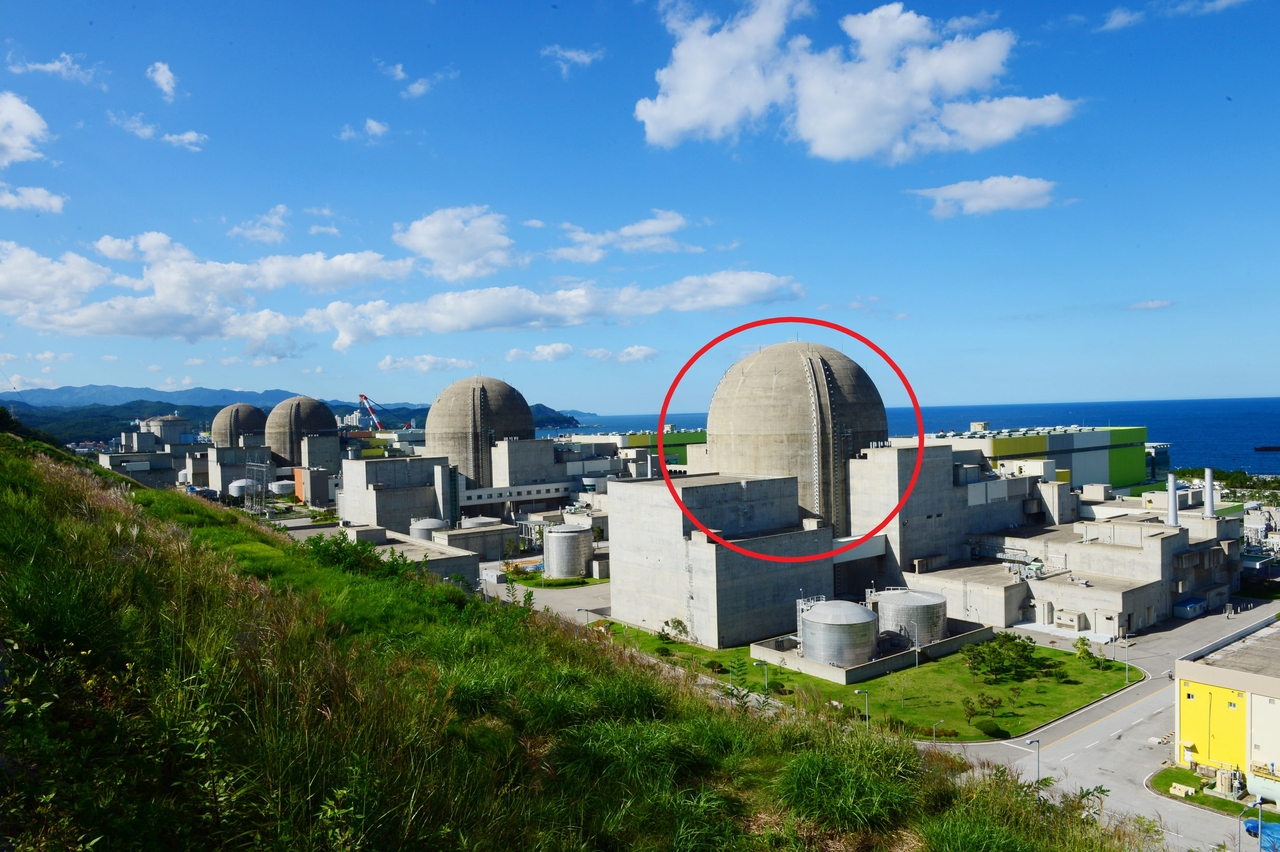
The government has begun soliciting industry opinion on the special contract exemptions applied to Korea Hydro & Nuclear Power (KHNP), amid growing calls from construction companies to reform a structure that forces contractors to absorb losses from price fluctuations and design changes. The move comes as the collapse of a construction contract for the Czech Republic's Dukovany nuclear power plant has put the issue of cost adjustments under fresh scrutiny, with attention now turning to whether revising the exemptions could ease tensions between project owners and contractors.
Contract amount adjustments blocked despite price hikes, design changes
According to the construction industry and authorities, the Ministry of Economy and Finance met with major construction companies late last month to discuss follow-up measures for improving the nuclear construction contract exemptions. At the meeting, the companies called for the exemptions governing price fluctuations and design changes under KHNP contracts to be abolished or eased, so that contract amounts can be more broadly adjusted to reflect actual cost increases.
Domestic nuclear power plants operate under a structure in which KHNP oversees project management, procurement and operations while also setting bidding and contract terms. Although KHNP is a public institution, it has been granted separate exemptions from the standard rules on contract amount adjustments for price changes and design alterations, citing the unique nature of nuclear projects.
"Under the standard Government Contracts Act, when changes arise through no fault of the contractor, the contract amount is increased — but KHNP's exemptions do not work that way," a construction industry official said. "Contractors already bear a heavy burden on domestic nuclear projects, and the problem is that KHNP has been trying to apply those same domestic exemptions to overseas projects, where no separate rules exist — which is why we raised the issue of unfairness."
A Ministry of Economy and Finance official said the meeting was "separate from the Czech nuclear plant construction issue" and was aimed at exploring improvements in response to the construction industry's requests regarding domestic nuclear plant construction.
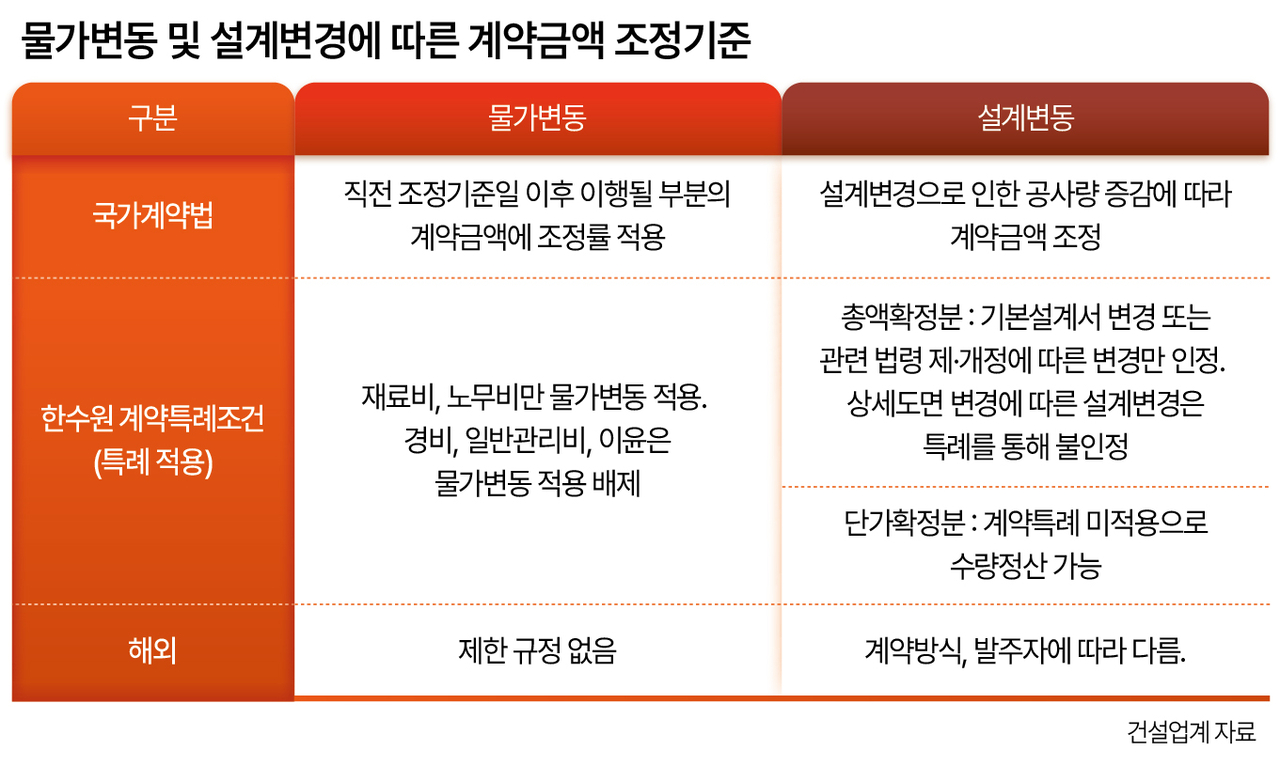
Under the current Government Contracts Act, contract amounts for construction projects can be adjusted when price fluctuations or design changes meet certain conditions. For price changes, an adjustment rate is applied to "the portion of the contract amount to be performed after the most recent adjustment base date," while design changes also trigger contract amount revisions based on increases or decreases in the volume of work.
KHNP's nuclear contract exemptions, however, significantly narrow the scope of allowable adjustments. For price fluctuations, adjustments apply only to material costs and labor costs — overhead expenses, general administrative costs and profit margins are all excluded.
The construction industry also contends that the scope for adjustments due to design changes is comparatively limited. For lump-sum contracts, only changes arising from "revisions to the basic design documents or amendments to related laws and regulations" are recognized. Design changes stemming from revisions to detailed drawings are not covered under the exemptions. Unit-price contracts, however, are not subject to the special exemptions and allow for quantity settlement.
Construction companies said contractors "have no choice but to take on losses in order to maintain their technical capabilities and stay competitive in the nuclear sector." They added that the structure imposes enormous losses on contractors because project viability must be assessed at the bidding stage before designs are finalized, and because basic design documents containing only conceptual plans provide no way to gauge work volumes or the likelihood of design changes.
Contractors absorb hundreds of billions in losses from cost overruns and delays
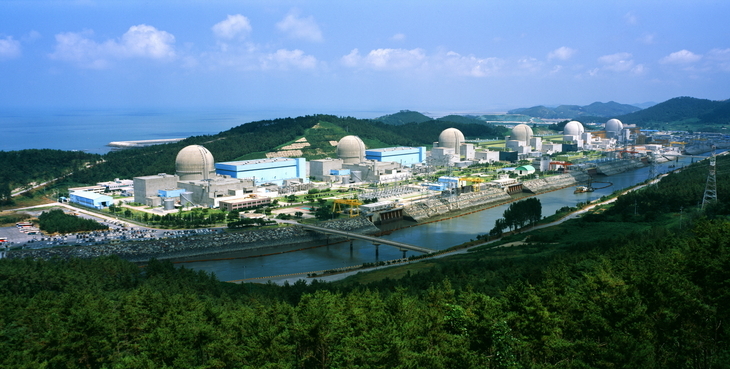
At the meeting, participants also raised past cases in which contractors suffered losses of hundreds of billions of won under KHNP's exemption rules. The Saewul Units 3 and 4 project was cited as a prime example. Construction on that project was delayed by more than three years, driving up costs, and it was claimed that contractor losses exceeded 600 billion won ($447 million).
Because designs are not finalized at the time of contracting, increases in work volume cannot be confirmed unless the basic design itself is changed. And even when volume increases are recognized, the exemption terms prevent contract amount adjustments for the lump-sum portion of the contract.
Concerns were also raised that the contract structure — which makes it difficult to secure adequate compensation for cost increases — could put the brakes on project execution at a time when construction material prices and labor costs have risen sharply.
Construction companies said that if the exemptions must be retained for domestic nuclear construction, changes should include expanding the scope of adjustable contract amounts to cover indirect costs, using the bill of quantities provided at the time of bidding as the basis for assessing volume changes when adjusting contract amounts for design changes, and including design changes requested by the project owner among the items eligible for contract amount adjustment.
Lee Eun-hyung, a research fellow at the Korea Research Institute for Construction Policy, said nuclear projects are long-term undertakings spanning more than a decade, often requiring design and construction to proceed in parallel, which had justified the need for the exemptions from an industry-expansion standpoint. "However, if rules created in the past no longer reflect current realities, there is a need to discuss them now," Lee said.
lucky@heraldcorp.com