Samyang Ecotech's R-Chip sales top 7,000 tons through October — more than four times last year's full-year total
Operation rates climb as virgin PET prices rise on supply disruptions
Mandatory recycled-material rules set to drive long-term demand
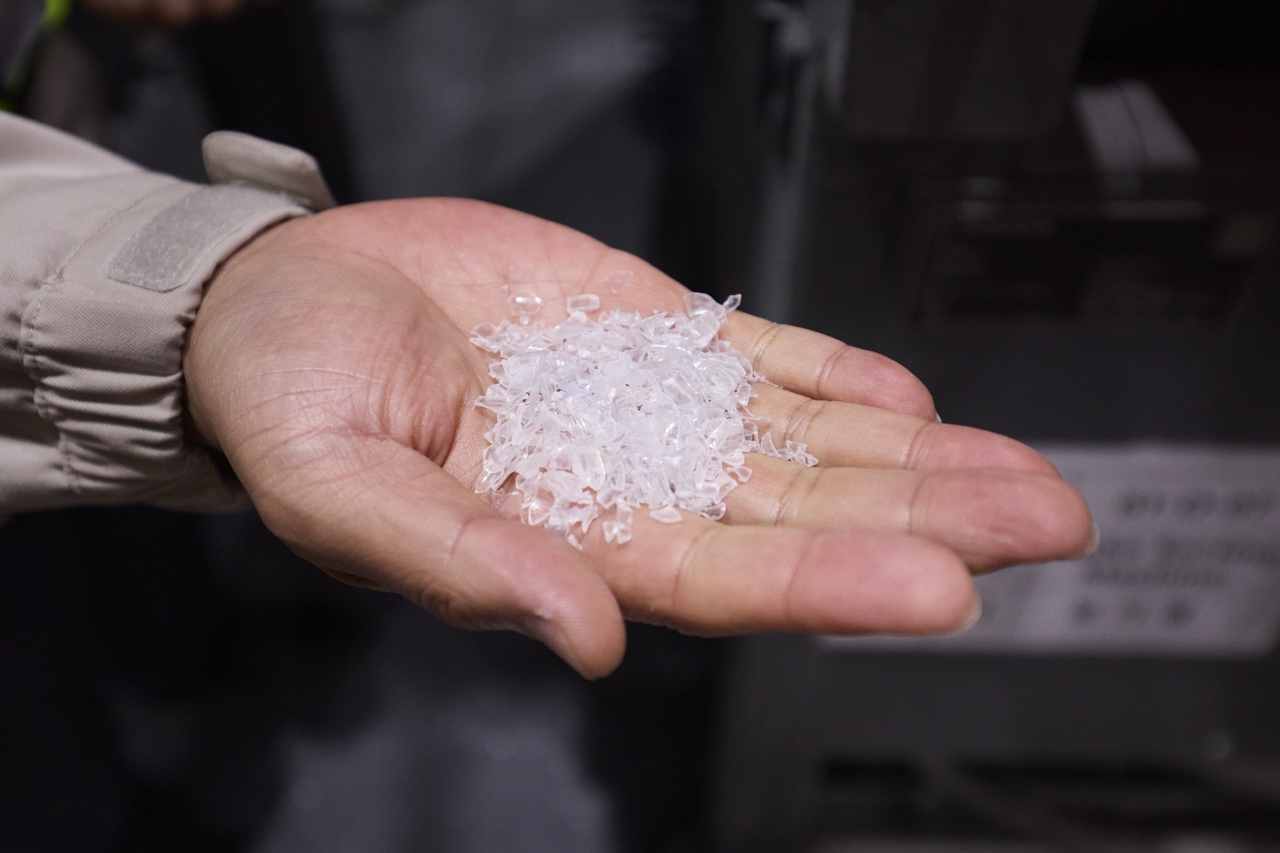
Supply disruptions in petrochemical raw materials caused by the Middle East war have turned into an unexpected windfall for the recycled plastics market this year. As prices for virgin PET resin — made from petrochemical feedstocks — climbed, demand shifted toward recycled PET chips, which gained a relative price advantage. Samyang Ecotech, the recycled-materials affiliate of Samyang Group, has been among the beneficiaries, with sales of its recycled PET chips rising sharply.
According to Samyang Group, cumulative sales of R-Chip — Samyang Ecotech's proprietary recycled PET chip — surpassed 7,000 tons through the end of October this year. That is more than four times the roughly 1,600 tons the company sold in all of last year, meaning this year's sales eclipsed the entire prior-year volume in just 10 months.
The surge in R-Chip sales traces back to supply instability and price increases for virgin PET resin driven by the Middle East war. PET is one of the most widely used plastic materials, found in water bottles and beverage containers. It is produced from petrochemical feedstocks including naphtha refined from crude oil. Geopolitical instability in the Middle East disrupted the supply of those feedstocks and pushed up prices, pulling virgin PET resin costs higher along with them.
R-Chip, by contrast, is made from collected waste PET bottles and is relatively insulated from direct petrochemical supply disruptions. Unlike virgin PET, whose procurement has grown more uncertain as raw-material prices and availability fluctuate, R-Chip relies on a separate supply chain — the collection and recycling of used bottles. That different sourcing route has made it an alternative material capable of hedging against petrochemical supply-chain instability.
R-Chip had also historically carried a price premium over virgin PET because of the costs involved in the recycling process, but the gap narrowed sharply as virgin PET prices rose. Industry sources said the two products reached near-price parity at certain points this year. Manufacturers struggling to secure virgin PET are believed to have turned to R-Chip as a substitute, driving a surge in orders.
The stronger demand translated into higher plant utilization. According to Samyang Packaging's semiannual report, the operating rate for PET flake and PET chip facilities used in R-Chip production reached 61 percent at the end of the first half of this year, up 13 percentage points from 48 percent in the same period last year. Samyang Ecotech produces PET flakes by crushing and washing waste PET bottles, then further processes them into R-Chips. The company has an annual R-Chip production capacity of 22,000 tons, making it the largest recycled PET chip producer in South Korea.
"During the period of global crude oil shocks, we received many inquiries about using R-Chip in sheet products — PET used in dosirak lids, fruit packaging and takeout cups — and more recently the inquiries have been focused on food containers," a company official said.
Over the medium to long term, mandatory recycled-material requirements are expected to provide an additional growth foundation. Starting this year, producers of bottled water and non-alcoholic beverages that use more than 5,000 tons of PET bottles annually are required to incorporate at least 10 percent certified recycled material when manufacturing clear PET bottles. The government is also pursuing plans to expand the mandate by 2030 to cover companies using more than 1,000 tons of PET bottles per year and to raise the minimum recycled-content requirement to 30 percent. As a result, the recycled PET chip market is expected to enjoy not just a temporary demand spike but durable, policy-driven demand even after petrochemical raw-material prices stabilize.

keg@heraldcorp.com