EVs left out of government's 6-sector tax reform plan
22nd Assembly sees 24 bills filed; tax subcommittee to take up issue this month
Lawmakers: 'Major economies using tariffs, subsidies — Korea must respond'
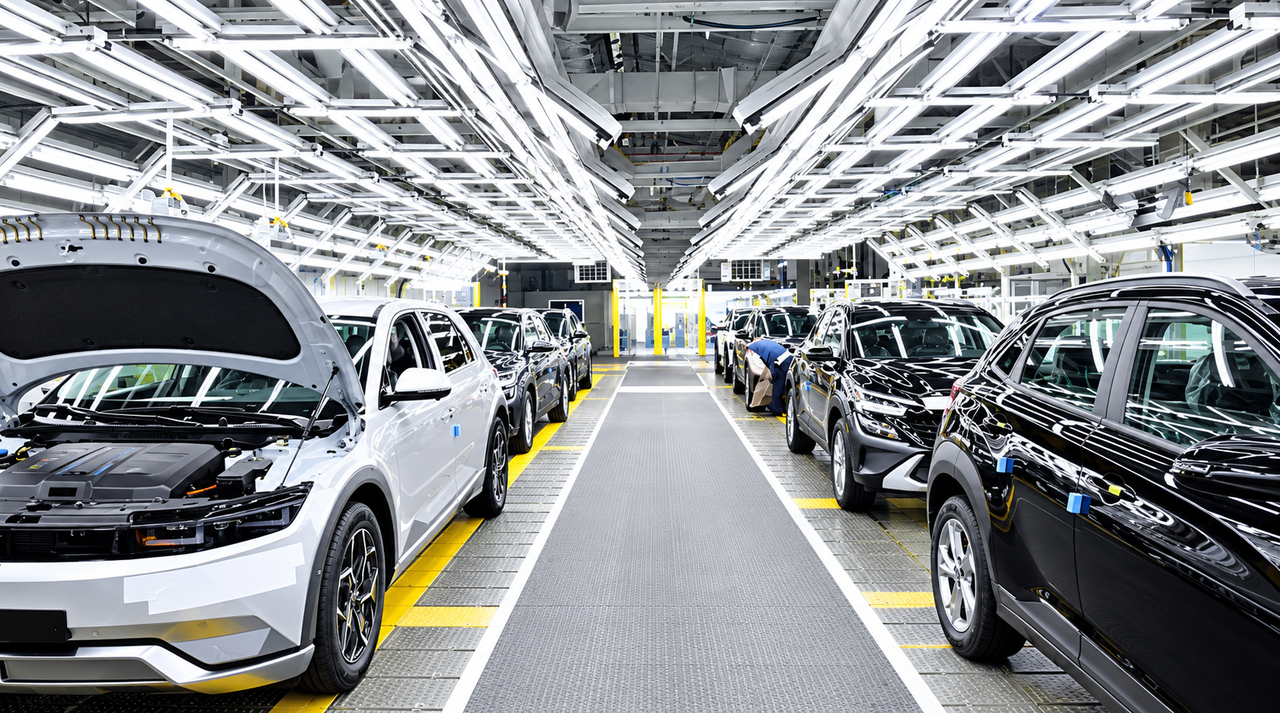
With Chinese-made electric vehicles led by Tesla eroding domestic market share below the majority threshold, lawmakers from both the ruling and opposition parties called in unison at this year's national audit for EVs to be included in the domestic production tax credit. Amid growing alarm that the foundation of Korea's auto manufacturing base could be shaken, the National Assembly's tax subcommittee is expected to take up the question of whether to add EVs when it reviews tax code amendments this month.
The domestic production tax credit is a key campaign pledge of President Lee Jae Myung and has been dubbed Korea's version of the Inflation Reduction Act. It grants tax credit benefits to companies that produce and sell strategic goods domestically, scaled to their production output. The government's 2026 tax reform plan, announced last August, however, covered only six sectors: solar power generation, wind power generation, secondary batteries, semiconductors, core materials and AI robot components.
PPP: 'Prime the pump like we did for chips'; DP: 'Plan pushes domestic automakers off a cliff'
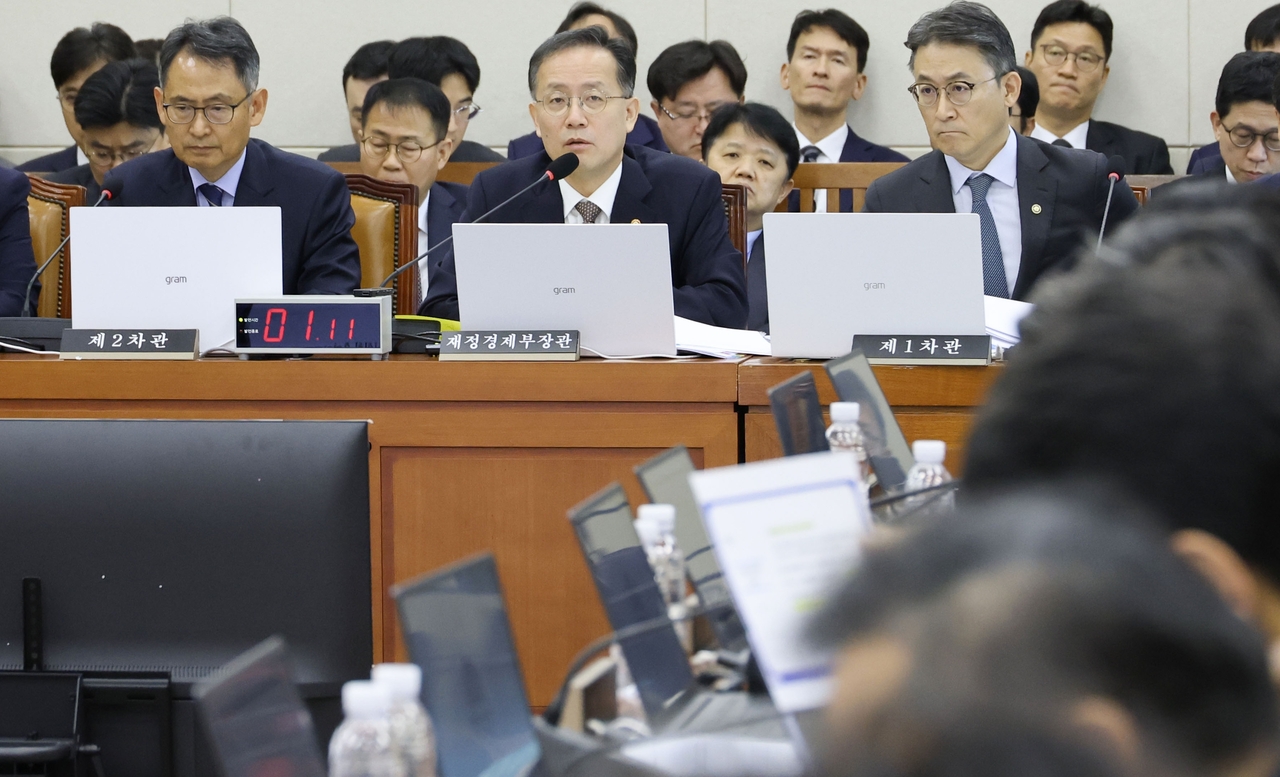
People Power Party lawmaker Ahn Sang-hun said at the Finance and Economy Planning Committee's comprehensive audit of the Ministry of Economy and Finance on Oct. 22 that major advanced economies were deploying tariffs, tax deductions and subsidies to protect their domestic EV industries. "There is in effect no country that has defended its market without an active response," Ahn said.
Bae Jun-young, who leads the People Power Party's side on the Finance and Economy Planning Committee, said the government had once primed the pump for the semiconductor industry when it was struggling. "I believe support should be provided where an EV tax credit or similar measure is needed to help compete against other countries or where the government needs to play a priming role," Bae said.
The same call came from the Democratic Party of Korea. Moon Jin-seog said the current government plan appeared to be pushing domestic finished-vehicle makers — who must compete against Chinese automakers with strong price competitiveness — off a cliff. "To genuinely strengthen competitiveness, EVs should be eligible for the domestic production tax credit regardless of whether capital investment in facilities has been made," Moon said.
According to the National Assembly's bill information system, 24 amendments to the Restriction of Special Taxation Act that would add EVs and other next-generation vehicles to the domestic production tax credit have been filed across both parties since the 22nd Assembly convened. Even after the government's tax reform plan — which excluded EVs — was made public, seven lawmakers from both parties led by Ahn Do-geol filed a string of related bills.
Eight of the 24 bills were introduced by lawmakers who sit on the tax subcommittee, which directly reviews tax legislation. The amendments are expected to clear the tax subcommittee, then pass through the full Finance and Economy Planning Committee and the Legislation and Judiciary Committee before a final floor vote in December.
Deputy PM Lee meets Hyundai Motor's Euisun Chung: 'Government will actively engage in National Assembly discussions'
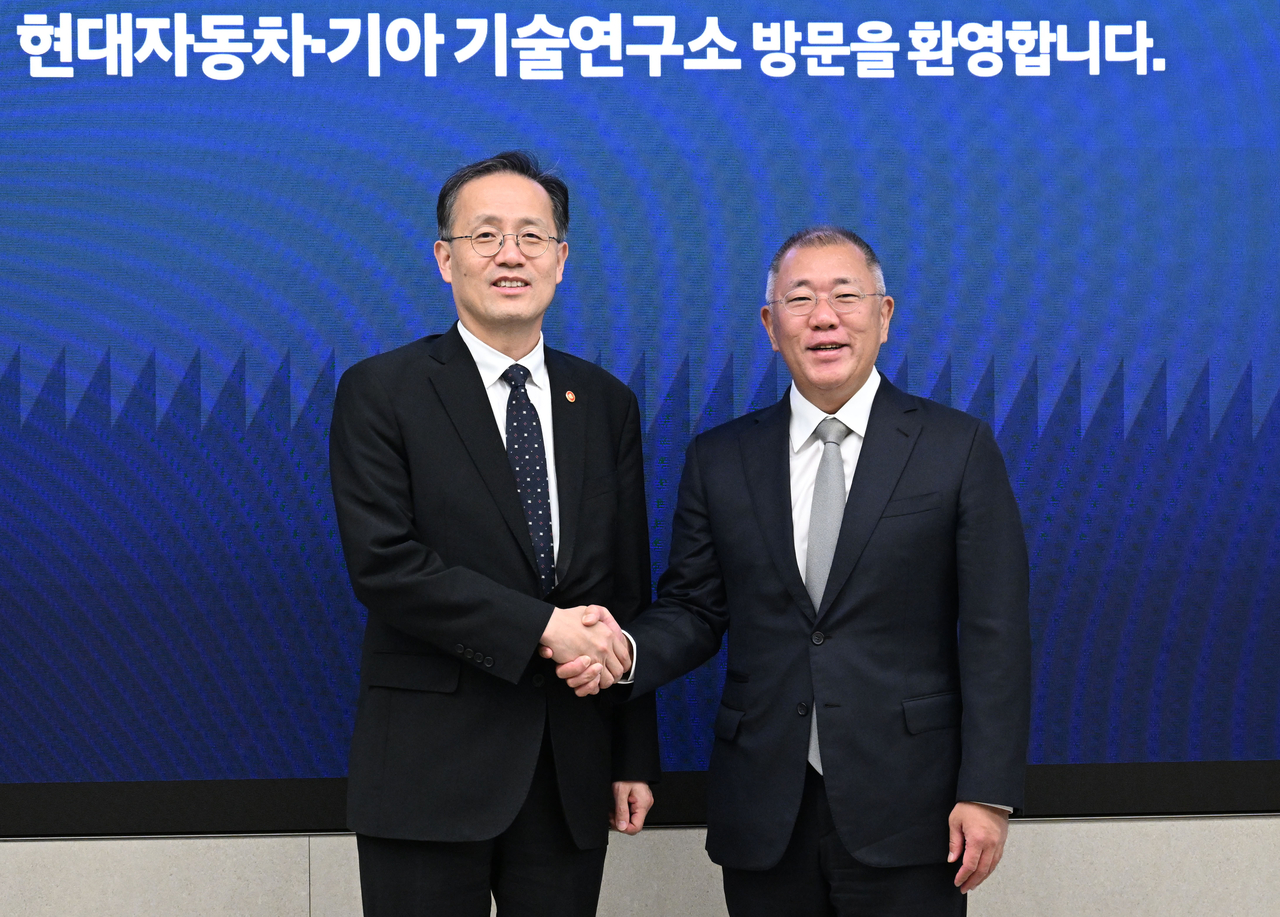
Deputy Prime Minister and Minister of Economy and Finance Lee Hyung-il visited Hyundai Motor and Kia's Namyang R&D Center in Hwaseong, Gyeonggi Province, on Monday to meet with Hyundai Motor Group Chairman Euisun Chung and hold a roundtable with the EV industry. At the Oct. 22 comprehensive audit, Lee had said he was considering visiting the scene to hear firsthand about actual conditions and was reviewing how to reach a conclusion after confirming that the EV sector faced serious difficulties over the next two to three years.
Industry executives from the EV, self-driving car and parts sectors who attended the roundtable requested support through the EV production tax credit. They also called for expanded support for the parts industry's transition to next-generation vehicles, a legal framework for introducing battery leasing, and an increase in specialist personnel at agencies dedicated to self-driving cars.
Lee said the government would actively participate in and engage in in-depth discussions during the National Assembly's deliberations on EV production tax credit support. The government plans to announce a package of measures to strengthen the competitiveness of the EV industry this month, reflecting opinions raised at the roundtable.
Gap between Sorento and Model Y narrows to 1,810 units: 'Korea needs Japan-level support'
The rapid pace at which Chinese-made EVs are capturing the domestic market is cited as the backdrop to the industry's push for tax support. According to the Korea Automobile Manufacturers Association and the Korea Automobile Importers & Distributors Association (KAIDA), Chinese-made passenger EVs newly registered in Korea from January through September this year totaled 112,417 units — 2.2 times the 51,535 units recorded in the same period last year. Their market share rose 8.4 percentage points to 43.5 percent. Domestic passenger EV market share, meanwhile, fell 6.2 percentage points to 48.7 percent, dropping below the majority mark.
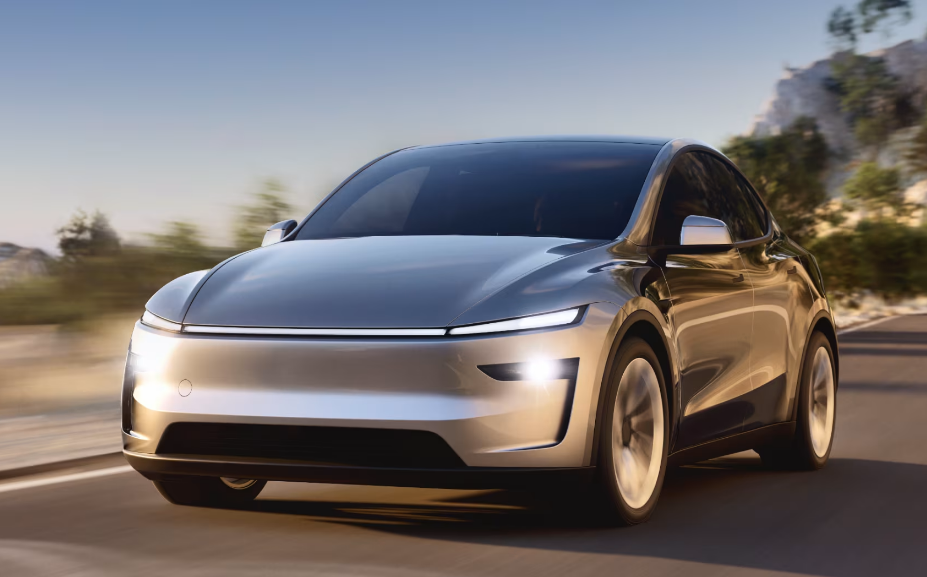
Tesla is driving the surge. According to KAIDA, 89,148 Tesla vehicles were newly registered in Korea from January through September this year, up 104.4 percent from the same period last year — already 1.5 times the full-year 2025 registration figure of 59,916 units. The Tesla Model Y and Model 3 sold in Korea are produced at the company's Shanghai factory. While Kia's Sorento has held on to the top-selling position in the domestic market, the gap with the Tesla Model Y has narrowed to just 1,810 units, fueling concern that a Chinese-made EV could dislodge a domestic model from the annual top spot.
The industry has long urged the government to introduce a production tax credit of around 4 million won ($2,990) per vehicle — on par with Japan's level. In the National Assembly, Democratic Party of Korea lawmaker Lee Eon-ju introduced a bill in September setting the base credit at 4 million won per EV.
Japan serves as the industry's benchmark. In 2024, Japan introduced its "Strategic Sector Domestic Production Promotion Tax Regime," which provides a corporate tax deduction of 400,000 yen ($2,540) per vehicle for EVs and hydrogen-powered cars produced and sold domestically, and 200,000 yen per vehicle for compact EVs and plug-in hybrid vehicles, for a period of 10 years. The deduction is capped at 40 percent of corporate tax liability.
An industry official said Korea, with its export-oriented industrial structure unlike the United States or Europe, finds it difficult to adopt the same trade measures as major economies, making it a concentrated target for Chinese EV makers. "If policy support across the entire auto industry — including the domestic production tax credit — is not provided in a timely manner, the domestic automotive ecosystem will wither away," the official said.
eyre@heraldcorp.com