Test follows ballistic missile cluster warhead trial last month; Gen. Kim Jong-sik oversaw both
'Urgency to develop weapons systems greater than ever,' missile chief says
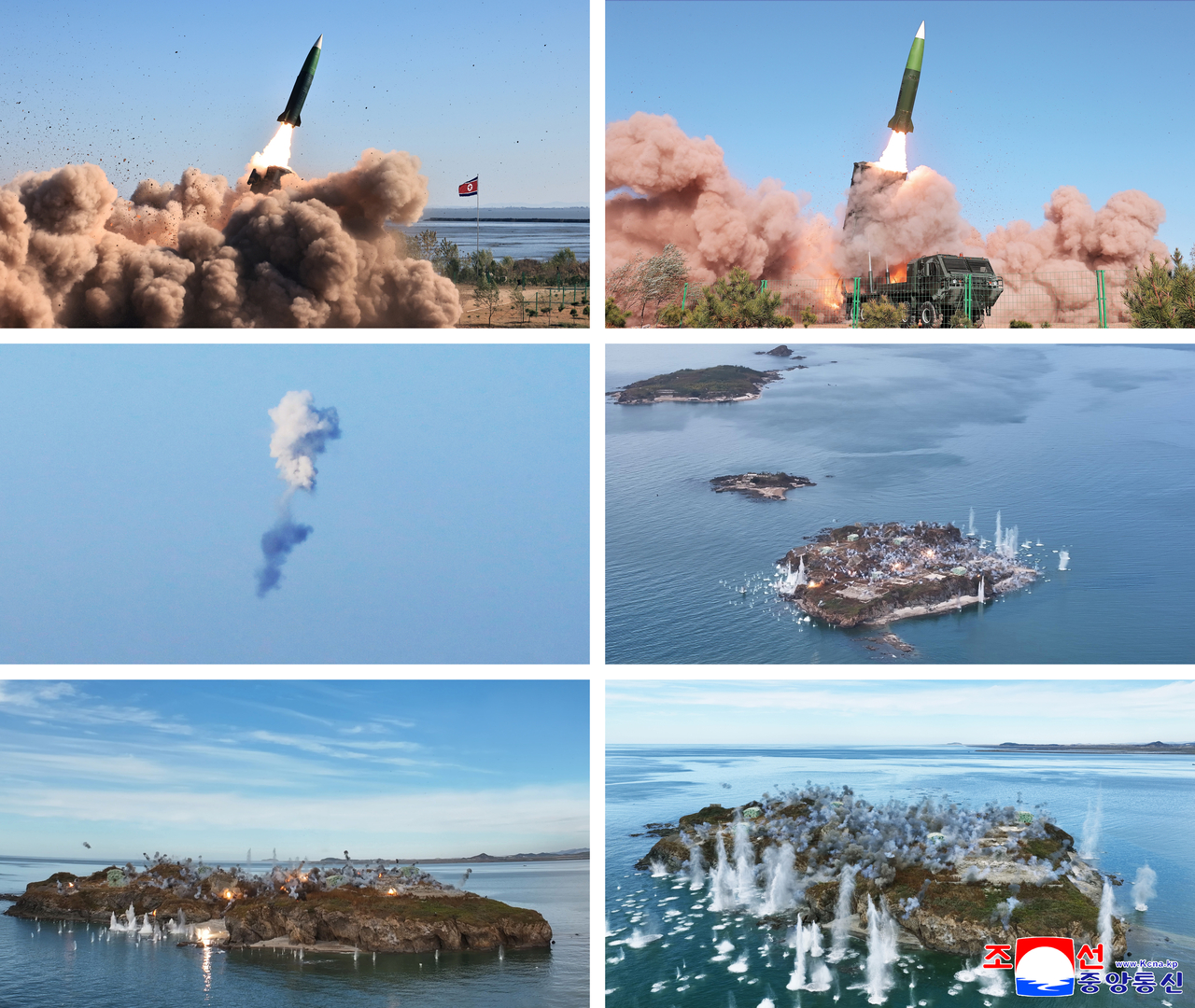
North Korea said Tuesday it conducted a destructive power evaluation test and a vertical-strike flight characteristics test of a cluster warhead mounted on a strategic cruise missile on Monday. The announcement came days after Pyongyang showcased a similar cluster warhead for a tactical ballistic missile, signaling parallel development of cluster munition technology across its missile arsenal.
According to KCNA, the Warhead Research Institute under the Missile General Bureau announced the test results, claiming it had "confirmed that a medium-sized cluster warhead mounted on a cruise missile can devastate a target zone of 5 to 6 jeongbo — roughly 5 to 6 hectares, or the equivalent of about seven to eight soccer fields — with overwhelming density." One jeongbo is approximately 9,917 square meters, or about one hectare.
The test was overseen by Gen. Kim Jong-sik, a member of the Korean Workers' Party Central Military Commission and first vice director of the Party Central Committee. Kim also directed the "combat applicability and destructive power evaluation test of a tactical ballistic missile cluster warhead" on Saturday. In a statement issued Monday, Kim condemned the South Korea-US nuclear and conventional integrated command post exercise Iron Mace as "the most heinous nuclear war rehearsal aimed at using nuclear weapons against our state."
A cluster warhead, known in North Korean terminology as a "scatter combat unit," houses multiple submunitions inside a single warhead. It is designed to detonate in midair, dispersing the submunitions in all directions to maximize lethality over a wide area.
The Cruise Missile System Research Institute under the Missile General Bureau said it had "completed the vertical-strike capability against targets by improving the terminal maneuverability of cruise missiles in consideration of the natural geographic characteristics of the zones where the weapons systems are deployed."
Missile General Bureau chief Jang Chang-ha said "the need to develop diverse weapons systems is more urgent than ever," adding that "the diverse combat functions of these most powerful weapons systems will defend the Democratic People's Republic of Korea from external potential threats and renew the state's military power."
youknow@heraldcorp.com