District Mayor Seo Jun-o meets ministers of planning and transport, citing rising demand from Gwangwoon University transit-oriented development, S-DBC project
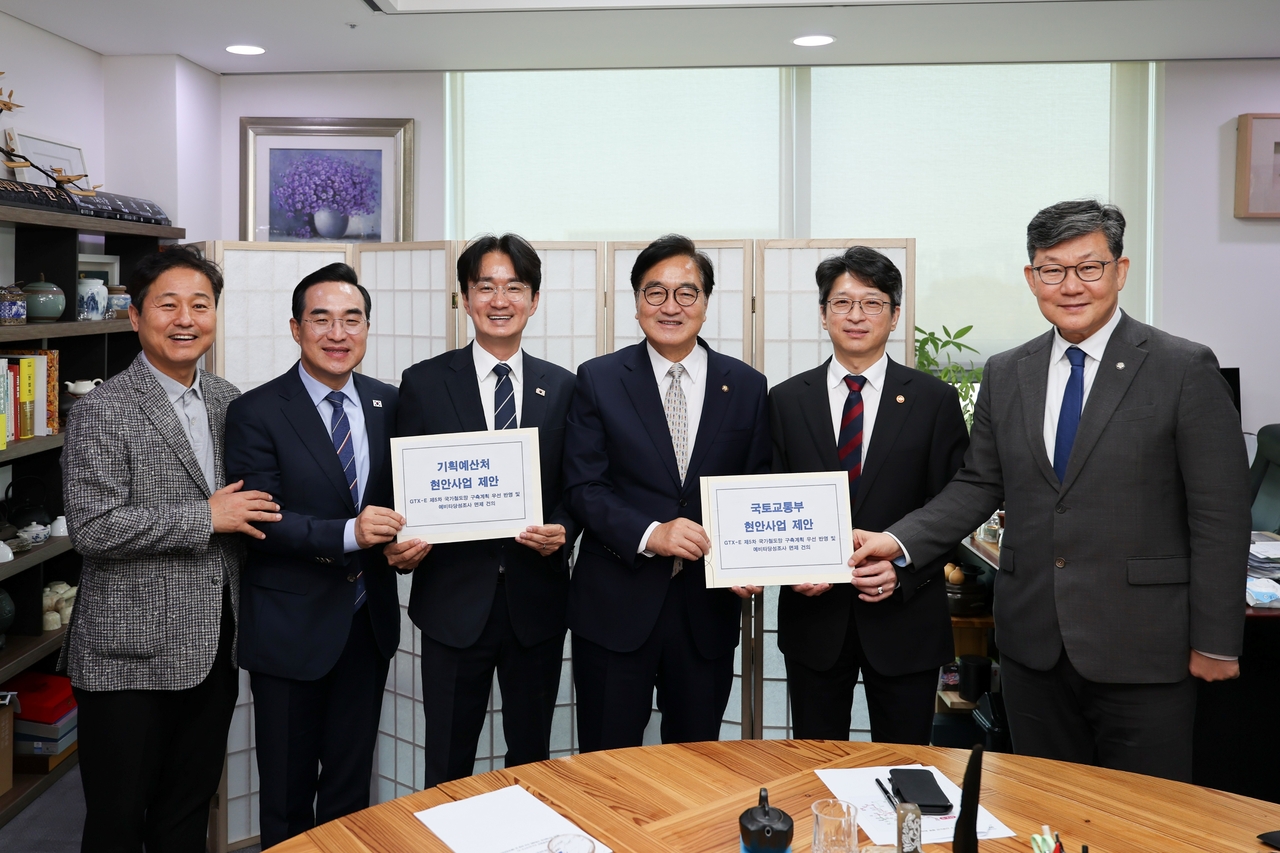
Seoul's Nowon-gu has formally asked the government to fast-track the GTX-E metropolitan express rail line as part of efforts to expand transit links across the northeastern Greater Seoul area.
Nowon-gu said Monday that District Mayor Seo Jun-o met with Minister of Planning and Budget Park Hong-keun and Minister of Land, Infrastructure and Transport Hong Ji-seon at a session arranged by National Assembly member Woo Won-shik, who represents Nowon-gu Gap, to request government support for the early rollout of the GTX-E line.
The meeting was also attended by lawmakers Kim Young-bae of Seongbuk-gu Gap, Kim Nam-geun of Seongbuk-gu Eul and Oh Gi-hyeong of Dobong-gu Eul. Participants called for the GTX-E line to be included in the Fifth National Railway Network Construction Plan (2026–2035) and for an exemption from the preliminary feasibility study requirement, saying the poor metropolitan transit conditions in Seoul's northeastern districts must be addressed.
GTX-E is a metropolitan express rail line that would run from Incheon International Airport through Digital Media City, Yeonsinnae, Gwangwoon University Station in Nowon-gu and the Wangsuk 2 district in Namyangju before terminating at Deokso. It is part of the second-phase GTX projects included in the government's three major transport innovation strategies announced in January 2024, and its inclusion in the Fifth National Railway Network Construction Plan remains the key hurdle.
Nowon-gu views GTX-E as critical infrastructure that would fill a gap in the weak east-west metropolitan transit network serving Seoul's northeastern districts. The district says expanded rail links are urgently needed given chronic congestion on the Inner Circular Expressway and the Northern Arterial Road, on top of insufficient rail connections between Incheon Airport and the western metropolitan area.
The district also projects a sharp rise in transport demand as major development projects get under way, including the Gwangwoon University transit-oriented development, the Seoul Digital Bio City (S-DBC) and the opening of Seoul Arena.
The Gwangwoon University transit-oriented development is set to bring corporate headquarters, a large shopping mall, commercial and office facilities, and a residential complex of about 3,000 units by 2028. S-DBC, to be built across roughly 280,000 square meters around the Changdong rail depot site, is being developed to attract biotech and AI companies and research facilities.
Seoul Arena, scheduled to open in June next year, is another factor expected to drive metropolitan transport demand. As the country's largest dedicated pop music venue, it is expected to draw growing numbers of domestic and international visitors for K-pop performances, raising the importance of a transit link connecting the airport to Seoul's northeastern districts.
"GTX-E is the key transport infrastructure that will complement the northeastern districts' insufficient east-west metropolitan network and underpin Nowon's future growth," Seo said. "We will do everything we can to have GTX-E included in the national railway network plan and pushed forward early, so that major projects such as the Gwangwoon University transit-oriented development and S-DBC can translate into real economic vitality for the area."
seouldream01@heraldcorp.com