AI films seen reaching commercial tipping point within a year as production barriers fall
BIFAN aims to train 10,000 AI filmmakers over five years, eyes deeper Korea-Japan collaboration
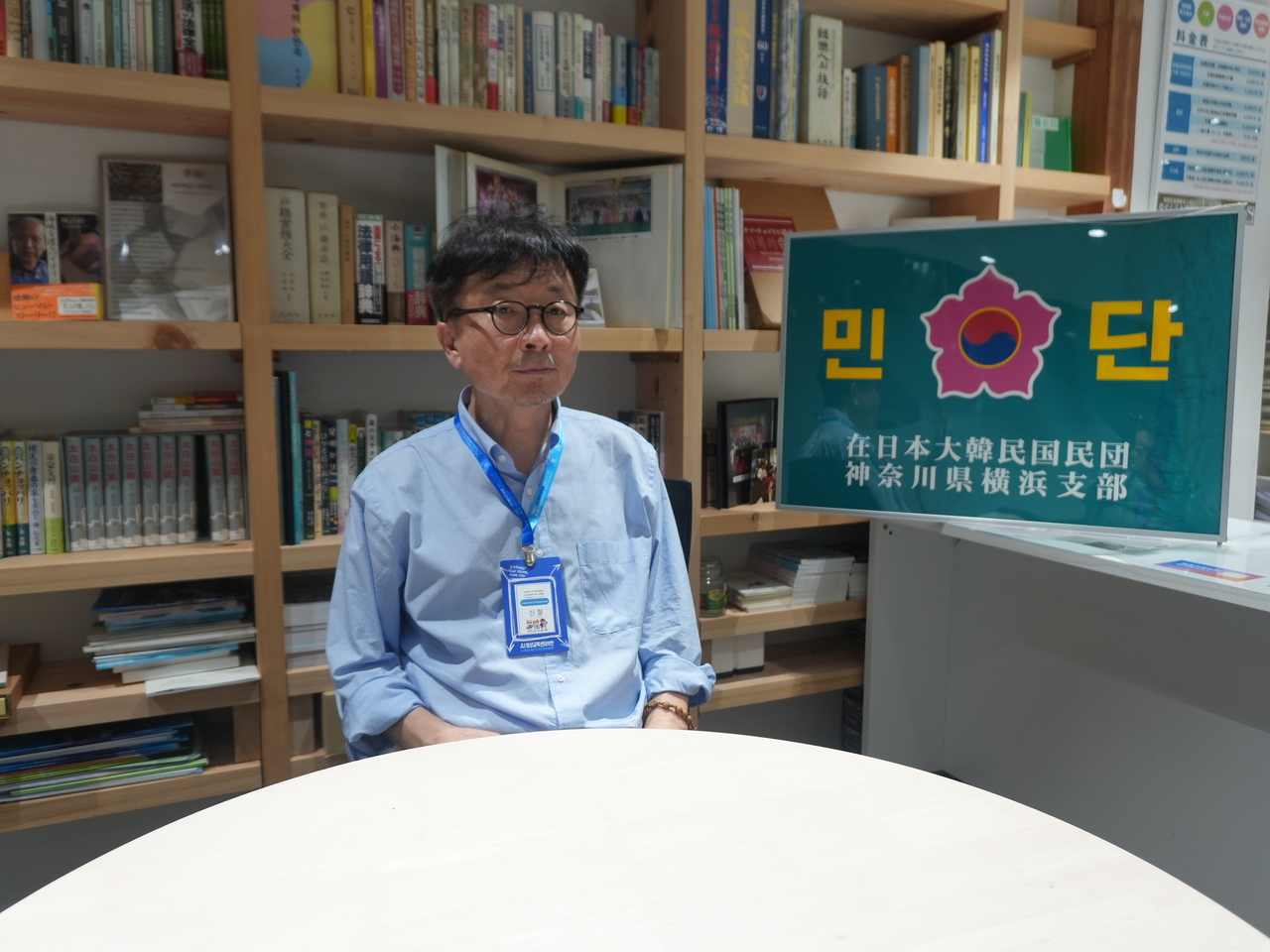
"Record your thoughts and your life in moving images. With AI, anyone can do that now."
Shin Chul, executive director of the Bucheon International Fantastic Film Festival (BIFAN), delivered that message to young Japanese filmmakers and Korean-Japanese youth during an interview in Yokohama, Japan, on Saturday. Shin had traveled to the city to give a special lecture on AI video production and host a screening, and he sees AI as both a response to the pressures facing the film industry and a tool for opening the door to a new generation of creators.
What Shin stressed was not the technology itself but the act of finding one's own story. Just as a writer develops daily observations into a novel, he said, anyone can now use AI to express their life and ideas through film.
The Yokohama visit grew out of the experience of a first AI workshop held last year. Shin said the enthusiasm of participants and the satisfaction he drew from the teaching process brought him back to Japan.
"I wanted to share what we know with the Korean diaspora living in Japan and give them a chance to adapt to a new era," he said. "Based on last year's experience, we agreed to take the education a step further."
He said he was particularly glad to see elementary school students take part this year. Because they are the generation that will live alongside AI for a long time to come, he said, it matters more that they learn how to use the technology in ways that help people than that they fear it.
On concerns that AI will eliminate jobs for film professionals, Shin focused on the shift in roles and the expansion of creative opportunity. He said AI makes it increasingly possible for someone who previously handled only one part of the filmmaking process — cinematography or screenwriting, for instance — to conceive and realize an entire project as a solo creator.
"When new technology appears, some jobs disappear but others are created," he said. "In film too, I think the role of someone who used to handle just one part will shift toward creating an entire project."
On the question of when AI films will reach commercial viability, Shin anticipated relatively swift change, citing the parallel rise of the technology and the creative skills of those using it.
"Looking at the current pace of technological development and the growth in creative ability, I think a commercially significant possibility will emerge within the next year," he said. "I believe a major turning point could be coming."
At the center of his thinking on copyright was the question of human creative contribution. Shin said AI does not produce everything on its own — a creator must decide what to express, give specific direction, and develop the result through an iterative process.
He drew an analogy to photography, where human choices about composition and exposure shape the work. "To make something better, the instructions have to be precise and they have to come from something only you possess," he said. He added that legal standards around AI-generated work would take shape through ongoing discussion.
BIFAN's AI strategy is squarely focused on responding to these shifts. The festival introduced an international competition section for AI films in 2024, and in 2025 announced the establishment of the AI Film Education Center Bucheon along with a goal of training 10,000 AI filmmakers over five years.
Shin said about 2,023 people completed the education program last year. Graduates are now active not only as creators but as educators themselves, building a foundation for developing new talent.
Behind this strategy lies a concern about the high cost structure of the traditional film industry. Shin said the weakening influence of theaters, combined with the expense of production and distribution, has made it increasingly urgent to prepare new methods of filmmaking and new channels for reaching audiences.
He acknowledged that the push to adopt AI has drawn considerable resistance from within the film community — criticism that BIFAN was championing a technology that threatens livelihoods. In response, he offered an analogy: the existing film production system is the main engine of an aircraft, and AI is the auxiliary engine.
"If you think of the existing system as the main engine, AI is the auxiliary engine," he said. "I'd like people to understand that smoke is coming from the main engine, and what we're doing is getting the auxiliary engine ready."
Shin also spoke highly of the potential for Korea-Japan collaboration. He envisions Japan's deep experience in animation production meeting Korea's strengths in webtoons and other formats, with AI as the bridge. As the boundaries between film, animation and games continue to blur, he said, the ability to bring together talent from different fields will only grow in importance.
"Co-production and talent exchange must be actively expanded," he said. "I believe we absolutely must cooperate with Japan on multiple fronts."
Looking back on his career as a Korean film producer, Shin named his work on the film "Marriage Story" as his most meaningful achievement — specifically, the way its success helped draw new talent into the industry. He recalled how the film's commercial success changed the way people looked at Korean cinema and gave young people from other fields the impetus to try their hand at filmmaking.
"The most meaningful thing was creating a moment when talented people from outside the industry decided they wanted to come in," he said. He drew a direct line between his early interest in computer graphics as a way to realize imaginative ideas and his current embrace of AI.
Ultimately, his reason for embracing new technology comes down to enabling more people to tell their own stories. The final message he left for the young participants was not about mastering sophisticated tools or following a formula for success, but about starting from their own everyday lives.
"Try recording your life in moving images, the way you would keep a diary," Shin said in closing. "That record can become a film."
sjkim@heraldcorp.com