Korean Air-Asiana merger to close in December; Jin Air integration set for March
Aviation industry restructuring nears completion
Korea Development Bank's 10.58% stake poses dilemma amid 'taking sides' concerns
Open bidding seen as likely; Hoban maintains 'passive investment' stance
March shareholder meeting looms as battleground; '3% rule' adds another variable

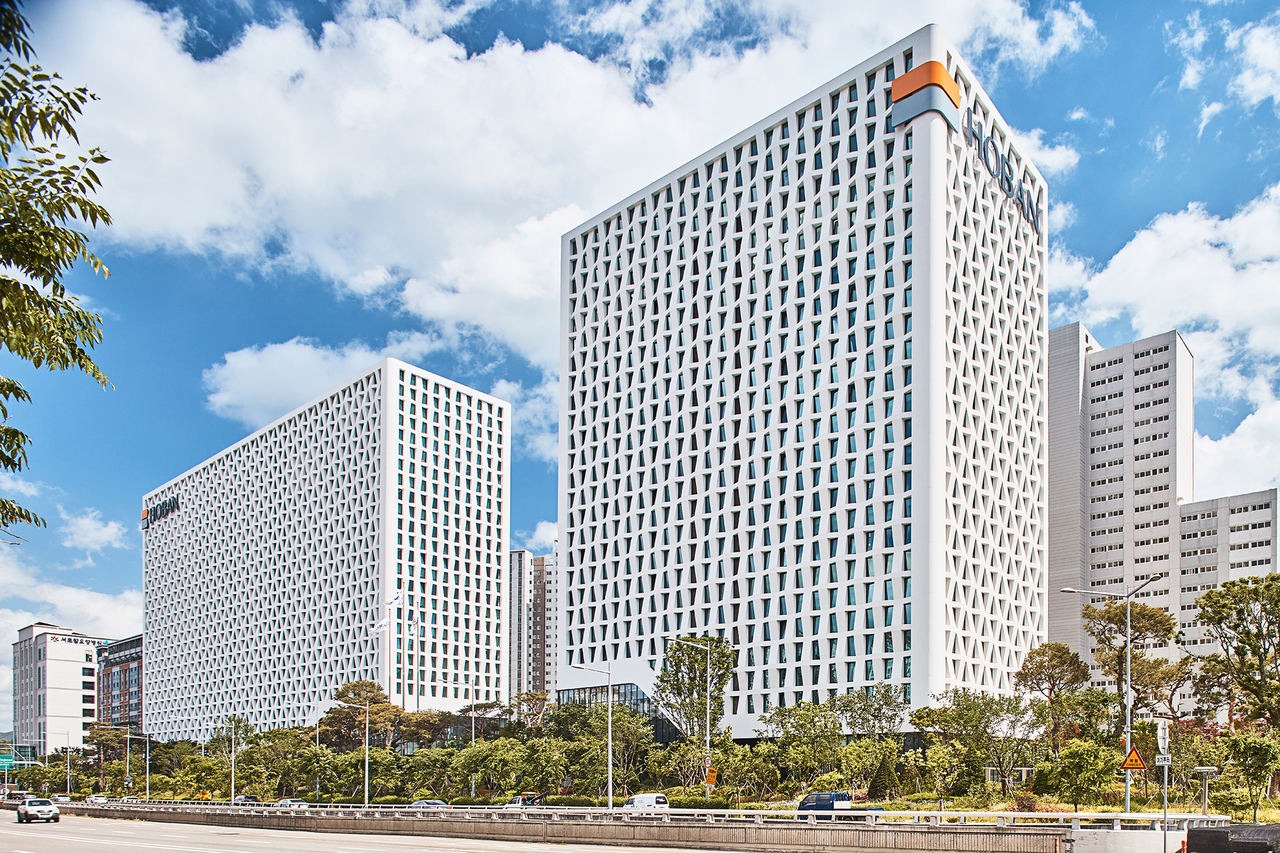
With Hoban Group having emerged as Hanjin KAL's largest shareholder, the 10.58% stake held by Korea Development Bank has become the pivotal variable that could determine the future of Hanjin Group's management control. Hanjin KAL's management still rests with Hanjin Group Chairman Cho Won-tae, but a governance battle could reignite at any moment should Hoban Group formally declare its intent to participate in management.
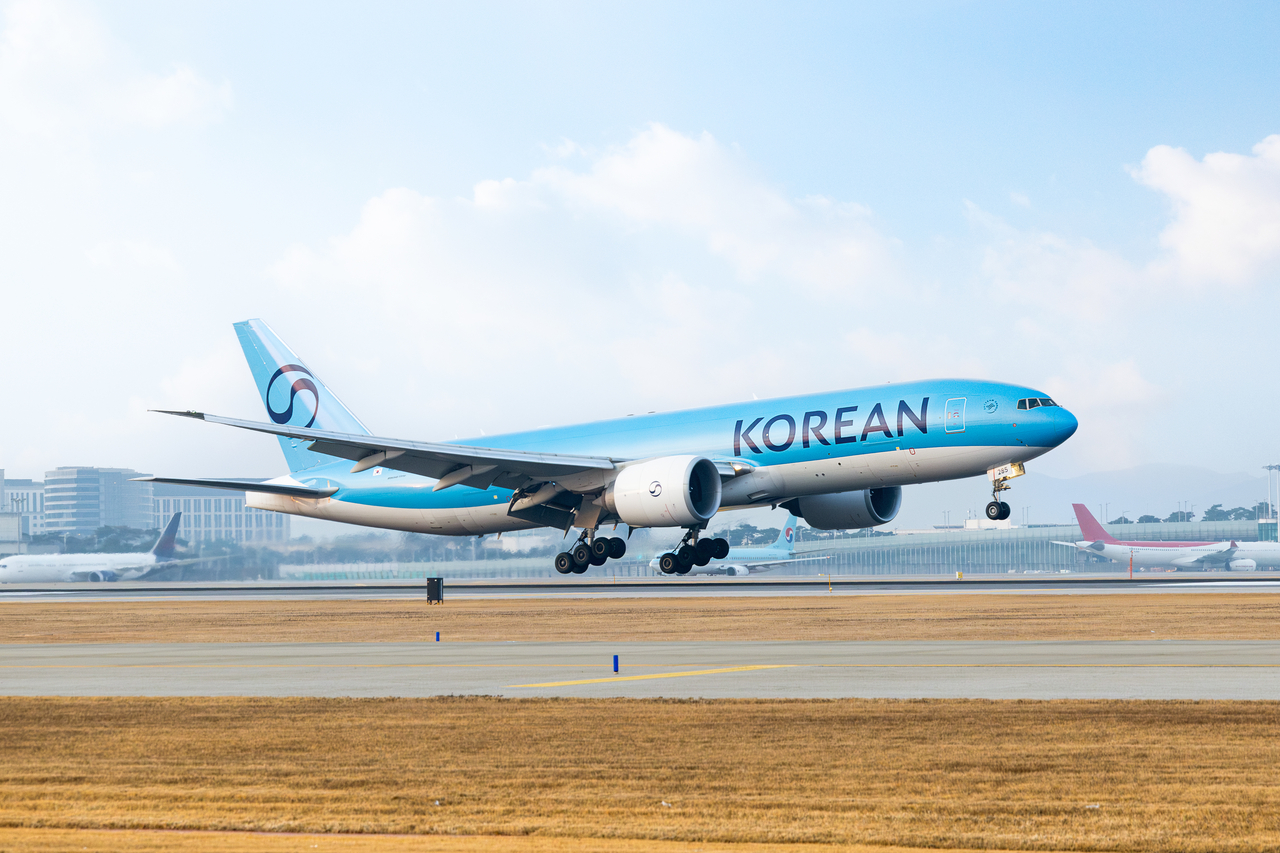
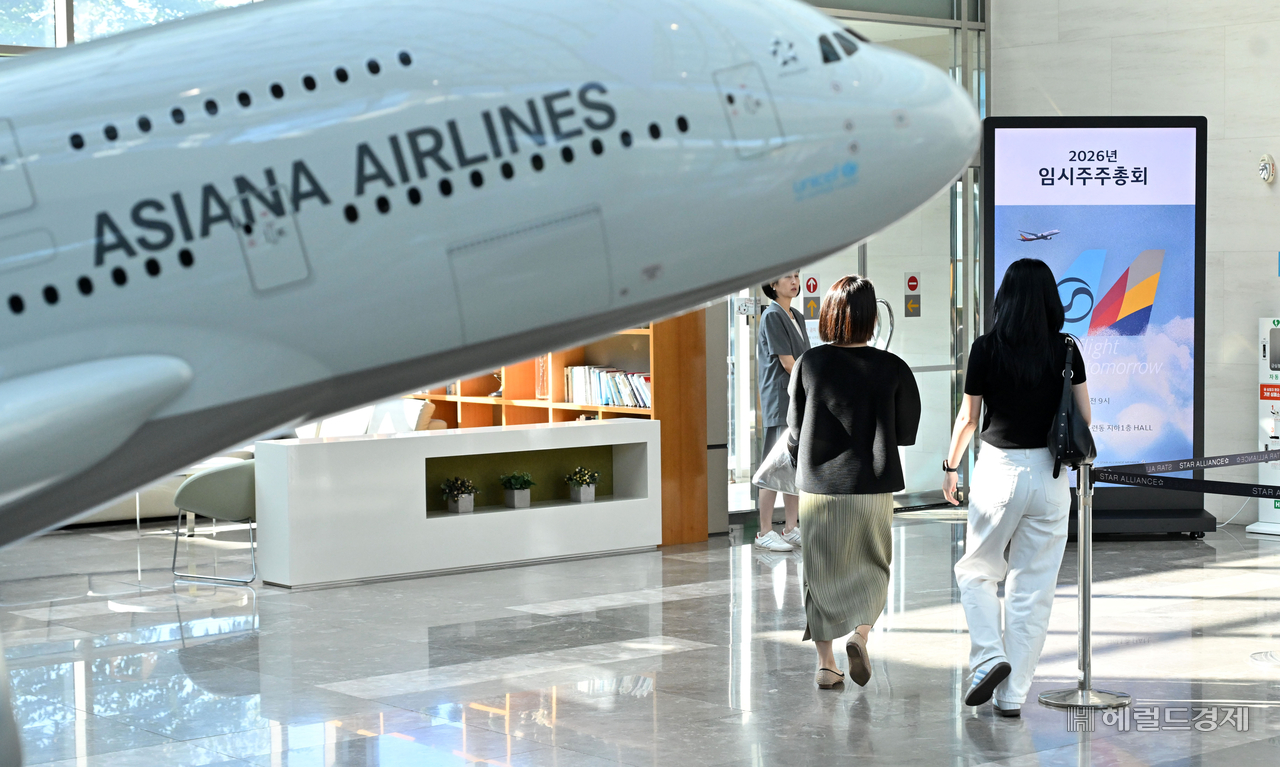
Korean Air Lines and Asiana Airlines are set to launch as a combined carrier on Dec. 17, industry sources said Monday. Jin Air will then absorb Air Busan and Air Seoul to form a unified Jin Air on March 17 next year. The domestic aviation industry restructuring, pursued since 2020, is in effect entering its final stage.
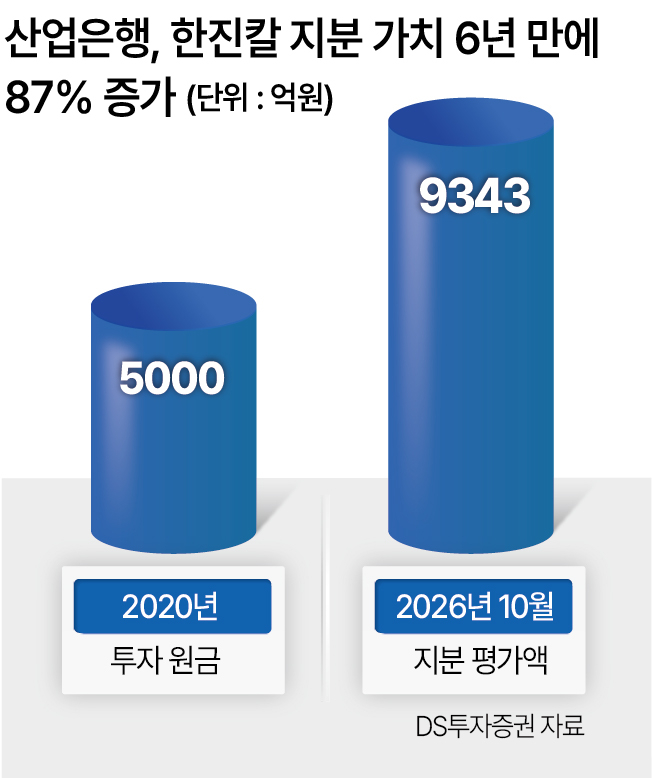
Against that backdrop, the question of how Korea Development Bank will handle its Hanjin KAL stake is likely to resurface. The bank invested 500 billion won ($374 million) in a Hanjin KAL rights offering in 2020 to support Korean Air Lines' acquisition of Asiana Airlines, securing a 10.58% stake. A separate 300 billion won in Korean Air Lines exchangeable bonds acquired at the time was repaid in December last year.
As the aviation restructuring that originally justified the investment nears completion, the bank has growing grounds to consider how to exit its remaining position, with estimated returns of around 90%. Still, an actual share sale is expected to take considerable time. Even after the merged carrier launches, the stable integration of its organization, workforce and flight operations remains unfinished, and the ownership dynamics surrounding Hanjin KAL have grown more complicated.
Aviation merger in final stretch — KDB's 10.58% stake poses a dilemma
With Hoban Group having become the largest shareholder through additional share purchases, Korea Development Bank's stake has grown into a block large enough to significantly influence any contest for control between the two sides. Industry attention is focused on whether the bank will sell to allies of Chairman Cho or to Hoban Group.
Selling to Cho's camp could draw criticism that the bank propped up the incumbent management's grip on power, while selling to Hoban could spark controversy that a state-run policy bank played a decisive role in shifting corporate control.
Having deployed public funds to support the aviation industry restructuring, Korea Development Bank would face considerable pressure if disposing of its stake were seen as helping a specific private company secure management control.
For that reason, if a full-blown control dispute materializes, the bank is more likely to hold its position and monitor developments than to move quickly to sell. Even if a sale does proceed, an open competitive tender is seen as the more probable route rather than a negotiated deal with a specific shareholder. DS Investment Securities noted that Korea Development Bank has used open bidding in past stake sales — including Daewoo Securities and HMM — and said the same approach could apply to its Hanjin KAL holding.
From Hoban Group's perspective, having already secured the top shareholder position, acquiring the bank's stake would dramatically widen the gap with Cho's camp. However, purchasing the entire block would push Hoban's Hanjin KAL ownership above 30%, potentially triggering the threshold for affiliate designation under the Fair Trade Act — bringing additional scrutiny of control relationships and conglomerate regulations covering Hanjin KAL and Korean Air Lines.
Hoban now the top shareholder — how long can 'passive investment' last?
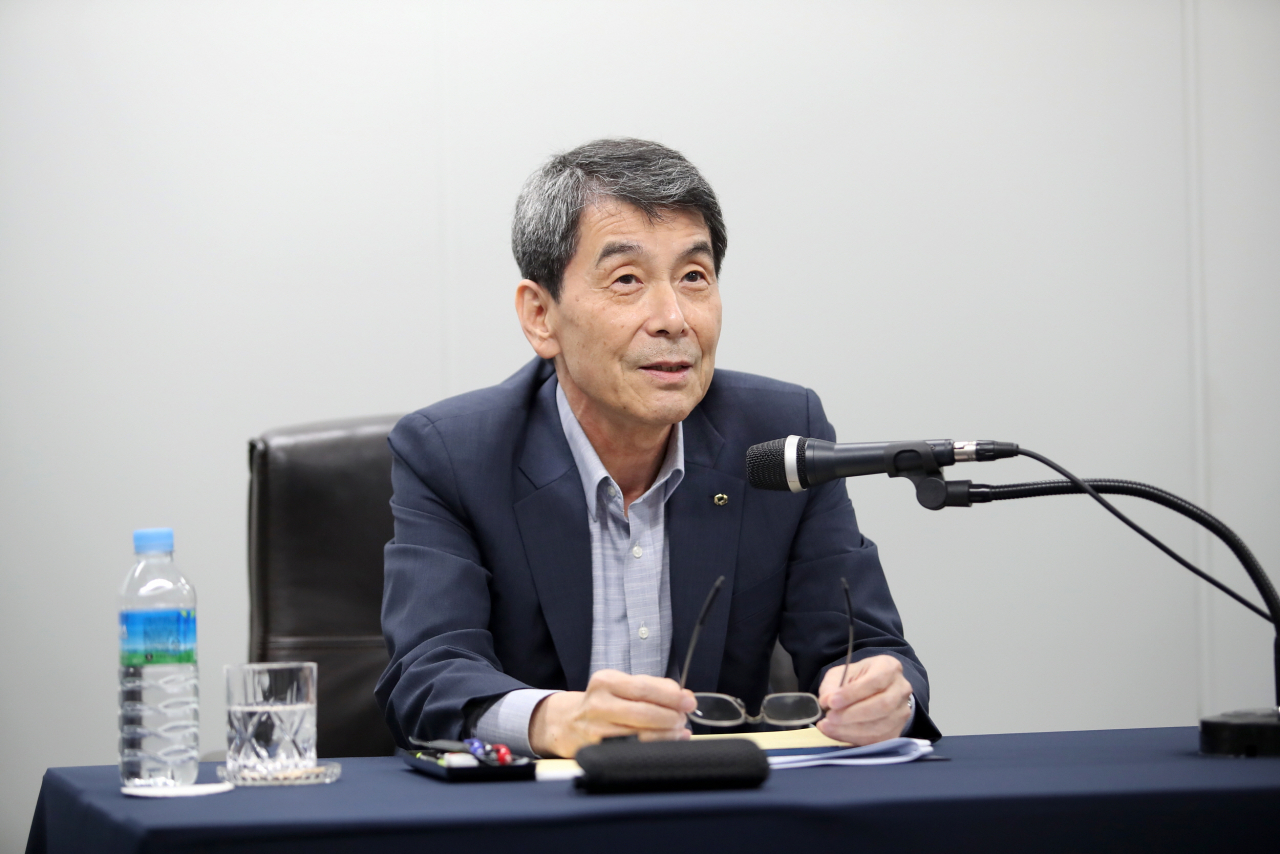
The timing of when Hoban Group will formally declare its intent to participate in management is another key variable. Since acquiring the stake held by private equity fund KCGI in 2022, Hoban has steadily built up its Hanjin KAL holding over roughly four years, yet has maintained its stated purpose as "passive investment." To date, the group has not officially signaled any move toward management involvement — such as nominating board candidates or calling for a change in leadership.
Becoming the largest shareholder alone does not automatically trigger an obligation to change the stated purpose of a holding. However, if an intent to influence management has already formed, that must be disclosed even if no specific plan of action has been finalized.
The disclosure of holding purpose has been a flashpoint in past Hanjin KAL control disputes. In 2020, Banado Construction — which had formed a three-way alliance with former Korean Air Lines Vice President Cho Hyun-ah and KCGI — was found by a court to have violated its obligation to report a change in holding purpose to management participation, resulting in voting rights being restricted on the portion of its stake exceeding 5%.
Even so, prematurely formalizing management participation could cost Hoban Group more than it gains. A full-blown control dispute would make it even harder for Korea Development Bank to proceed with a stake sale.
Observers expect Hoban Group to maintain the "passive investment" designation in the largest-shareholder change disclosure due this month. If an intent to influence management had already existed, the group would have been required to file a change report within five business days of that intent forming.
March shareholder meeting seen as turning point — shifting dynamics in the vote count
The annual general meeting in March is widely seen as the critical juncture. Three independent directors nominated by Korea Development Bank currently sit on Hanjin KAL's board, and all three are set to see their terms expire in March — raising the prospect of conflicting interests between the two camps during the appointment of successors.
Cumulative voting under the revised Commercial Act and the "3% rule" — which caps voting rights when electing audit committee members — add further complexity. When electing audit committee members, the largest shareholder and related parties may exercise voting rights on a combined maximum of 3% of shares, while other shareholders each face a separate 3% cap.
Under this framework, if Hoban Group retains its position as the largest shareholder, the combined stakes of affiliates such as Hoban Construction and Hoban Hotels & Resorts would be capped at a combined 3%, while the per-shareholder 3% limit would apply individually to each member of Cho's camp.
The friendly stakes secured by Cho's camp are also a variable. Delta Air Lines, which operates a joint venture with Korean Air Lines and holds 14.90%, is among those cited as allied shareholders, along with five companies including LX Pantos and GS Retail, and private equity funds affiliated with Daeshin and Eugene. Some analysts say a simple aggregation of those holdings with Cho's own stake would exceed a majority.
There is no guarantee, however, that all friendly shareholders will vote with Cho. Delta Air Lines is a strategic investor, and Korea Development Bank is a policy finance institution — each may ultimately act according to its own interests. The national pension fund, which holds 5.11%, voted against Cho's reappointment as an inside director at the March general meeting this year.
Earlier this year, Hanjin Group had sought to raise its Hanjin KAL stake held through three group-affiliated public interest foundations from 3.05% to 4.24%. While shares held by such foundations carry restricted voting rights, the move was interpreted as an effort to reduce the pool of shares available for Hoban Group to acquire and thereby check further stake accumulation. The plan ran into trouble when Jeongseok Inha Hagwon — the foundation with the largest planned purchase — withdrew its additional buying plan in September after controversy erupted over the use of school foundation funds for management defense purposes.
"Hoban Group is a company that has grown rapidly through mergers and acquisitions, and many see it as having its sights set on control of Hanjin Group as well," a business community insider said. "That said, Hoban is unlikely to formalize management participation until it judges the odds to be sufficiently in its favor. Cho's camp will also move to respond, so the uncertainty over control is likely to persist for a considerable period."
kwater@heraldcorp.com
eyre@heraldcorp.com