
Wins contract for smart bridge operating technology project
Cockpit-style IBS operable by as few as two crew members
Navigation, combat, propulsion and control functions integrated into single system
Maritime situational awareness and data-based collision avoidance technology to be applied
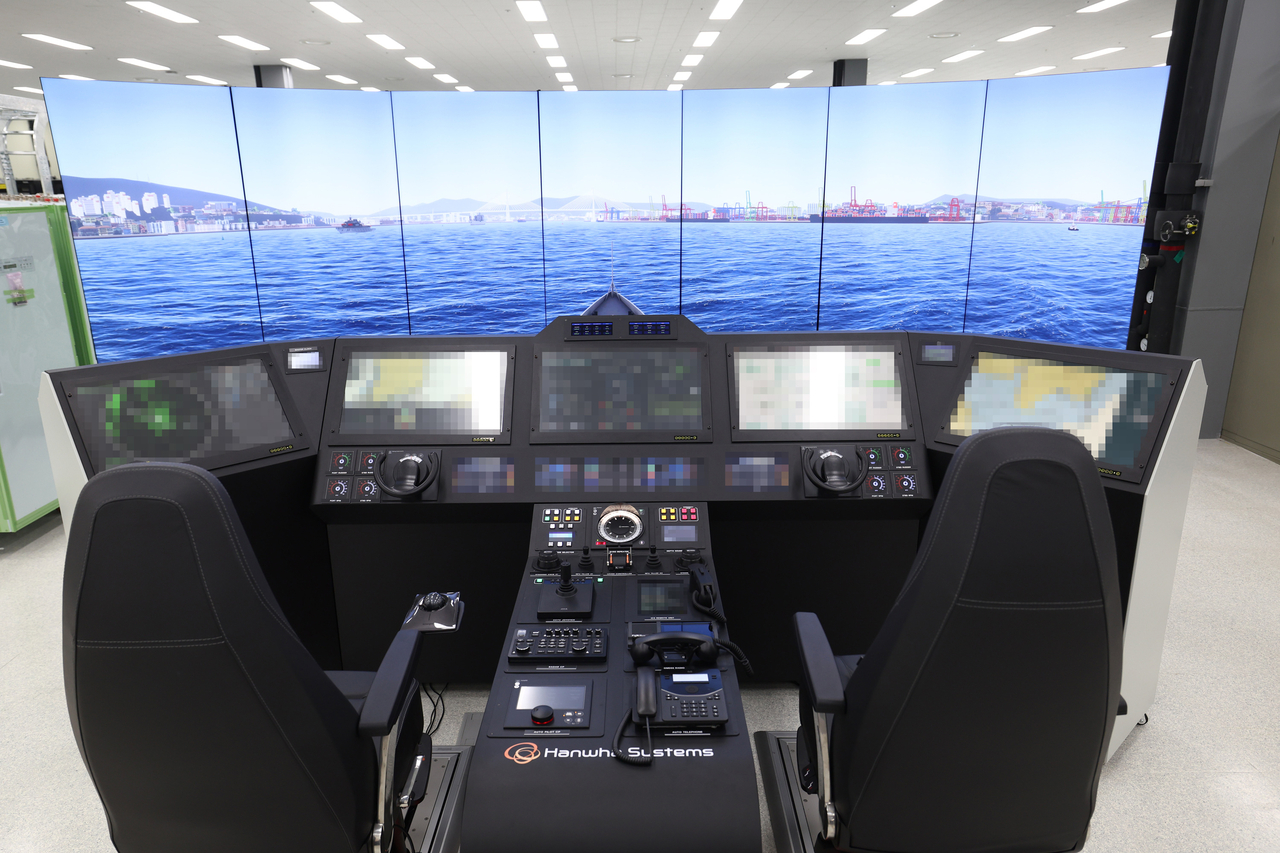
Hanwha Systems is moving to localize cockpit-style integrated bridge system technology, considered a core component of next-generation combat vessels.
Hanwha Systems announced Monday that it has won a contract for the "smart bridge operating technology with cockpit system" development project, overseen by the Defense Acquisition Program Research Institute.
The project runs through 2030 and covers everything from hardware — the console units for the cockpit-style integrated bridge system (IBS) — to software development for the integrated operating program.
A cockpit, as in an aircraft flight deck, refers to an operator's station that allows crew to intuitively monitor conditions around them. A bridge is the control room from which a ship's captain steers and commands the vessel.
The cockpit-style IBS is a state-of-the-art bridge system designed in the form of an aircraft cockpit, allowing just two crew members to simultaneously carry out navigation, combat, propulsion and control functions that previously required multiple sailors working separately.
The system also integrates, on a single platform, all components essential for vessel automation and unmanning: the integrated bridge system (IBS), combat management system (CMS), integrated engine control system (ECS) and unmanned systems (UMS).
Currently held only by countries such as the United States and Italy, cockpit-style IBS is regarded as a key technology for advancing naval capabilities in an era of declining populations, enabling safe navigation and mission execution with a minimum crew.
Hanwha Systems' cockpit-style IBS will incorporate maritime situational awareness visualization technology and data-based collision avoidance technology to ensure safe navigation under any maritime conditions.
"By winning the cockpit-style IBS contract, Hanwha Systems has secured all the core technologies for vessel automation and unmanning," said Yu Mun-gi, head of Hanwha Systems' maritime business division. "We will complete our lineup of key technologies to lead the future era of unmanned vessels under the Navy's 'Smart Navy' strategy, which aims to build an advanced, technology-intensive force."
keg@heraldcorp.com




