
19th Asia-Pacific Conference of German Business held in Seoul
Opening dialogue features Trade Minister Kim Jung-kwan, State Secretary Leuenhofer
Kim: 'We have a shared responsibility to preserve multilateralism'
Leuenhofer: 'Diversification must create new partnerships'
Both sides emphasize bilateral AI partnership
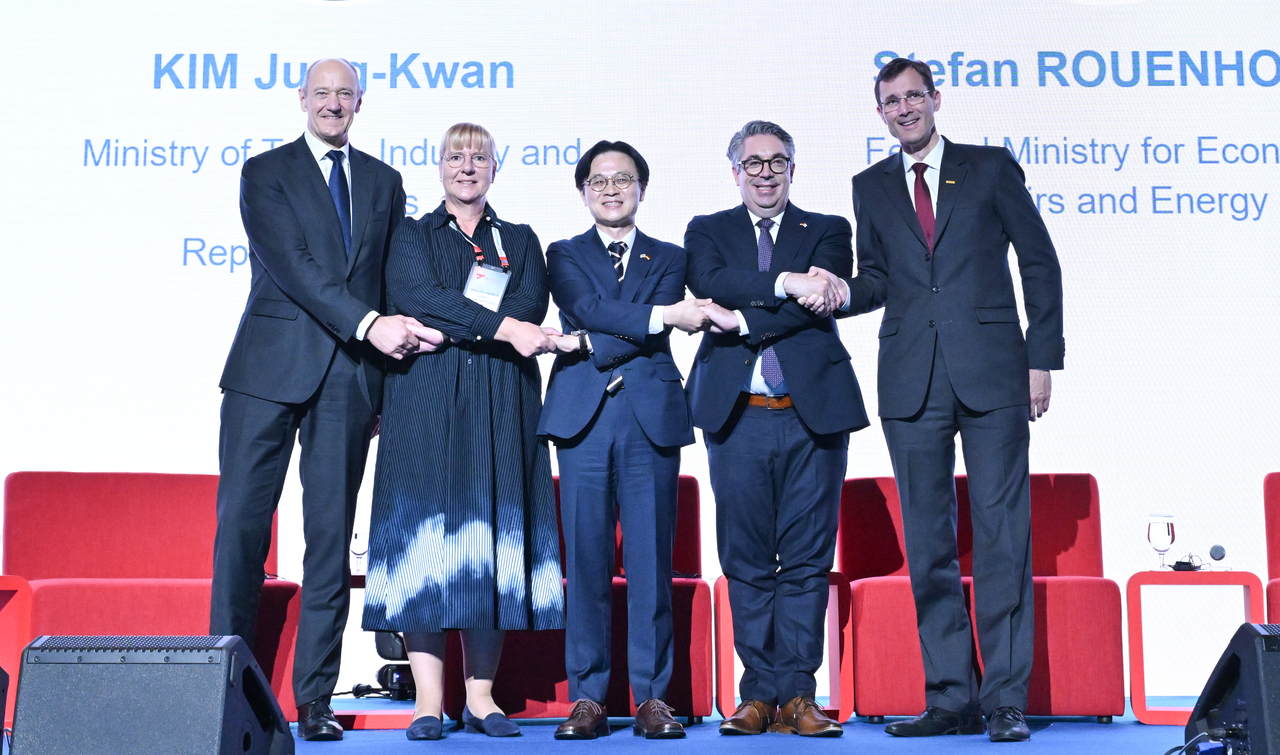
South Korea and Germany signaled Friday that both countries must deepen economic openness even as major economies tighten protectionist barriers. Officials from both governments also found common ground on the need to collaborate on industrial AI to stay competitive in the global technology race.
'We cannot sacrifice either economic security or openness'
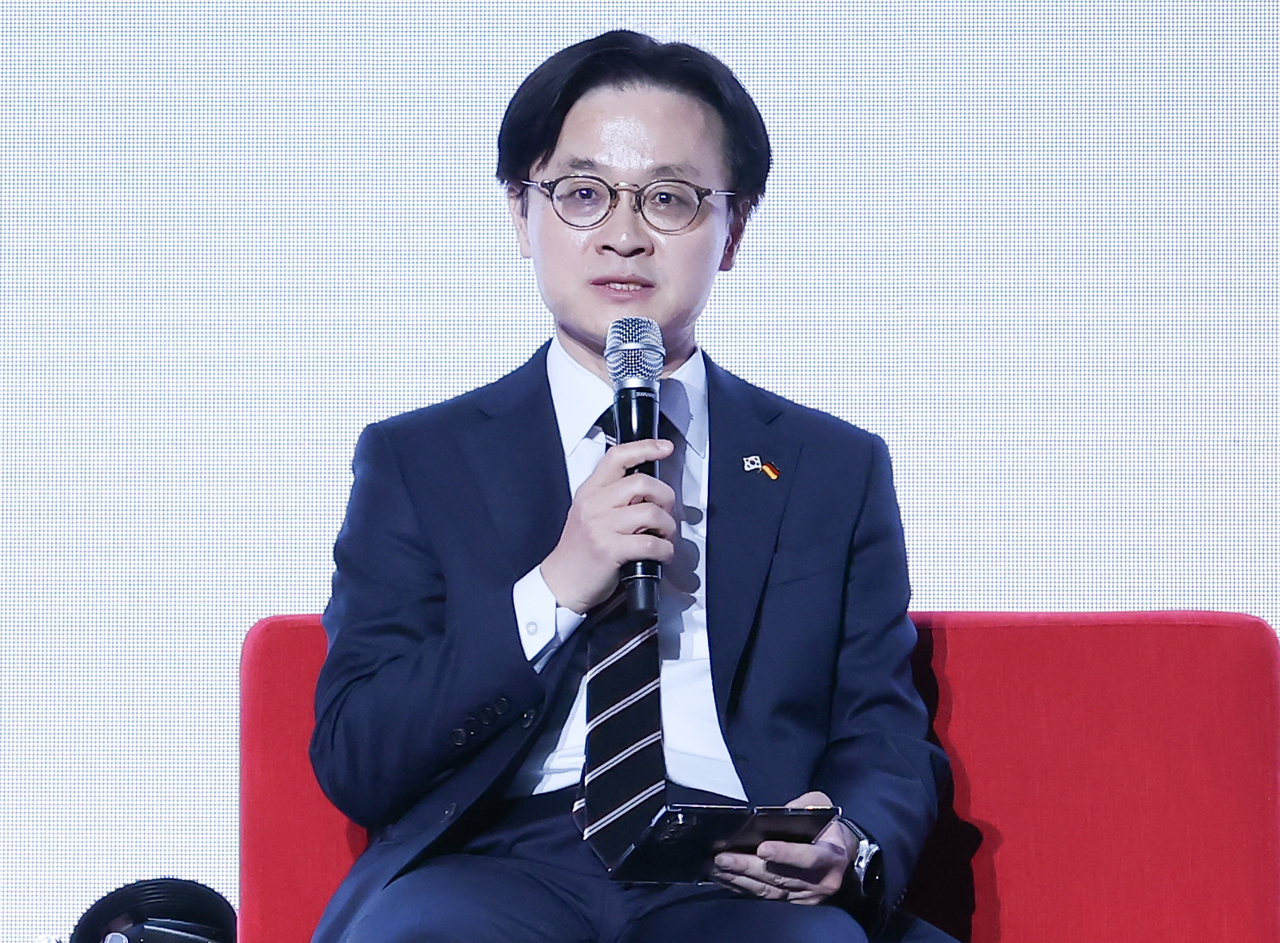
South Korea's Minister of Trade, Industry and Energy Kim Jung-kwan said at the opening dialogue of the 19th Asia-Pacific Conference of German Business (APK 2026), held Friday at the Grand InterContinental Seoul Parnas, that "the Indo-Pacific region is no longer simply a zone of economic opportunity — it is becoming the center of geopolitical competition." Kim stressed that "our goal is not to choose between security and economic openness, but to achieve both." The session was themed "How the global power shift affects economic relations between Germany and the Indo-Pacific."
Major economies including the United States and China have been raising tariff barriers under the banner of protecting domestic industries, fueling geopolitical tensions as competing national interests collide.
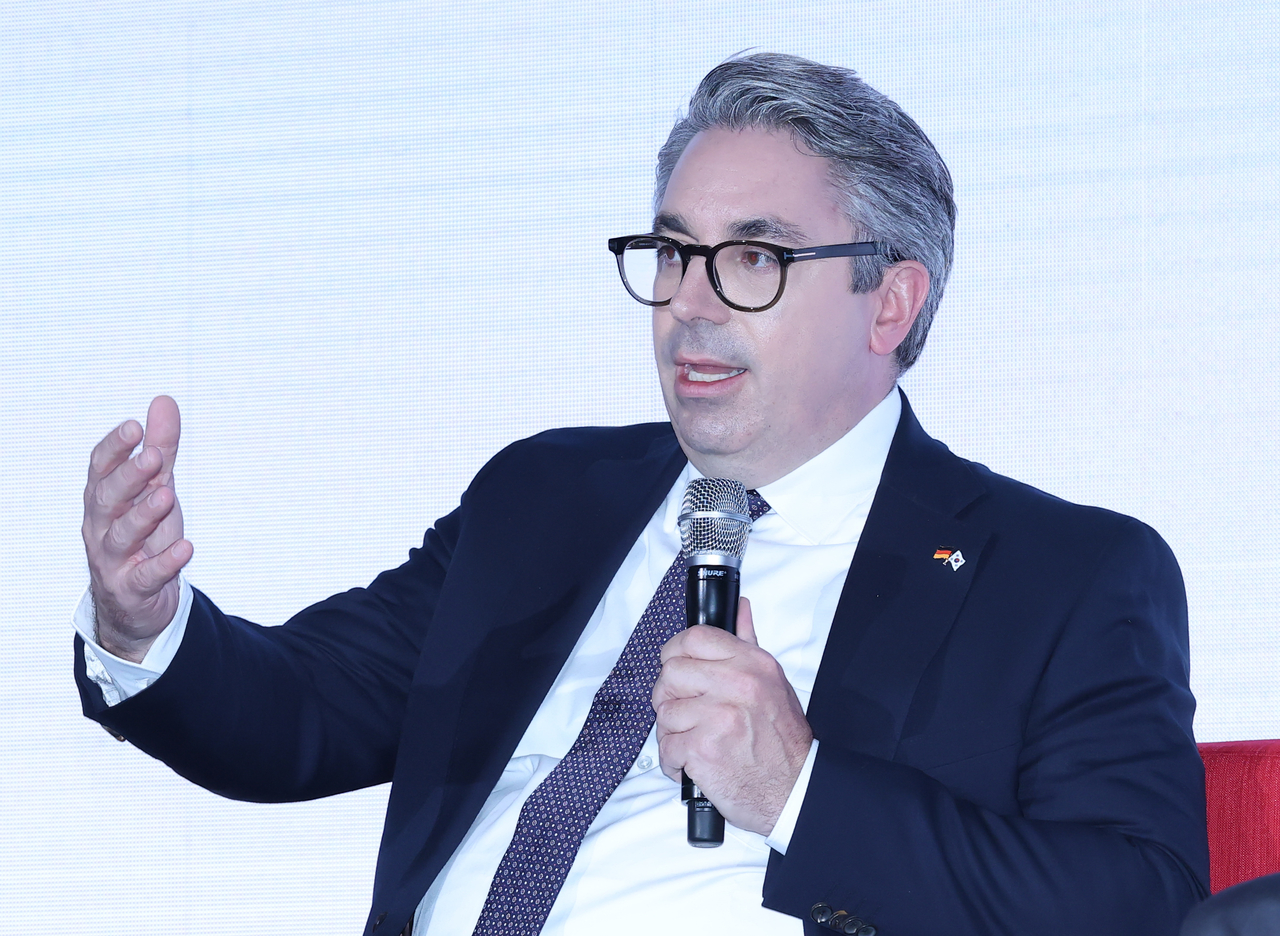
Speakers argued that South Korea and Germany must not abandon multilateralism and openness even amid the protectionist tide, noting that the manufacturing strengths both countries share can only grow through open markets. Stefan Leuenhofer, state secretary at Germany's Federal Ministry for Economic Affairs and Energy, said the two sides must "find the right balance between industrial policy and market openness," adding that "diversification must create new partnerships and build economic resilience."
Kim said that because South Korea and Germany "have benefited enormously from an open economic order, we bear a shared responsibility to preserve and strengthen that system."
Tobias Meyer, CEO of DHL Group, said protectionism "does absolutely nothing for export-driven economies like Germany's," and called for sustained dialogue with Asia-Pacific partners, including China, to find better solutions rather than retreating behind trade barriers.
'Korea and Germany share much in common — ideal partners'
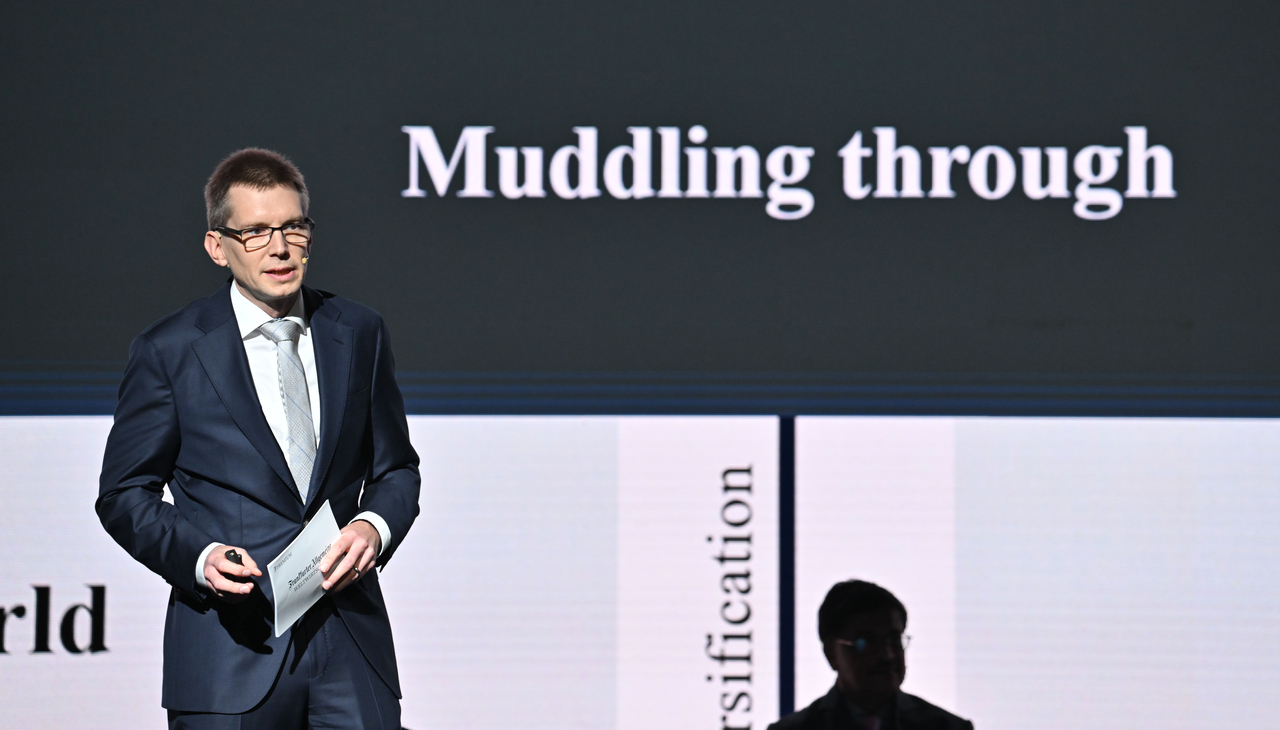
A subsequent session on Germany–Asia-Pacific trade scenarios for 2030 produced the view that South Korea could be Germany's ideal partner, given the many economic and social parallels the two countries share — including aging populations.
Patrick Bernau, newly appointed editor of the geoeconomics newsletter at Frankfurter Allgemeine Zeitung, said South Korea and Germany "share so many things in common that they have the potential to collaborate across a wide range of fields." Bernau added that "Germany needs South Korea's semiconductors and batteries, while German equipment and components will find strong opportunities in South Korea."
Participants also raised the need for closer ties with ASEAN economies of comparable scale. Park Shin-young, executive director of the SEACEN Centre, said ASEAN accounts for roughly 7 to 7.9 percent of global GDP and records a GDP of more than $4 trillion in purchasing-power-parity terms — on par with Germany.
'Combine German technology and Korean AI capabilities to build solutions'
The day's discussions also turned to how South Korea and Germany can carve out a leading position in the AI era. Leuenhofer said that while "it is true that the United States and China have advanced AI very rapidly through large language models, Germany and South Korea can take a leading position through industrial AI." Industrial AI refers to AI systems deployed in factories and other manufacturing facilities to maximize production capacity.
The two countries agreed Thursday at a summit held at Cheong Wa Dae to establish an "enhanced strategic partnership," aiming to deepen cooperation beyond existing trade ties into areas such as the semiconductor ecosystem. South Korea's Ministry of Trade, Industry and Energy and Germany's Federal Ministry for Economic Affairs and Energy also signed a joint letter of intent for an "Economic High-Tech Partnership Framework" that day, committing both sides to collaboration in electric vehicles, batteries, advanced energy systems and industrial AI.
Kim said the key question around AI is "who can translate AI into technology that is actually applicable on the industrial floor," and argued that combining "Germany's precision machinery and automation capabilities with South Korea's AI technology, the two countries can create practical industrial AI solutions that lead the global market."
Speakers also cautioned that security risks must be carefully managed as AI technology develops. Meyer warned against "technological dependency on specific big-tech companies," saying that "designing systems that do not rely on big-tech is critically important both commercially and geopolitically."
yeongdai@heraldcorp.com
soho0902@heraldcorp.com




