
Japanese playwright Mitani Koki brings 'American Dream' to Seoul
A story of Hollywood filmmakers caught in the Red Scare
Original Japanese cast returns to Korea for first time in 16 years
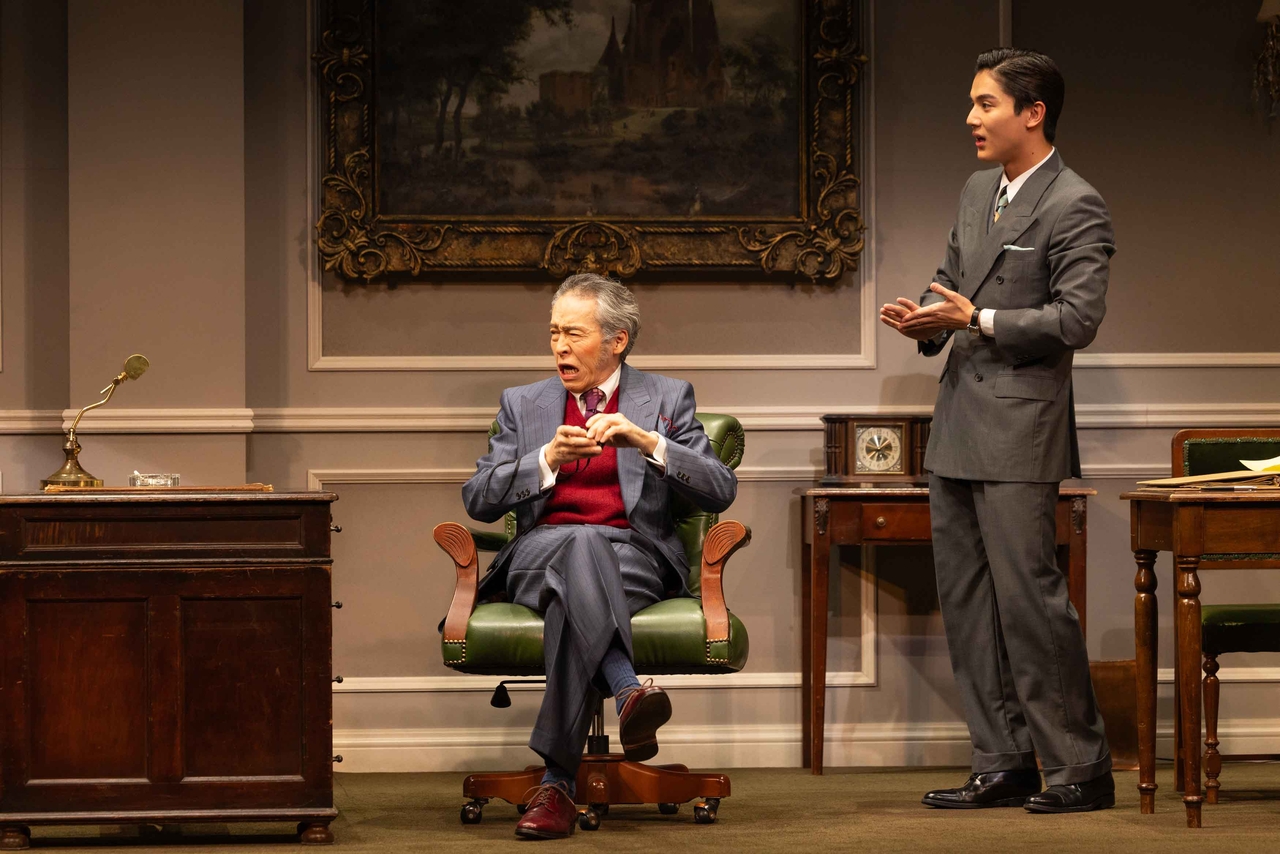
"Are you a Communist, or have you ever been a Communist?"
Hollywood, 1947. As the Cold War between the United States and the Soviet Union deepened, the land of dreams turned on itself in search of an enemy within. The heart of the capitalist film industry was no exception. Subpoenas from the House Un-American Activities Committee rained down on studios across the city. Those named as Communists lost their jobs. To survive, you had to name your colleagues.
The stage is built in two layers. Below sits a hotel room secretly rented by the committee — an interrogation chamber into which filmmakers are summoned one by one. Above hangs a screen the size of the stage itself. Subtitles scroll across it, and occasionally the image shifts to the room next door: hidden-camera footage of a waiting area where filmmakers gather before their turn. Vivid dialogue from the interrogation room gives way to the camera panning to that waiting area, and then the stage returns to the interrogation. Theater time and film image run side by side within a single stage.
"There are no villains. There are only victims."
This spare sentence, which appears on the screen before the curtain rises, encapsulates an era. Even an audience unfamiliar with Hollywood of that period can sense from this single line that the Red hunt was a tragedy that left no one unscathed. The words were spoken by blacklisted screenwriter Dalton Trumbo, who served prison time, at the 1970 Writers Guild of America Awards.
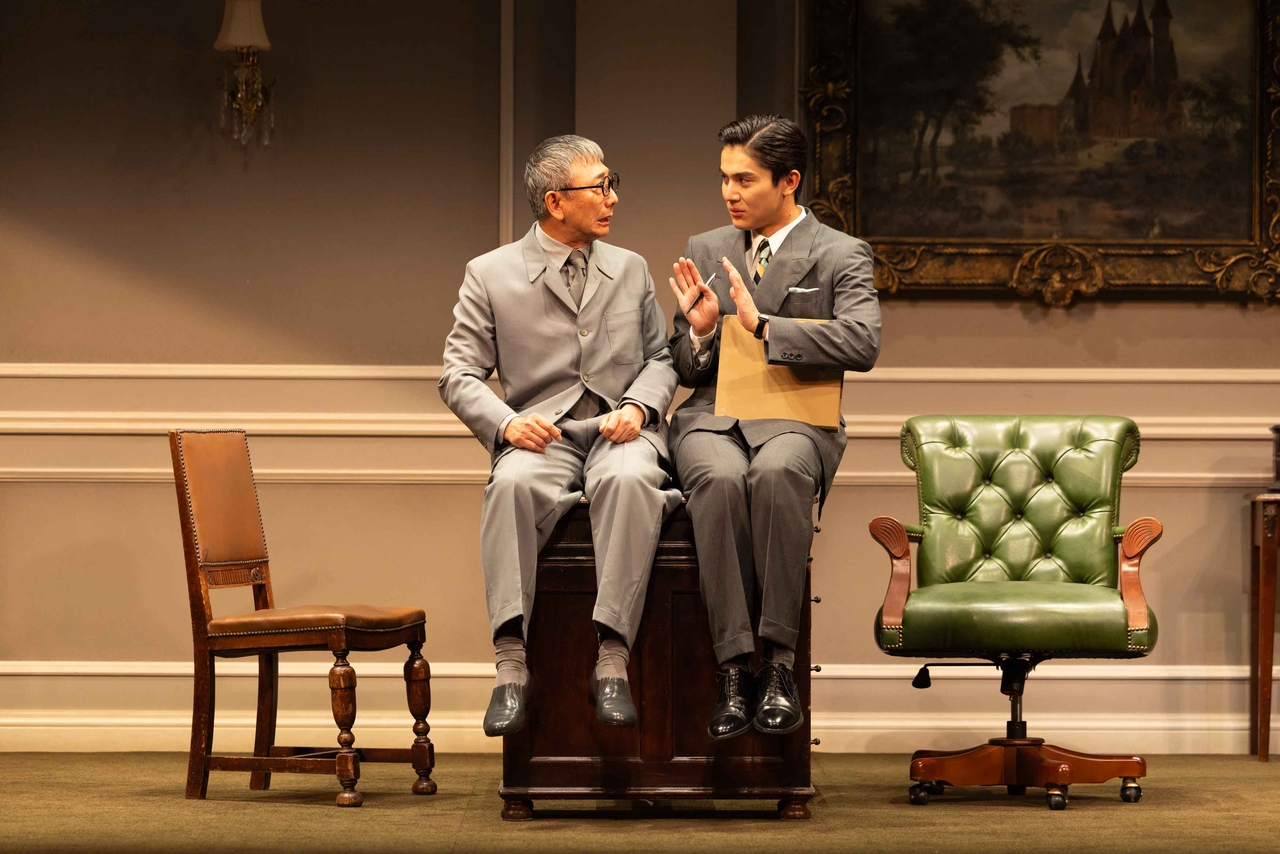
Mitani Koki — the Japanese playwright and director best known in Korea for "University of Laughs," which starred Song Seung-hwan and Seo Hyun-chul — opens his new work "American Dream" (Oct. 30–Nov. 1, COEX Artium Woori Bank Hall) with that sentence. At a press conference held Friday at COEX Artium in Seoul, Mitani said, "Everything is contained in those words." The production premiered at Parco Theater in Tokyo in August, toured seven cities across Japan, and arrived in Seoul as the final stop, with the original Japanese cast performing in their native language. It is Mitani's first official theatrical visit to Korea in 16 years.
Four filmmakers are summoned to the hotel room. Mitani shapes their responses to the era's targeting into four distinct archetypes. Faced with a single question, each gives a different answer. The play assigns no correct stance on how an artist should confront power. What it pursues relentlessly, however, is how violent that suppression was — and how the survival and dignity of artists were driven to the very edge. The answer each person gives is, in the end, the shape of the life each has lived.
Each survival looked different — a black comedy of satire and ridicule
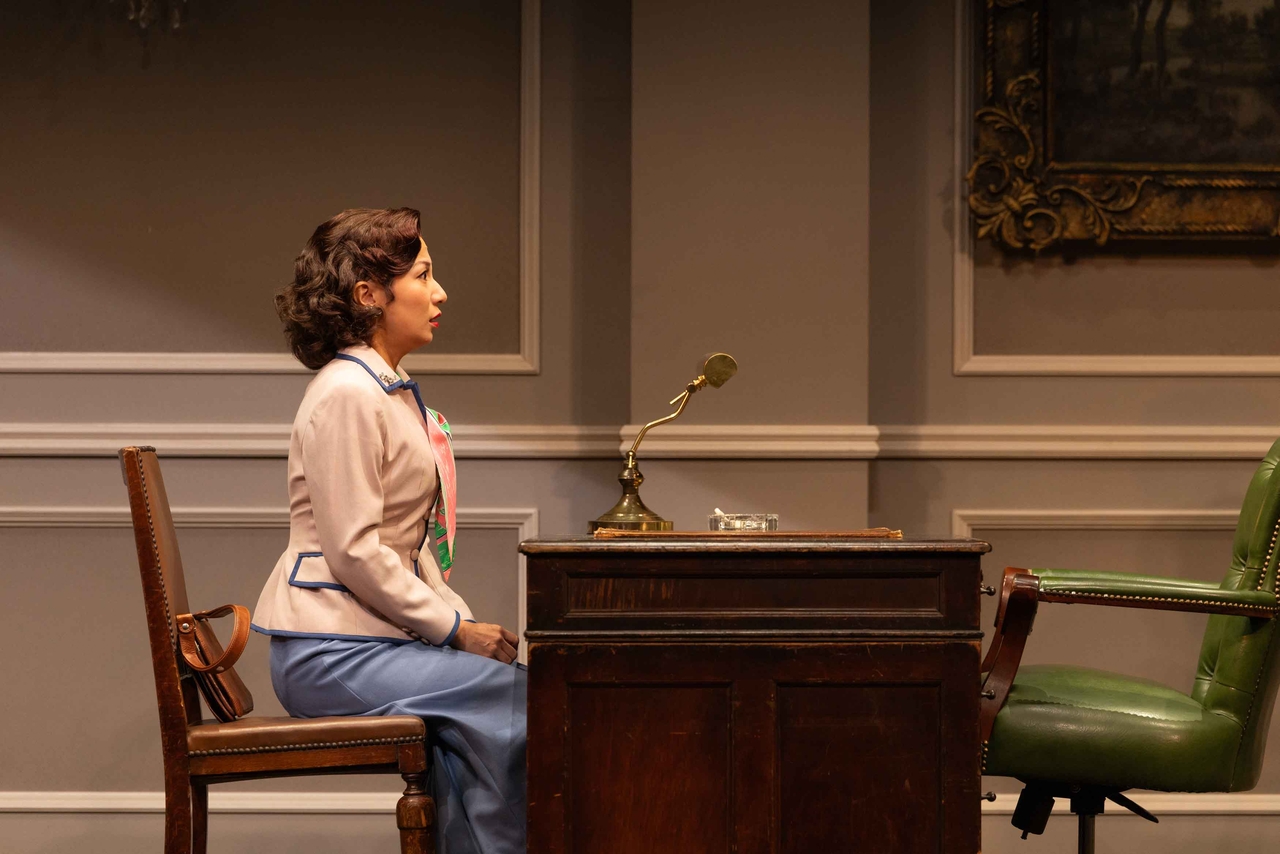
The first to enter is an unnamed actress (played by Sekiya Haruko). She has appeared in notable films and even won an award for a memorable performance, yet her name appears only at the tail end of the credits — someone a casual moviegoer would not recognize by face or name. For an actress who never knows when the next role will come, ideology is a luxury. Today's livelihood and tomorrow's meal come first. She still works at a Chinese restaurant while waiting for her next part.
The committee has one demand: inform on who attended a party held on Aug. 30 of that year at the home of a screenwriter known to be a Communist. The actress ultimately signs a document bearing the names the committee has already compiled. Sekiya does not dress up that capitulation in grand terms. With trembling eyes and a quietly swallowed breath, Sekiya conveys the despair of someone choosing survival while still clinging to what she wishes she could protect. Mitani said he "wanted to portray the nameless actors who appear in almost no historical records" and "wanted to convey that they, too, fought their own battles."
The second interrogation centers on a film director (played by Asano Kazuyuki) who handed colleagues' names to the committee. Modeled on Elia Kazan, the director is determined to keep making films no matter what. Asano layers cold calculation beneath a breezy manner without reducing the informer to a flat villain. The face of this director — whom Mitani calls "the character who most precisely embodies Trumbo's words" — is marked less by meanness than by a ferocious hunger for the camera.
The third to be called is a Meister (played by Yamazaki Hajime), an exiled playwright who fled Nazi Germany. Modeled on Bertolt Brecht, the Meister slips through the committee's interrogation like a seasoned escape artist, responding to every question with elaborate digressions and sophistry. The real Brecht did much the same at his Oct. 30, 1947, hearing, talking circles around the committee before leaving the United States the following day.
When asked point-blank, "Are you a Communist?", the Meister launches into a lengthy lecture on the criteria for identifying a vegetarian, then concludes: "And therefore I am not a vegetarian." It sounds like a non sequitur, but it is a sharp device that exposes the absurdity of ideological litmus tests.
The exiled writer who came to America in search of freedom finds himself subjected to an ideological inquisition in the so-called land of the free. The Meister laments that the "American Dream" turned out to be an illusion, then delivers a cutting line: "This very method of rooting out Communists is itself thoroughly Communist." It is the passage Mitani points to when explaining that the title carries "a slightly cynical meaning — about what the aspiration everyone once dreamed of actually looked like in reality."

Another unexpected highlight of the production is a sausage. After his interrogation, the Meister delivers a passionate tirade over his room-service order: he asked for two kinds of sausage, and the American hotel had the audacity to boil the one that should have been grilled and grill the one that should have been boiled. The exile who so deftly sidestepped every ideological question refuses to yield a single inch on the question of cooking method — and the audience erupts.
Mitani declared that "this one is not a comedy," yet offbeat lines and comic touches flash throughout. The laughter is not mere entertainment; it is a weapon that twists the hysteria of the Red hunt into something ridiculous. An intelligent script and the cast's exceptional ensemble work bring the fierce psychological dueling, the verbal sparring, and the bursts of humor and humanism to life.
The lens of surveillance, the romance of art
The final chair in the interrogation room belongs to a screenwriter (played by Kohinata Fumiyo). Speaking in a measured tone, the screenwriter draws a clear line between what will and will not be answered, and when colleagues' names come up, stays silent to the end. The spare, refined performance completes a portrait of an artist who will not bend to oppression, gripping the audience from the first moment.
It is also the screenwriter who sees through the pantomime in the waiting room. "People in film are sensitive to lenses," the screenwriter observes. The filmmakers in the waiting room already knew the hidden camera was there — which explains why they mugged for it and filled the footage with trivial small talk. After noting that "no one says anything important in there," the screenwriter proposes sending those who have finished their interrogations home.
Even the committee members find themselves disarmed by the screenwriter's composed and courteous manner. At one point during the investigation, a conversation about films leads, almost accidentally, to a committee investigator being put through an acting audition — a moment that proves the interrogators, too, are not "villains."
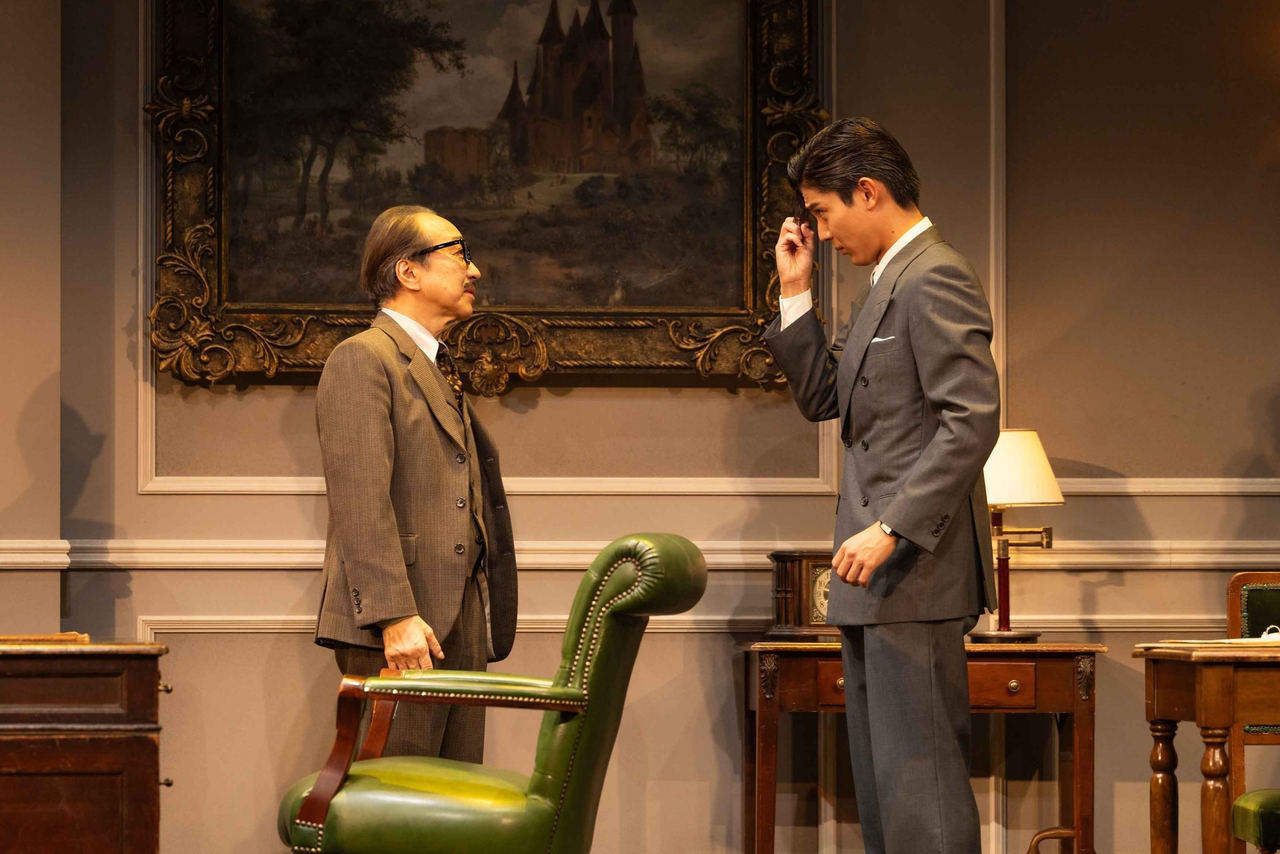
The screenwriter holds firm through the committee's interrogation. Openly identifying as a Communist, the screenwriter insists this does not mean active organizing or ideological proselytizing. What the screenwriter is protecting is not a political creed but a conviction as an artist and a human being. "When I write a script, there is one thing I keep in mind: to stand on the side of the weak. Because I myself am weak." To the screenwriter, the filmmakers whose livelihoods are threatened by the Red hunt — and the Communists themselves — are all among the weak. That is why the screenwriter asks how anyone could inform on the weak and then claim to write on their behalf.
Yet no one leaves. The actress, being weak, watches for cues; the Meister waits for the sausage; the director brazens it out. The screenwriter tosses out a casual observation: "There are two kinds of people in the film world — those who leave the moment it's over, and those who linger." The reasons for staying differ, but it is those who stay who fill the stage at the end.
"American Dream" is a play about film, and a play that makes a film on stage. The dialogue that passes back and forth in a single hotel room is tightly woven, and the cast delivers it with quiet restraint — neither the comedy nor the tragedy is pushed too hard. Above it all, the screen adds the eye of the camera. Mitani, who has moved fluidly between film and theater throughout his career, said he does not think of the two as separate, viewing them instead as "a single unified art form." The sensibility of a writer who has loved Hollywood films of the 1950s and '60s permeates every corner of the stage.
The story continues even after the interrogations end. The actress, still looking for work, runs into the informer director somewhere outside the hotel. A dangerous tension hangs between the director who holds casting power and the actress — though only the actress fails to sense it.
The play's closing does not surrender the essential romance of cinema. A young committee member (played by Nakagawa Daishi), who has witnessed the naked face of ruthless power and the unbroken dignity of artists, retrieves a dream of film kept long buried. An elegant dance sequence conjures the age of jazz and swing, while the enormous screen above the stage captures the scene like a black-and-white film. In the moment theater becomes cinema, the audience comes face to face with the vitality of art — something that survived even an age of violence. When Mitani announced the cast last June, he wrote:
"I, who love theater and love American cinema, will portray the world of American film within the world of theater. At last, a dream has come true."
shee@heraldcorp.com




