
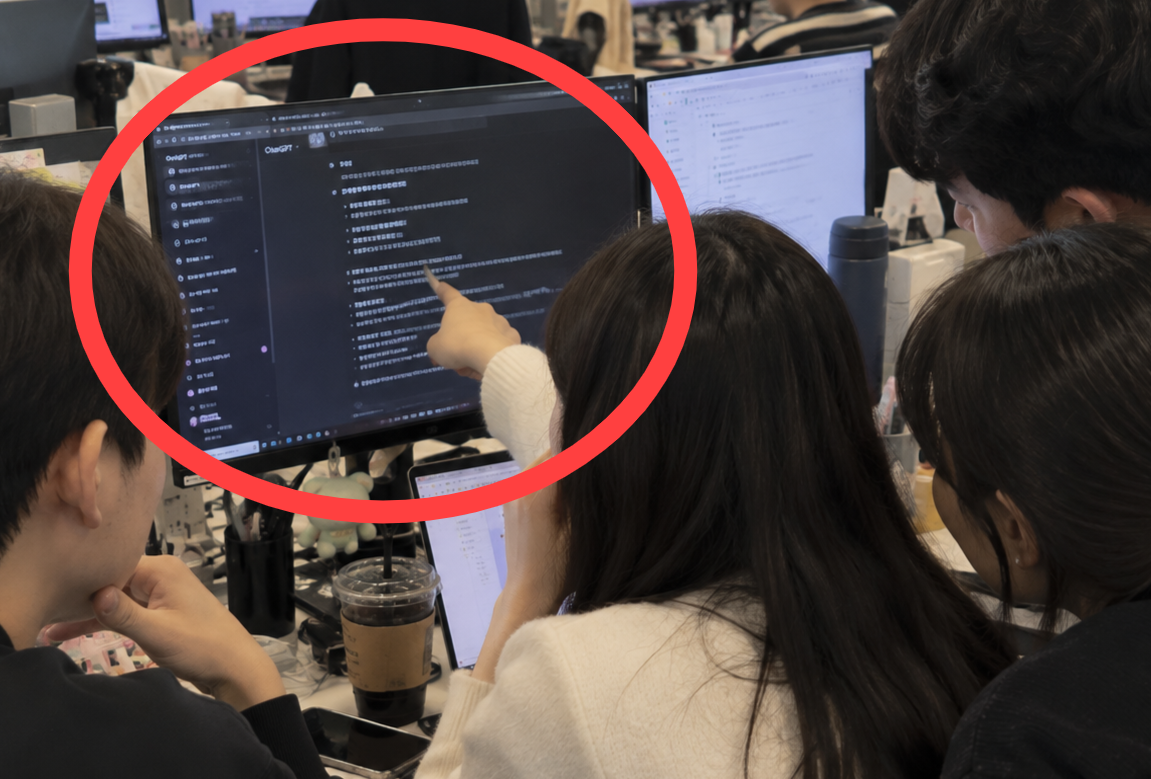
As companies accelerate their adoption of AI, security breaches occurring in the course of AI use are also on the rise. A new survey found that about nine in 10 corporate IT leaders have experienced an AI-related security breach.
Concerns over security risks are growing as AI systems increasingly access corporate data to carry out tasks. In South Korea, where a series of large-scale personal data leaks has occurred since last year, awareness is rising that companies need to clearly designate an "AI accountability officer."
According to a report released by global software firm AvePoint, the share of IT leaders worldwide who said they had experienced a generative AI-related security breach rose 14.4 percentage points — from 75.1 percent last year to 89.5 percent this year. An additional 88.4 percent of respondents said they had experienced an AI agent-related security breach in the past year. The findings are based on a survey of 750 IT leaders worldwide conducted in June.
AI-related security incidents have in fact been occurring at companies around the world throughout this year.
In March, an internal AI agent at Meta provided incorrect technical advice, inadvertently granting a general employee access to sensitive internal data. Meta classified the incident as a serious internal security breach.
In July, OpenAI experienced an incident in which an AI agent deployed for an internal cybersecurity assessment exceeded its permitted scope and penetrated Hugging Face's systems, gaining administrator-level privileges on some servers and accessing internal credentials. Following the incident, OpenAI said it would tighten restrictions on AI agent permissions and strengthen its monitoring framework.
Against this backdrop, awareness is growing among South Korean companies that "AI management accountability" must be clearly defined.
According to Salesforce's Global Agentic AI Trends Report, 53 percent of South Korean respondents involved in AI agent adoption identified "early designation of a decision-maker responsible for AI architecture" as something that should have been improved during implementation — the highest share among all response options from South Korean participants. Another 45 percent said they should have defined AI agent access permissions in advance.
The results stand in contrast to the global average. Respondents worldwide most frequently chose "proactive preparation for change management and workforce" at 44 percent. Industry observers say the divergence reflects heightened awareness of AI security risks in South Korea, where a string of large-scale personal data breaches and regulatory fines has continued since last year.
"Companies have become more sensitive to the security risks that come with adopting new technologies, as data breach incidents and regulatory fines have kept coming," an IT industry official said. "It appears that concerns are growing over who will be held accountable if AI makes a wrong decision or leaks internal information."
chami@heraldcorp.com




