
96 Kospi firms, 55 Kosdaq firms named
Korea Exchange to offer tailored consulting to listed companies
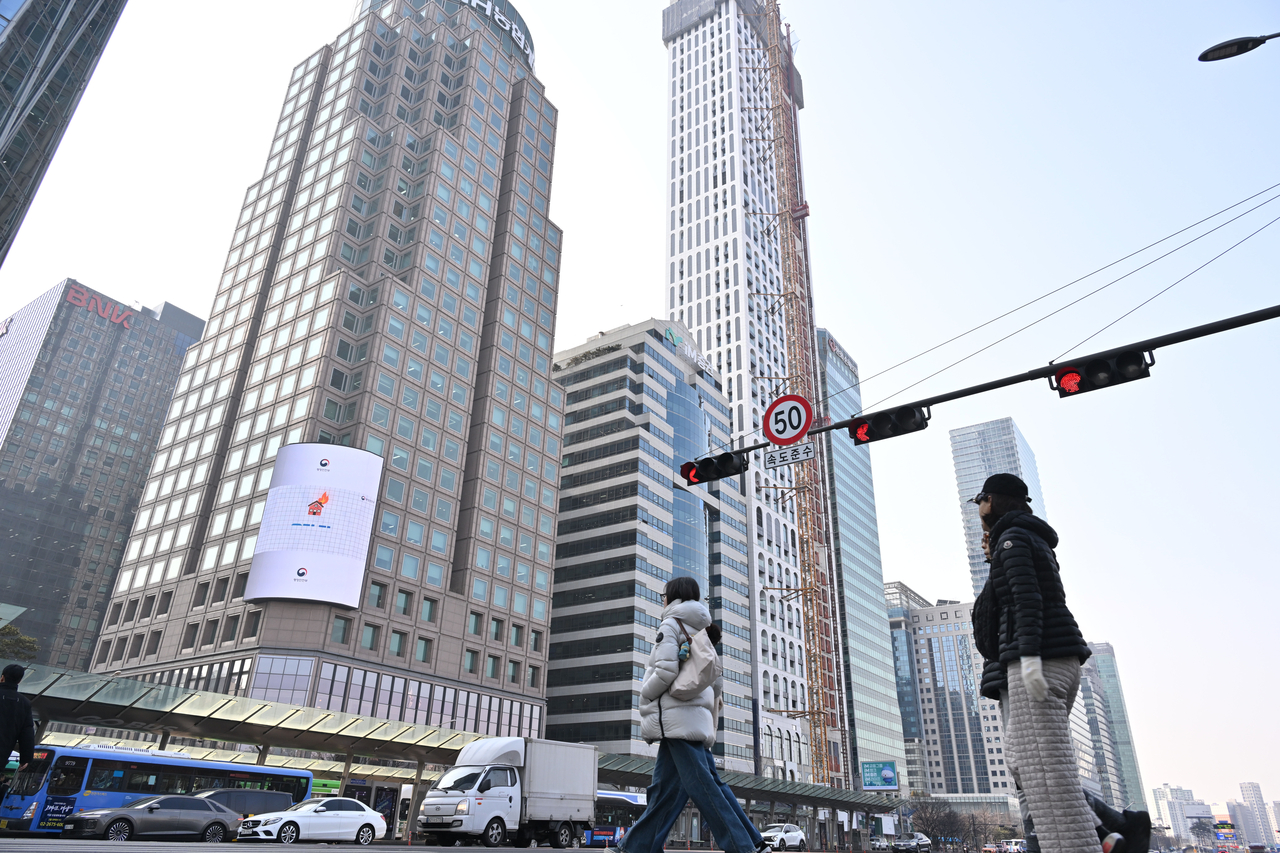
Korea Exchange on Sunday published for the first time a list of 151 companies that have persistently traded at low price-to-book ratios across their respective sectors over the past three years.
A price-to-book ratio, or PBR, divides a company's share price by its book value per share. A reading below 1 means the company's market capitalization falls short of its liquidation value — a signal that the market is severely undervaluing the firm relative to its assets.
The exchange named 96 Kospi-listed companies and 55 Kosdaq-listed companies, for a combined total of 151 low-PBR firms. Their simple average PBR stands at roughly 0.25 times, far below the approximately 1.8 times average for all listed companies on the domestic market.
The disclosure follows a "naming and shaming" approach — making the list public to pressure companies into taking steps to improve their corporate value by putting shareholders and investors on notice.
A company qualifies for the list if its PBR has ranked in the bottom 25 percent of its GICS sector on the Kospi, or the bottom 10 percent on the Kosdaq, for six consecutive half-year periods or six out of seven such periods. A total of 185 companies — 115 on the Kospi and 70 on the Kosdaq — met the low-PBR criteria, but 34 that had disclosed a corporate value improvement plan, including PBR improvement measures, by Oct. 22 were excluded from the published list.
The list is available on the "Value-Up" page within Korea Exchange's listed-company disclosure system KIND. Securities firms' trading systems will also tag the relevant stocks with a "low-PBR" label. The disclosure period runs from Monday through May 4 next year, the next scheduled publication date. Korea Exchange plans to release the low-PBR list every May and November.
Among the Kospi companies named, a significant number have market capitalizations exceeding 1 trillion won ($749 million). By sector, materials had the most entries at 23, followed by industrials with 22 and consumer discretionary with 18. Consumer staples accounted for 12 entries.
Looking at average PBR by sector, real estate posted the lowest reading at 0.11 times. Utilities (0.25 times), consumer discretionary and materials (0.27 times each), and energy (0.28 times) all came in below 0.3 times, while IT (0.63 times) and health care (0.51 times) were the highest.
On the Kosdaq side, companies with market caps exceeding 100 billion won also made the list. By sector, IT led with 17 entries, followed by industrials and health care with 10 each.
For Kosdaq companies, real estate and energy posted the lowest average PBR at 0.17 times each. Consumer discretionary (0.25 times) and materials (0.28 times) were also below 0.3 times, while industrials, consumer staples, financials and communications each came in at 0.31 times. Health care was the highest at 0.51 times.
Korea Exchange said it plans to offer one-on-one tailored PBR improvement consulting to all companies on the list starting next year, helping them diagnose the causes of their low valuations, set targets and draw up improvement plans.
"Some companies could have been excluded from the list by submitting a PBR improvement plan, but it appears they were unable to do so because they had difficulty accurately diagnosing the causes of their low PBR or developing concrete remedies," the exchange said.
The exchange added that it would "closely analyze the causes of low PBR for each company and present improvement measures tailored to each firm's characteristics — including steps to enhance capital efficiency, expand shareholder returns and improve governance — along with best practices from home and abroad, while also supporting the setting of specific targets and the formulation of action plans."
Korea Exchange also said it would encourage institutional investors holding stakes in low-PBR companies to engage more actively with those firms as shareholders. The Financial Services Commission is working to revise its stewardship code guidelines to promote greater institutional investor engagement with low-PBR companies and to identify model cases.
The stewardship code, first established in 2016, is set to undergo its first comprehensive revision in a decade. The revision will require a review of the code's necessity and compliance level every three years, and will also require institutional investors to check whether the boards of investee companies have fulfilled their duty of loyalty to shareholders.
A series of regulatory changes has raised the likelihood of institutional investors exercising shareholder rights more actively. Three rounds of amendments to the Commercial Act between 2025 and this year introduced directors' duty of loyalty to shareholders, cumulative voting, and the separate election of audit committee members. These changes have increased the chances of minority-shareholder-backed candidates winning board seats and minority-shareholder-supported resolutions passing.
"Institutional investors also need to engage more actively in activities aimed at enhancing corporate value, from the perspective of fiduciary responsibility," Korea Exchange said. "We plan to closely monitor going forward whether substantive engagement — such as dialogue with management, demands for improvement and the exercise of voting rights — is actually taking place."
park.jiyeong@heraldcorp.com




