
Seoul apartment monthly rents up 7.68% through September — nearly double last year's full-year gain
Nowon-gu leads all 25 districts with 12.88% rent increase; sale prices and jeonse also surge
Tenants squeezed out of jeonse market face triple burden of rising sale prices, jeonse and monthly rents
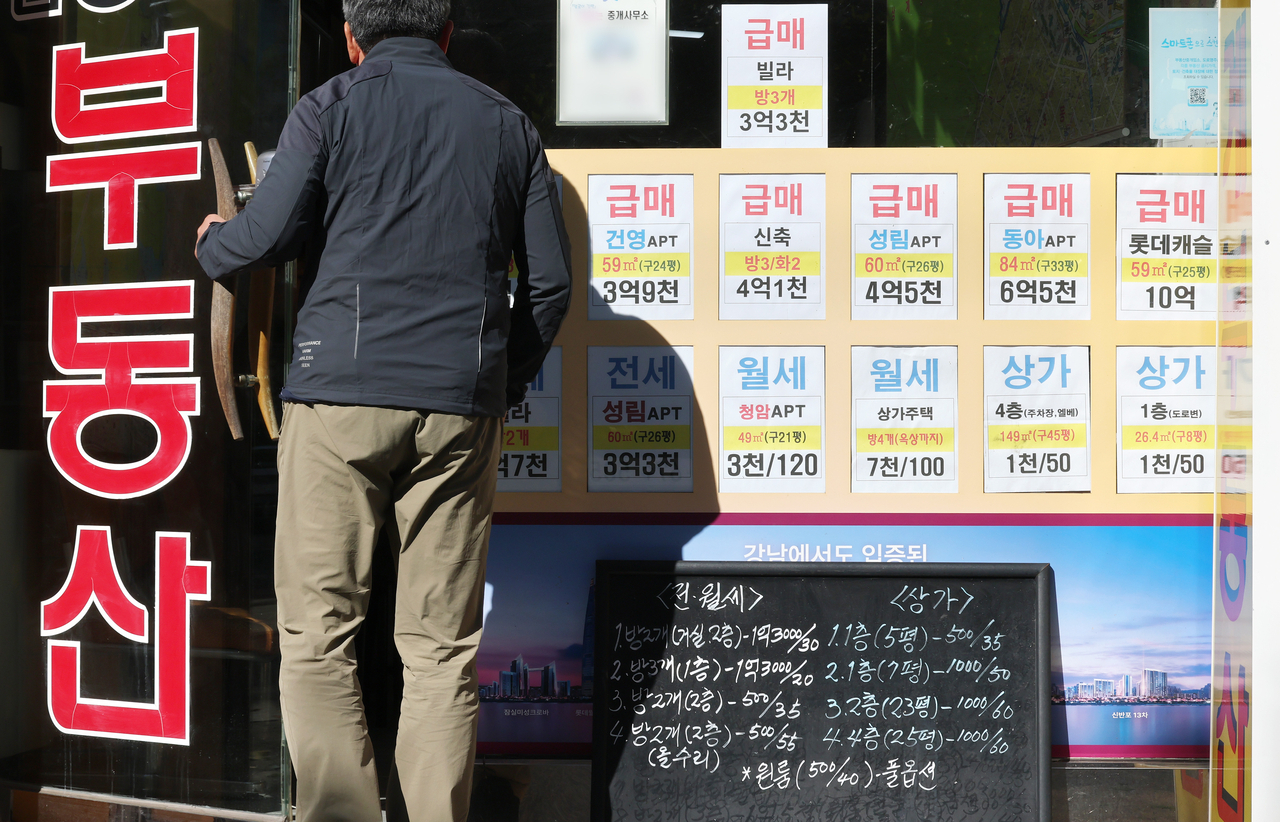
Even Seoul's traditionally more affordable neighborhoods are seeing monthly rents surge alongside rising sale prices and jeonse rates. A shortage of jeonse listings, combined with growing loan burdens, is pushing more tenants toward monthly-rent arrangements — and that added demand is driving rents higher still. Rather than offering relief, lower-priced districts are now saddling tenants with what critics describe as a triple burden: soaring costs across sale prices, jeonse and monthly rent alike.
According to the Korea Real Estate Board, the cumulative increase in Seoul apartment monthly rents through September averaged 7.68% — nearly double last year's full-year gain of 3.94%. As jeonse prices continue to climb and the rental market shifts toward monthly-rent contracts, the housing costs tenants must absorb are rising rapidly.
Nowon-gu recorded the steepest monthly rent increase of any district in Seoul, rising 12.88% through September to rank first among the city's 25 autonomous districts. Over the same period, sale prices in the district climbed 11.54% and jeonse rates rose 12.96%. The district had drawn owner-occupiers precisely because of its relatively lower housing costs, but sale prices, jeonse and monthly rents are now all climbing simultaneously, pushing housing burdens higher across the board.
Recent transactions confirm the upward trend. On Oct. 21, an 84-square-meter unit at Junggye-dong Geonyoung 3rd Complex was newly leased at a deposit of 350 million won ($262,000) with a monthly rent of 2.1 million won. A 115-square-meter unit at Junggye-dong Sindonga was leased at a deposit of 200 million won with a monthly rent of 3.4 million won. These deals show 84-square-meter apartments now commanding monthly rents above 2 million won, while larger units are trading in the 3 million won range.
Seongbuk-gu, which posted the highest sale price increase in Seoul this year, also saw monthly rents climb 11.82% through September. Sale prices rose 14.69% and jeonse rates gained 13.58% over the same period. On Oct. 8, an 84-square-meter unit at Jangwi-dong Kkumeui Sup Kolon Haneulchae was leased at a deposit of 40 million won with a monthly rent of 3.25 million won. In both Nowon-gu and Seongbuk-gu, sale prices, jeonse and monthly rents are rising in tandem, narrowing the range of affordable housing options available to tenants.
Other mid-to-lower-priced districts are facing similar pressures. Monthly rent increases through September exceeded the Seoul average in Jongno-gu (8.93%), Geumcheon-gu (8.89%), Gangbuk-gu (8.81%) and Dobong-gu (8.73%). In southern Gyeonggi Province, Suwon's Yeongtong-gu rose 11.29% and Yongin's Giheung-gu gained 9.72%. Hwaseong's Dongtan-gu, for which monthly statistics have been compiled since January, also rose 11.31% through September.
Analysts attribute the rent increases primarily to a shortage of jeonse supply and the broader shift of the rental market toward monthly-rent contracts. Adding to the pressure, tenants who signed leases at low deposits during the reverse-jeonse period from the second half of 2022 through 2023 are now reaching the end of their contract terms. Unlike that earlier period — when both home prices and jeonse rates were falling — jeonse rates have since risen sharply, making it difficult for tenants to secure new jeonse housing with their existing deposits alone.
"Tenants who signed contracts during the reverse-jeonse period want to move when their leases expire, but jeonse prices for the homes they want have gone up," said Nam Hyeok-woo, a real estate researcher at Woori Bank. "Tenants who find it difficult to borrow the difference because of jeonse loan interest rate burdens sometimes choose instead to pay that gap as monthly rent."
The concern is that this shift reflects not a genuine preference but an unavoidable response to rising jeonse prices and loan burdens. If tenants continue to be pushed out of the jeonse market and into monthly-rent arrangements — and if that added demand keeps pushing rents higher — the housing cost burden on low- and middle-income tenants could grow even heavier.
Pressure may intensify in early next year, when a concentration of expiring leases is expected. Nam said the expiry of contracts that had already been renewed once could cluster around February and March next year, adding: "If that coincides with the peak moving season, it could affect jeonse and monthly rent prices in lower-priced areas, particularly in Seoul's northeastern districts." There are growing concerns that unless the cycle — in which tight jeonse supply and loan burdens spill over into higher monthly rents — is brought under control, even Seoul's relatively more affordable neighborhoods may cease to offer tenants any real refuge.
attom@heraldcorp.com




