
Hanmi Pharm's Effe costs 165,000–200,000 won for first four weeks, undercutting Wegovy and Mounjaro
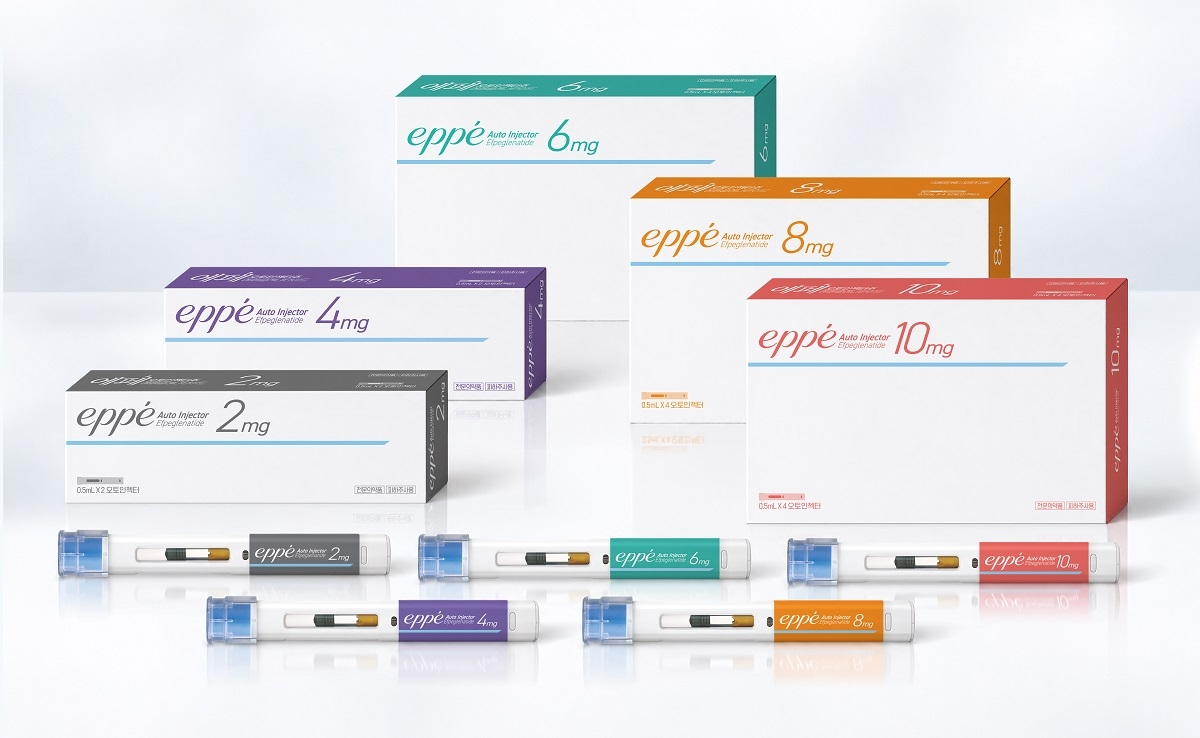
Hanmi Pharm's independently developed obesity treatment Effe has begun to be prescribed at select medical institutions, with the cost of the first four weeks coming in at around 180,000 won ($135).
A survey of the pharmaceutical industry and obesity-care platforms including DoctorNow found that patients receiving an initial Effe prescription pay between 165,000 and 200,000 won for a four-week supply. That figure is based on the starting dosage and does not reflect the higher total treatment cost as the dose is gradually increased.
Initial supplies of Effe are limited, so prescriptions are currently available only at select hospitals, and the drug has not yet been distributed to pharmacies. The drug comes in doses of 2 mg, 4 mg, 6 mg, 8 mg and 10 mg. During the first four weeks, patients receive two injections each of the 2 mg and 4 mg doses, after which the dosage is progressively raised until reaching the 10 mg product.
Effe is South Korea's first domestically developed GLP-1 receptor agonist for obesity, with efpeglenatide as its active ingredient. The drug works by binding to GLP-1 receptors in the central nervous system and gastrointestinal tract, suppressing appetite, slowing gastric emptying and inducing a sense of fullness.
Its biggest selling point is price competitiveness that outpaces rival drugs. Hanmi Pharm has set the following supply prices by dosage: 24,200 won for 2 mg, 40,700 won for 4 mg, 57,200 won for 6 mg, 69,300 won for 8 mg and 74,800 won for 10 mg. The combined supply price for the first four weeks comes to 129,800 won.
However, patients pay more than the supply price once consultation fees and other charges are added, and because the drug is not covered by national health insurance, prices vary by hospital. For other obesity drugs, the cost of the first four weeks runs 223,000 to 270,000 won for Wegovy 0.25 mg and 285,000 to 320,000 won for Mounjaro 2.5 mg. While Effe's supply price is roughly half that of Mounjaro, the actual out-of-pocket treatment cost works out to about 60 percent of Mounjaro's price.
Securities analysts estimate the domestic obesity drug market at 2 trillion won ($1.5 billion) annually. The question now is whether Effe — designed to reduce both cost and side-effect burden — can crack a market currently split between Wegovy and Mounjaro. As a homegrown new drug, Effe carries the advantage of clinical data optimized for Korean patients. In a Phase 3 trial involving 448 Korean patients with obesity, those who received Effe over 40 weeks achieved an average weight loss of 9.75 percent, with individual patients recording reductions of up to 30 percent.
park.jiyeong@heraldcorp.com




