
Police apologize, but fallout continues
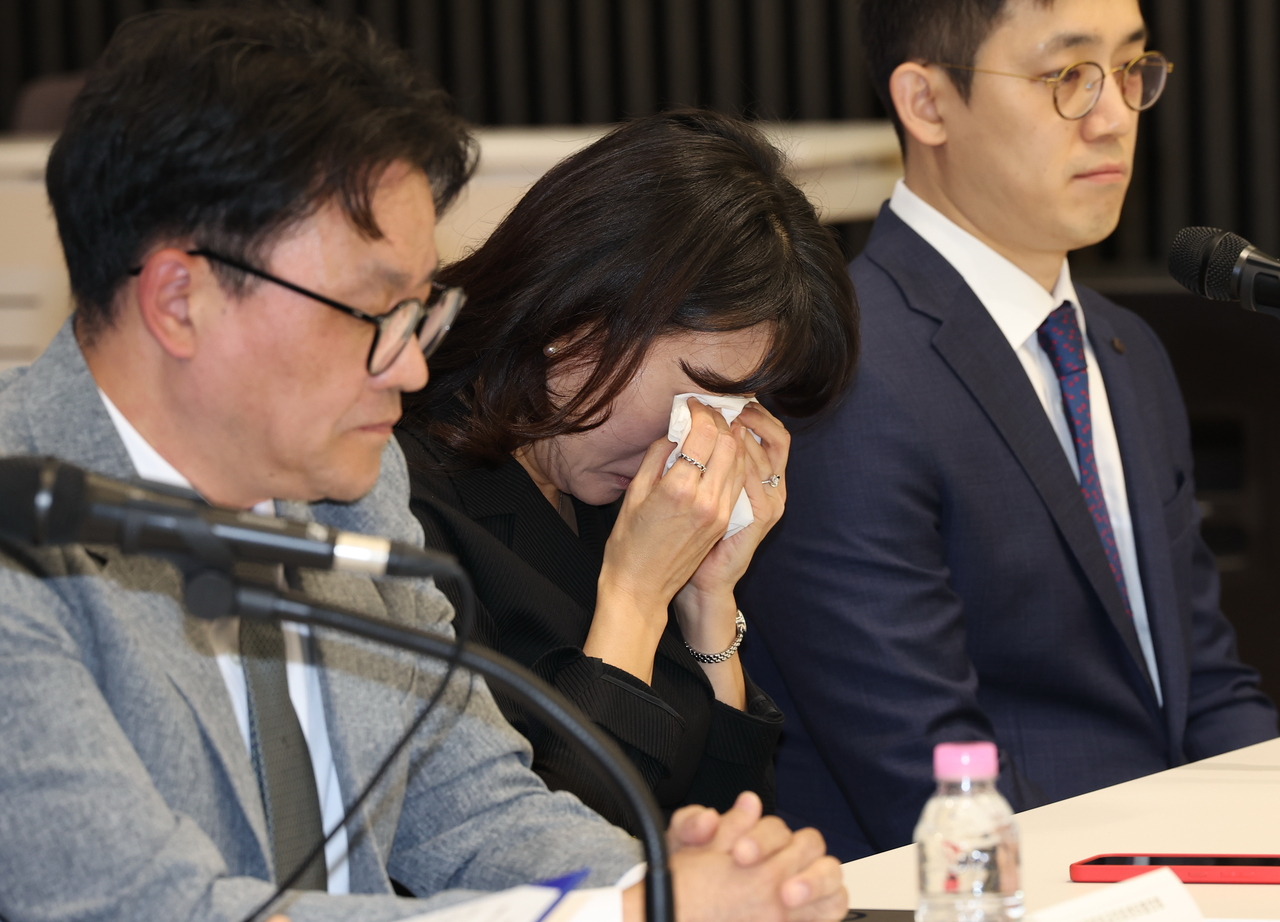
Criticism from both the ruling and opposition parties over the police search and seizure of a pediatric emergency room has continued even after the police leadership issued an apology.
Shin Hyun-young, a family medicine specialist and spokesperson for the Democratic Party of Korea, held a press conference Saturday at the National Assembly press center, saying that following the search and seizure of the Pediatric Emergency Medical Center at Ajou University Hospital, the center director had submitted a resignation letter and there were growing concerns about further departures of medical staff. "The loss of essential medical personnel is directly tied to the lives and safety of the public, and this situation must be viewed with the utmost gravity," Shin said.
Shin called on police to explain the circumstances under which the search warrant was executed. "They must clarify whether it was truly impossible to achieve the investigative purpose through voluntary submission or other means of obtaining materials, and what the reasons and procedures were that led them to conclude a search and seizure was unavoidable," Shin said.
"The government and police must establish clear investigative guidelines that can guarantee patient safety and continuity of care even in cases where a search and seizure is unavoidable," Shin said. "This is not a special privilege for medical staff — it is the minimum principle needed to protect the lives and safety of the public."
Shin said essential-care physicians who protect the lives of critically ill patients must not be driven to despair or pushed out of clinical settings by the shock and burden of complaints, accusations and search-and-seizure operations. "Institutional protections must be strengthened so that medical staff who have done their best can practice with peace of mind," Shin said.
People Power Party lawmaker Yun Sang-hyun also criticized the police's investigative approach in a Facebook post Saturday, saying he took seriously the anger of doctors at Ajou University Hospital's Pediatric Emergency Medical Center.
"Seven of the nine specialists at the core medical institution responsible for pediatric emergency care in southern Gyeonggi Province have indicated their intention to resign, and even the center director has submitted a resignation letter," Yun said. "What exactly was the police trying to protect by bringing about this situation?"
Yun said police had explained that the warrant was executed without disrupting medical care, but that the medical staff's account differed. "We must ask how much consideration was given to patient safety and continuity of care in an emergency room where lives hang in the balance," Yun said.
Yun also referenced the 2017 newborn deaths at Ewha Womans University Mokdong Hospital, in which some medical staff were detained and indicted but were ultimately acquitted by the Supreme Court. "Even though the trial is over, that fear has remained a heavy burden on the medical field," Yun said.
"If we demand a sense of mission from doctors while failing to protect even the environment in which they can safely save patients, the harm will ultimately fall on the public," Yun said, urging the state to create conditions in which medical staff can practice again without fear.
Yun also made a personal appeal to the Ajou University Hospital medical staff: "I earnestly ask that you please stay by the children's side."
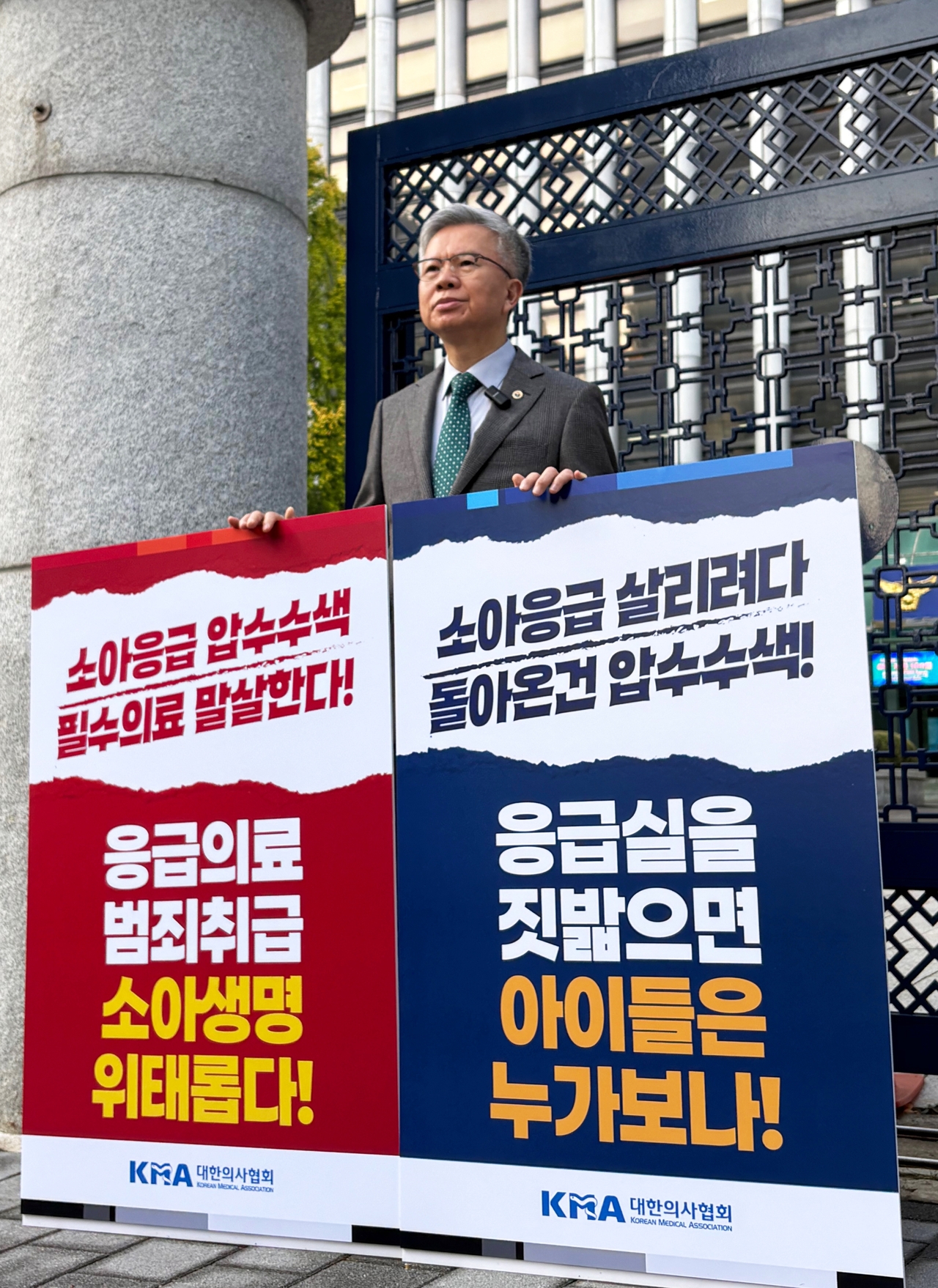
Lee Ji-suk, director of the Pediatric Emergency Medical Center at Ajou University Hospital, said at a press conference held Friday at the Korean Medical Association headquarters in Yongsan-gu, Seoul, that Lee had submitted a resignation letter to the hospital that day.
"The police acknowledged and apologized for their lack of understanding of the emergency medical environment," Lee said, "but I have not received a satisfactory explanation for how the search and seizure was carried out without any prior notice."
The controversy began when police conducted a search and seizure of the pediatric emergency center at Ajou University Hospital on Sept. 30 in connection with the death of an infant who had been receiving treatment there.
arin@heraldcorp.com


