
Codex Micro gifted to about 50 Samsung affiliate presidents
Dial and joystick let users control AI reasoning depth and tasks
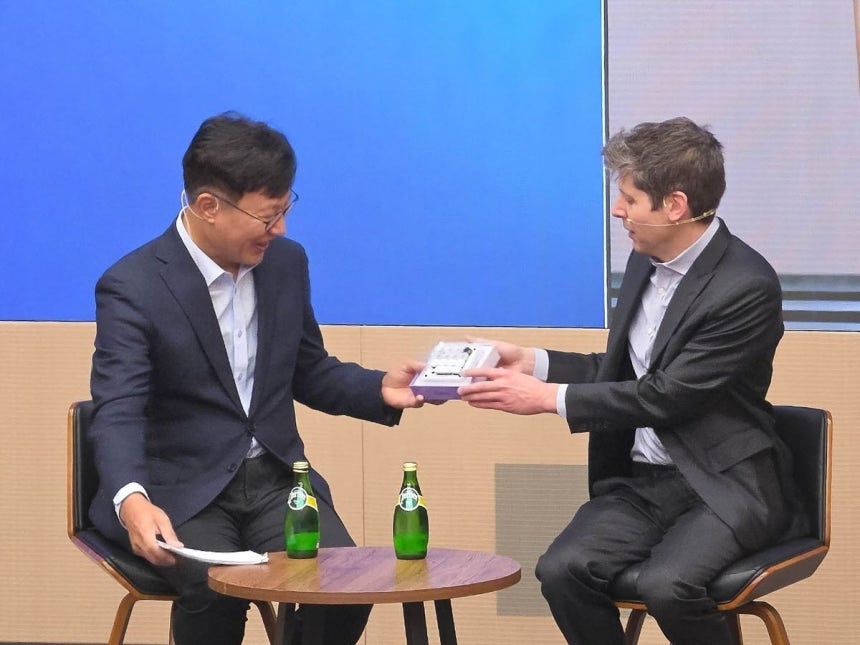
It is a keyboard with only 13 mechanical switches. In their place: a dial, a joystick, touch sensors, and LED lighting that signals whether the AI is thinking, working, or done. The Codex Micro, which OpenAI CEO Sam Altman gifted to Samsung executives during a visit to South Korea, is drawing attention.
According to industry sources Saturday, Altman presented the Codex Micro keyboard to attendees at a roundtable with about 50 presidents of Samsung affiliate companies, held under the theme "The next decade AI will change, and the choices companies must make."
Unlike a conventional keyboard, the device is not designed for typing text. It is a compact input device built specifically for issuing commands to OpenAI's coding agent Codex, monitoring task progress, and adjusting results.
"The idea is that in a world where you speak instructions to a computer and use AI, you might not need a full keyboard," Altman said. "I think it actually helps you use Codex faster in practice."
The Codex Micro was co-designed by OpenAI and keyboard specialist Worklouder. It features 13 mechanical switches, a rotary dial, a joystick, and touch sensors, and works with both Mac and Windows via Bluetooth and USB-C.
The most distinctive feature is how it communicates with the AI. The color and state of the key lighting indicate whether Codex is reasoning, executing a task, or waiting for a user response.
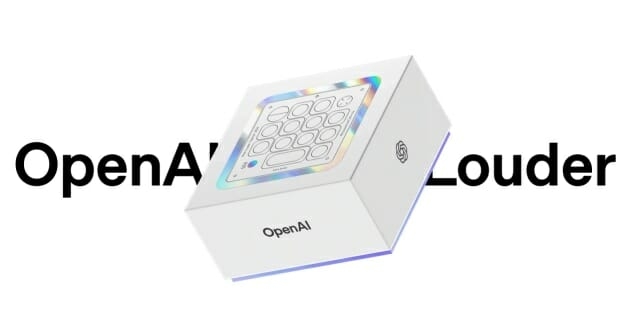
Users can also assign frequently used commands to specific keys, accept or reject code changes proposed by the AI, and press a button to start voice input or a conversation. The joystick handles tasks such as reviewing code and fixing errors.
The rotary dial controls how deeply the AI reasons through a problem. Users can set it for fast processing on simple tasks or dial up more extensive reasoning for complex ones.
The device is listed at $230 on OpenAI's official store. It is also drawing interest as OpenAI's first hardware product, arriving ahead of a smart speaker the company is expected to release early next year.
Altman's decision to gift the device to Samsung executives carries a broader message about how human-computer interaction may evolve. Rather than typing everything directly into a keyboard, a more common paradigm may emerge in which users give spoken or brief commands to an AI, then review and refine what it produces.
At the roundtable, Altman also stressed that simply adopting AI is not enough to secure a lasting competitive edge. "Competitive advantage lies in how you use AI to move faster, build better products, and stay ahead of rivals," Altman said.
Altman arrived in South Korea on Friday afternoon for a two-day visit and was expected to depart Saturday afternoon.
Meanwhile, OpenAI has reportedly lowered its external fundraising target from $30 billion to $20 billion and trimmed its valuation from $1.4 trillion to $1.25 trillion. The moves reflect growing market wariness over the burden of AI infrastructure investment, prompting OpenAI to scale back both its valuation expectations and its fundraising ambitions.
rim@heraldcorp.com




