
Fears of distraction during inspections prompt students to consider new frames
Students with severe myopia face limited options due to thick lenses
Dedicated screening staff assigned to all 1,312 test sites
Cheating with smart glasses to be referred to police; mere possession treated separately
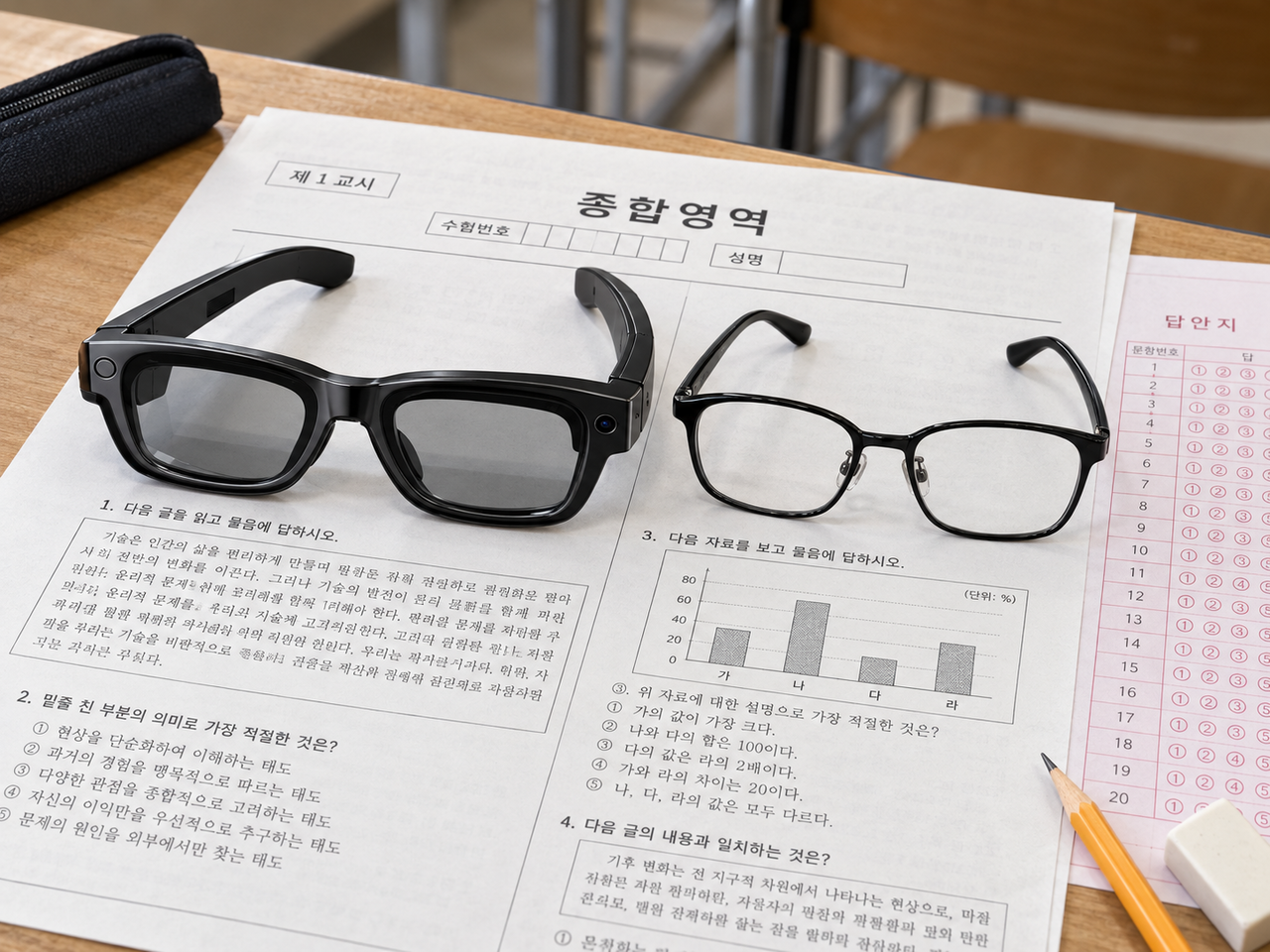
"I've worn these glasses for years — they're practically part of me. Do I really have to change them?"
With the College Scholastic Ability Test set for Nov. 19, eyeglasses have become an unexpected source of anxiety for test-takers. A string of cheating cases involving AI-enabled smart glasses has prompted tighter inspections, leaving students worried that even their everyday thick-framed glasses could fall under suspicion.
The Ministry of Education said it will station dedicated smart-glasses screening personnel at all CSAT venues and will refer anyone caught cheating to police for investigation. Students and parents say they fully support cracking down on cheating, but are urging authorities to ensure that students who wear ordinary glasses are not penalized during the screening process.
'I can't read the test without them': Students weigh switching frames before exam day
Even after the Ministry of Education released its plan to counter cheating involving smart glasses at the CSAT, inquiries about smart glasses have continued to pour into the Korea Institute for Curriculum and Evaluation and regional education offices, according to reporting compiled Friday. Students and parents are asking what kind of glasses they should wear to avoid being suspected of using AI glasses at the test site, and how the inspection process will work.
To prevent cheating through smart glasses, authorities will assign one dedicated screening officer to each of the 1,312 test sites nationwide this year. When an on-site proctor cannot determine whether a pair of glasses is a smart device, the designated officer steps in. If needed, the case can be escalated to situation rooms at regional education offices, the Ministry of Education and the Korea Institute for Curriculum and Evaluation.
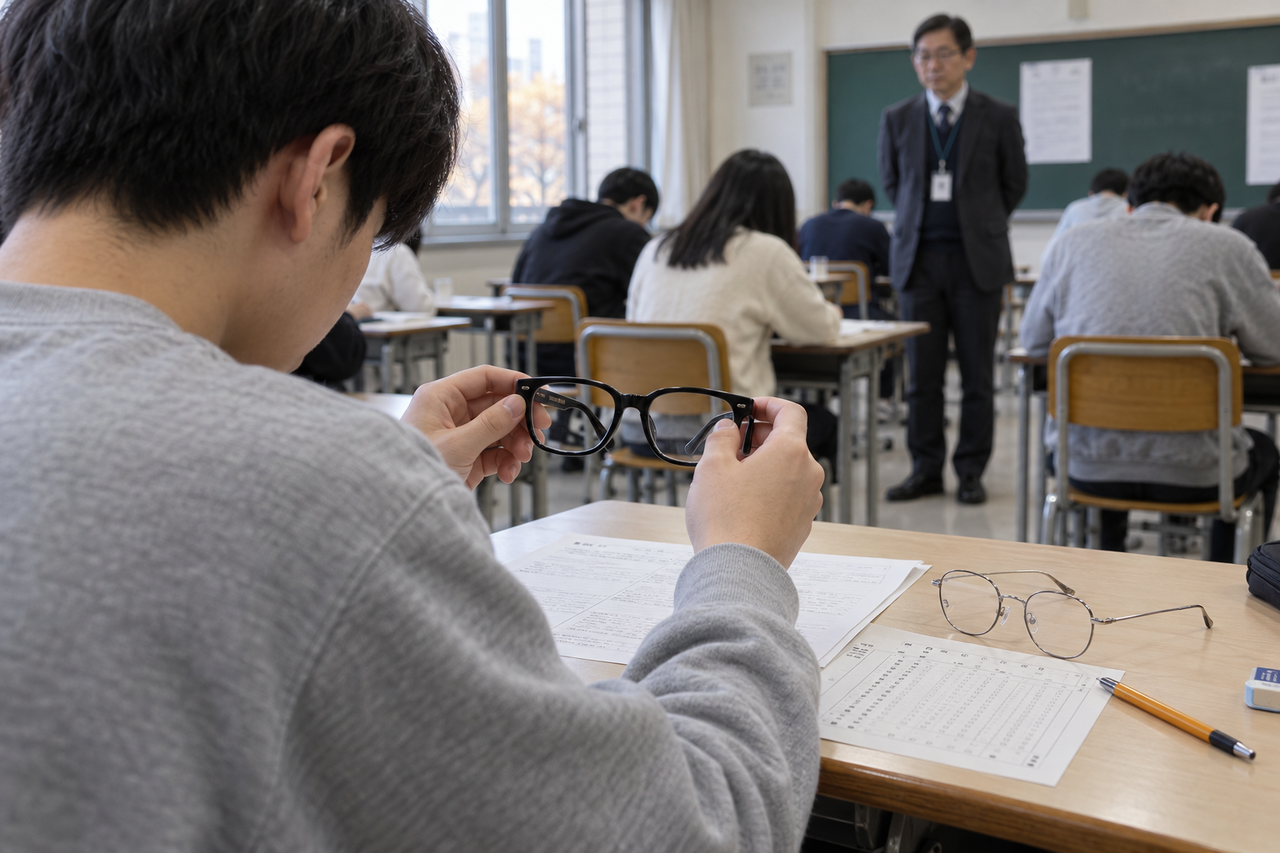
What worries test-takers most is how the inspections could affect their performance. Students fear they may lose valuable time while handing over their glasses for examination, or that the mere awareness of being watched could break their concentration.
Many students and parents say they are considering replacing long-worn glasses simply to avoid added stress on exam day. One parent of a repeat test-taker said the student was worried about what would happen to unanswered questions if glasses were taken away mid-exam for inspection. For students with poor eyesight who struggle to read the test paper without their glasses, even a brief check could be a significant burden.
Students with poor vision also face difficulties switching to new frames. Many rely on thick frames to accommodate high-prescription lenses, or have astigmatism that makes fitting new lenses complicated. One repeat test-taker said many peers who wear black thick-rimmed frames are anxious about being mistaken for smart-glasses users, adding that students with severe myopia cannot easily switch to thinner frames because their lenses are too thick.
Parents are stressing that cheating prevention and student protection must go hand in hand. On college-entrance forums, comments have included concerns that the majority of students who wear glasses could end up disadvantaged, and calls for proctors to observe students with care and discretion.
Beyond exam nullification — criminal charges: 'Existing law already allows it'
The Ministry of Education said it will take a hard line against cheating involving smart glasses, including filing criminal complaints with police. The ministry views such conduct as a deliberate and premeditated disruption of the proper administration of a national examination, and intends to pursue criminal punishment.
Under current rules, a test-taker caught using or wearing smart glasses during the CSAT faces immediate nullification of that sitting and a one-year ban from the following year's exam. The ministry is also pushing to amend the law to extend the eligibility suspension from one year to three years.
Legal experts say criminal charges are already possible under existing law. Attorney Kwak Jun-ho of law firm Cheong said cheating with AI smart glasses could constitute obstruction of official duties through deception, on the grounds that using such a device to interfere with the fair administration of the exam amounts to fraudulent interference with a public function.
However, regulatory sanctions under exam rules and criminal punishment must be kept distinct. Possessing undisclosed smart glasses — even without using them — can result in exam nullification, but mere possession does not automatically lead to criminal charges. Whether a crime has been committed depends on the actual conduct and intent involved.
Attorney Ha Jin-gyu of law firm Founders said that wearing smart glasses inside a test venue could be taken as evidence of intent to cheat. Wearing the device, Ha said, can serve as a basis for inferring intent. Cases where a person carried smart glasses but did not wear them, however, need to be assessed separately from actual cheating, Ha added.
brunch@heraldcorp.com
newday@heraldcorp.com




