
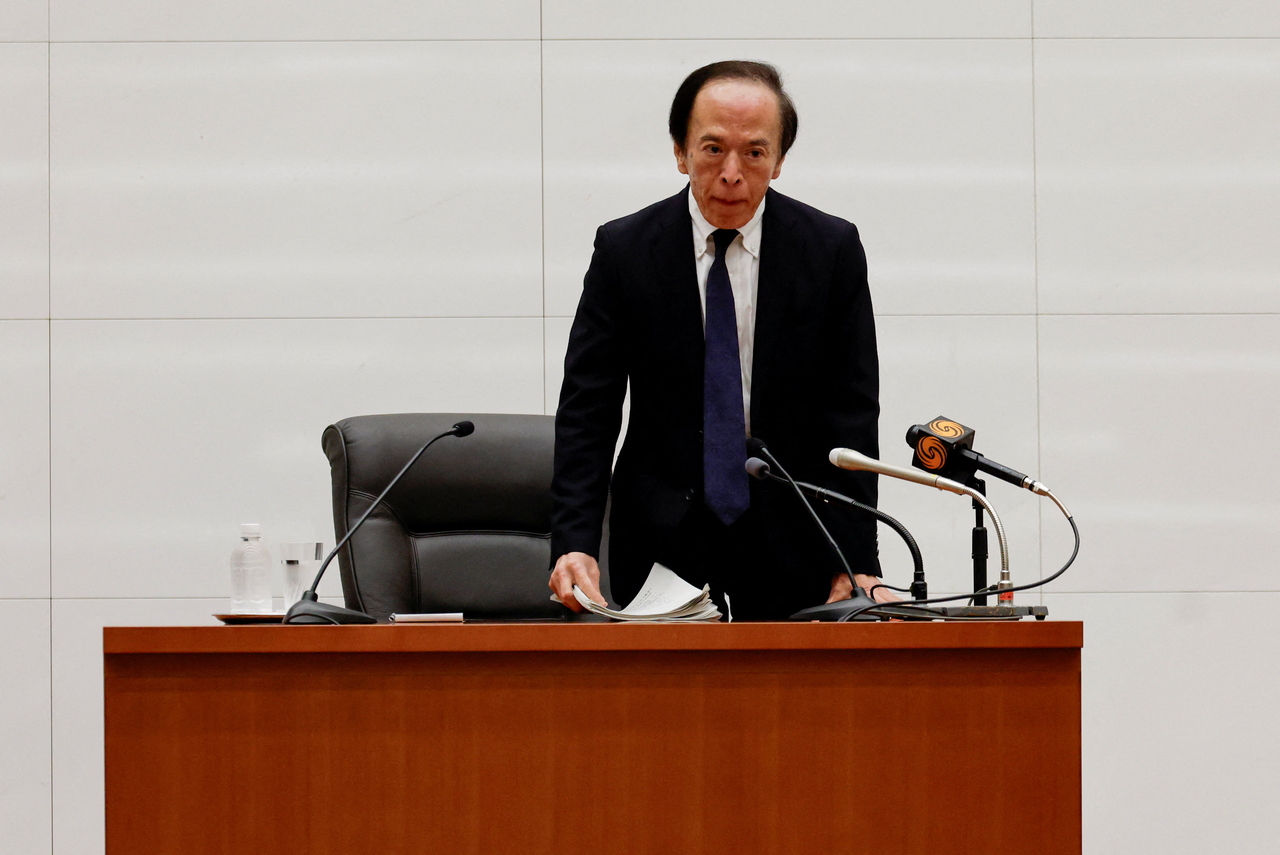
The Bank of Japan held its benchmark short-term policy rate at around 1.25 percent at its monetary policy meeting on Friday.
According to local media including Kyodo News and the Nikkei, the central bank's policy board voted by a majority to keep rates unchanged at the two-day meeting that began Thursday. Board member Hajime Takata was the sole dissenter, proposing a 0.25 percentage point increase.
At last month's meeting, the BOJ raised its benchmark rate by 0.25 percentage points — from around 1 percent to around 1.25 percent — citing concerns about rising prices driven by higher oil prices, a weaker yen and growing AI-related demand. The move pushed Japan's benchmark interest rate to its highest level since 1995, a span of 31 years.
Friday's decision to hold rates was in line with market expectations. Attention at this meeting centered less on whether rates would rise and more on the BOJ's assessment of inflation.
In its quarterly "Outlook for Economic Activity and Prices" report released Friday, the BOJ officially stated that underlying inflation — excluding temporary factors — is "broadly consistent" with its 2 percent target. The announcement is widely interpreted as a signal that Japan's deflation, which persisted for more than 30 years, has in effect come to an end. The report is also seen as laying the groundwork for signaling further rate increases ahead.
The BOJ adopted a 2 percent inflation target in January 2013 and has since pursued that goal through large-scale monetary easing, including government bond purchases. Friday's report marks the first time in 13 years that the central bank has declared the target reached.
Upward price pressures have continued in recent months, driven in part by elevated oil prices stemming from tensions in the Middle East. The BOJ said it is now important "to confirm the degree of entrenchment at around the 2 percent level, from the perspective of sustainably and stably achieving the price stability target."
The bank added that "given the current accommodative monetary environment, we will continue to raise the policy interest rate and adjust the degree of monetary easing in accordance with economic, price and financial conditions," signaling that further rate hikes remain on the table.
However, the BOJ said the timing and pace of any rate increases will depend on how rising crude oil prices tied to Middle East tensions, expanding AI-related demand and exchange rate fluctuations affect Japan's economy and prices.
Markets are increasingly pricing in the possibility that the BOJ could raise rates again at its next policy meeting in December.
Meanwhile, the BOJ revised its forecast for Japan's real GDP growth rate for fiscal year 2026 upward by 0.1 percentage points to 0.7 percent. The bank said that while rising energy and raw materials prices driven by Middle East tensions could weigh on the economy, global growth in AI-related demand, combined with various government measures and an accommodative financial environment, is expected to provide support.
kate01@heraldcorp.com




