
Choi Yun-beom's early bet on AI-driven demand recovery draws positive reviews
'Continuous investment in the future to accelerate growth engine'
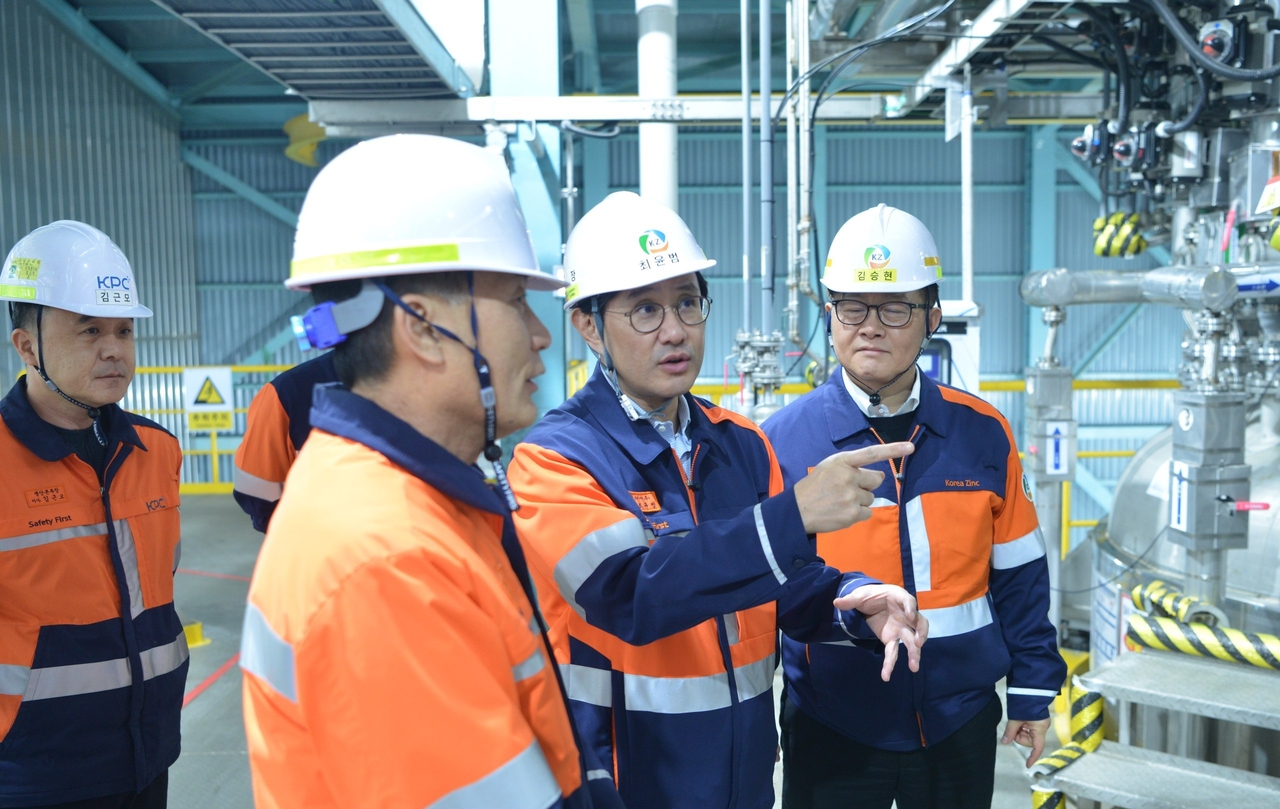
With Samsung Electronics and SK hynix posting record quarterly earnings on the back of an AI-driven memory chip boom, demand for ultra-high-purity sulfuric acid — used in semiconductor manufacturing — is expected to surge at Korea Zinc, the country's largest supplier of the material.
Korea Zinc has been expanding its reach into the US market, most recently participating in SEMICON West 2026, a major global semiconductor industry exhibition, where it held discussions with leading chipmakers on potential cooperation. The move has heightened expectations that the company stands to benefit significantly from the ongoing semiconductor boom.
According to industry sources, Korea Zinc completed a scale-up of its semiconductor sulfuric acid production lines at the Onsan Smelter in the third quarter of this year, raising annual production capacity from 280,000 metric tons to 320,000 metric tons.
Korea Zinc said the expansion was carried out "to proactively respond to the launch of new production facilities by major domestic semiconductor manufacturers as AI infrastructure investment accelerates." Semiconductor-grade sulfuric acid is a key material in the cleaning process that removes organic matter and fine contaminants from wafer surfaces during chip manufacturing. Korea Zinc supplies more than 60 percent of domestic demand for the material.
The purity and consistency of semiconductor sulfuric acid directly affect chip yield and reliability. Korea Zinc produces "six-nines" (6N) grade ultra-high-purity sulfuric acid — with purity of 99.9999 percent or higher — by capturing and refining sulfur dioxide (SO₂) generated during its zinc and lead smelting process through multiple purification stages. Unlike conventional producers that procure external sulfur as a raw material, Korea Zinc uses the SO₂ byproduct from its own smelting operations, giving it a relatively stable production base that is less exposed to fluctuations in global sulfur prices and supply chains.
The expansion reflects the management strategy of Chairman Choi Yun-beom, who has called for identifying new growth engines to sustain long-term growth. According to Korea Zinc, Choi and the current management team continued investing through a sector downturn in 2024, anticipating a recovery in semiconductor demand driven by the spread of AI. As a result, Korea Zinc — which had been producing 240,000 metric tons of semiconductor sulfuric acid annually across 17 production lines — added lines 18 and 19 in 2024 to lift annual output to 280,000 metric tons, and added lines 20 and 21 this year.
Korea Zinc plans to expand semiconductor sulfuric acid production capacity in stages to as much as 500,000 metric tons, in line with the expansion schedules of domestic chipmakers.
Korea Zinc is also actively targeting the US market. The company is considering building a semiconductor sulfuric acid production line with annual capacity of around 100,000 metric tons at an integrated smelter it plans to develop in Tennessee, with a trial run targeted for 2029 and commercial production for 2030. Korea Zinc also participated in SEMICON West 2026, where it held meetings with global chipmakers to lay the groundwork for entering the US semiconductor materials market.
Korea Zinc said it "held meetings with major global chipmakers and related companies, including Micron, Intel and GlobalFoundries, to discuss the feasibility of supplying semiconductor sulfuric acid locally in the United States and potential avenues for future cooperation." The company added that it would "pursue the establishment of a local production and supply system based on Project Crucible, currently underway, and expand business opportunities targeting global semiconductor companies."
A key driver of Korea Zinc's growth is what Choi calls the "periodic table roulette" strategy. The approach centers on building the technological capability to generate added value across a diverse range of metals and materials, rather than allowing earnings to be dictated by the price cycle of any single metal.
In a letter to shareholders in September, Choi said, "In practice, the metals driving our earnings have not been the same every year. In 2025, rising prices for antimony and other critical minerals translated into additional profit, and in the first half of 2026, gold and silver recovered through our advanced refining process underpinned record earnings."
Choi added, "In the second half of this year and into next year, we are seeking new growth opportunities in zinc, copper, sulfuric acid and ultra-high-purity sulfuric acid for semiconductors. In an environment where the products leading our performance change from year to year, our portfolio diversification strategy has proven highly effective."
A Korea Zinc official said Choi "has emphasized that investment for the future has never stopped since taking office, and has laid out a vision for Project Crucible — the plan to build an integrated smelter in the United States — as a new global growth axis, with the flexibility to respond to developments in AI, semiconductors, the defense industry, the energy transition and geopolitical shifts."
likehyo85@heraldcorp.com




