
Cities sign MOU on hydrogen and LNG industry cooperation
Incheon's supply infrastructure to be paired with Ulsan's demonstration capacity
Initiative to cover hydrogen vehicle rollout and charging network expansion
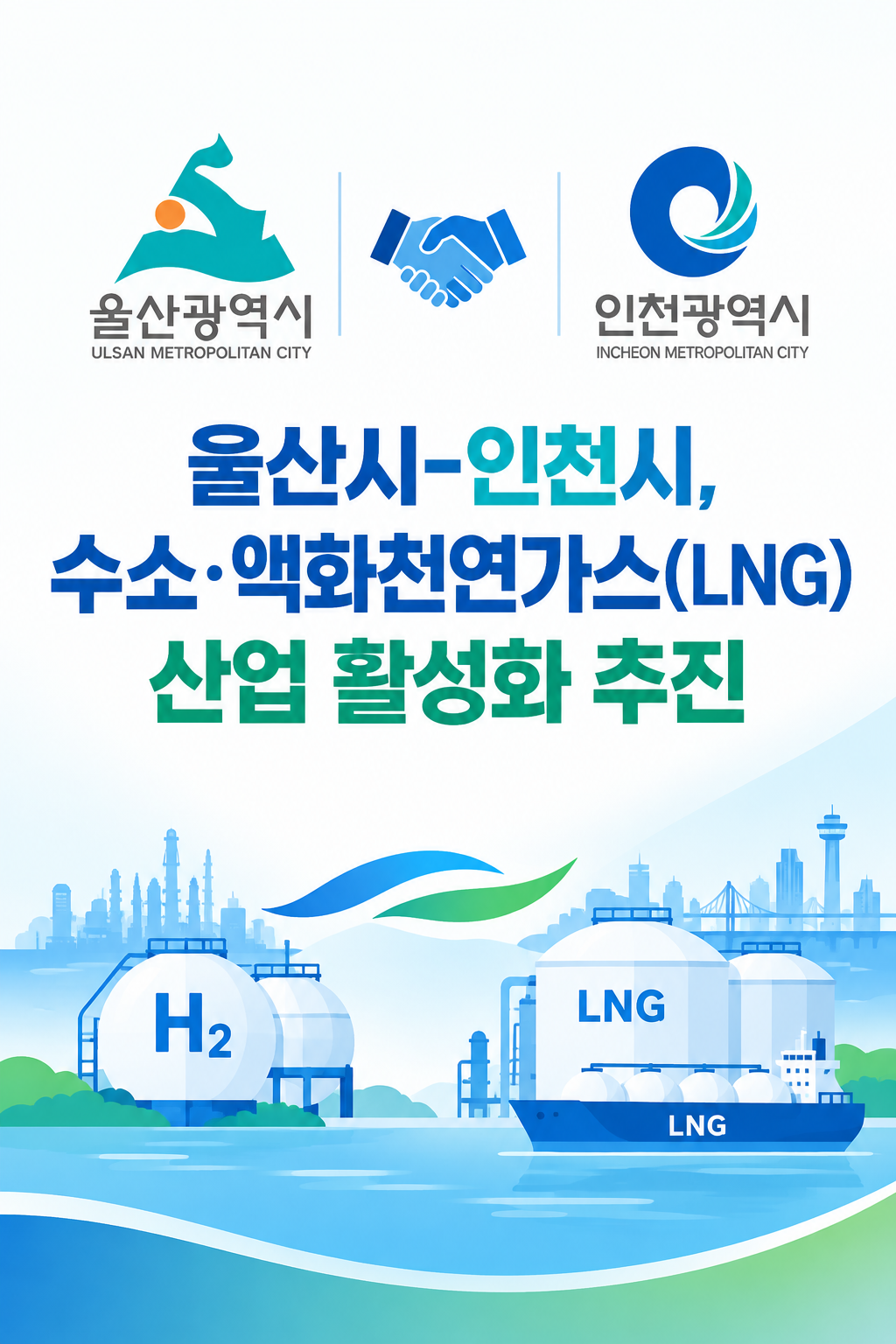
Ulsan and Incheon, both pursuing hydrogen city ambitions, have joined forces to expand the country's hydrogen infrastructure, stabilize LNG supply and identify new industries that can make use of LNG cold energy.
The two cities signed a "hydrogen and LNG industry mutual cooperation MOU" Friday at the reception room on the second floor of Incheon City Hall, with Ulsan Mayor Kim Sang-uk and Incheon Mayor Park Chan-dae in attendance.
The agreement is designed to link Incheon's liquid hydrogen production and supply capabilities and its port and airport logistics infrastructure with Ulsan's hydrogen production and demonstration capacity, with the aim of advancing the domestic industry. Under the MOU, the two cities will cooperate across a broad range of areas — from hydrogen production and supply to market expansion, LNG supply chain stability and the discovery of new industries using cold energy.
Specifically, the cities will work together on five fronts: responding to national hydrogen policy and expanding government support; deploying hydrogen vehicles and building out charging infrastructure; strengthening hydrogen production, distribution and utilization capacity and fostering related companies; stabilizing the energy supply chain; and developing LNG cold energy utilization.
On the hydrogen front, the two cities will share regional production, supply and demand data, and push to expand the deployment of hydrogen passenger and commercial vehicles while building out charging facilities. The cities will also conduct comprehensive reviews of actual operating demand, vehicle suitability, economic viability and charging conditions as part of efforts to introduce hydrogen taxis and other applications.
Alongside this, the cities will identify hydrogen demand sites in transportation, logistics and manufacturing, and pursue commercialization through technology development and demonstration projects involving related companies.
In the LNG sector, the two cities will share supply-and-demand policy and technology while seeking projects that can link LNG cold energy to industries such as AI data centers, semiconductors, biotechnology and refrigerated logistics. They will also push for expanded government support and regulatory improvements to serve areas with inadequate city gas supply.
cityblue@heraldcorp.com




