
'China's military expansion demands response — Japan to develop its own missiles, satellite constellation'
'Disaster agency launches Nov. 2, proactive measures could cut damage by 80%'
'Korea-Japan shuttle diplomacy key — history disputes must be managed separately'
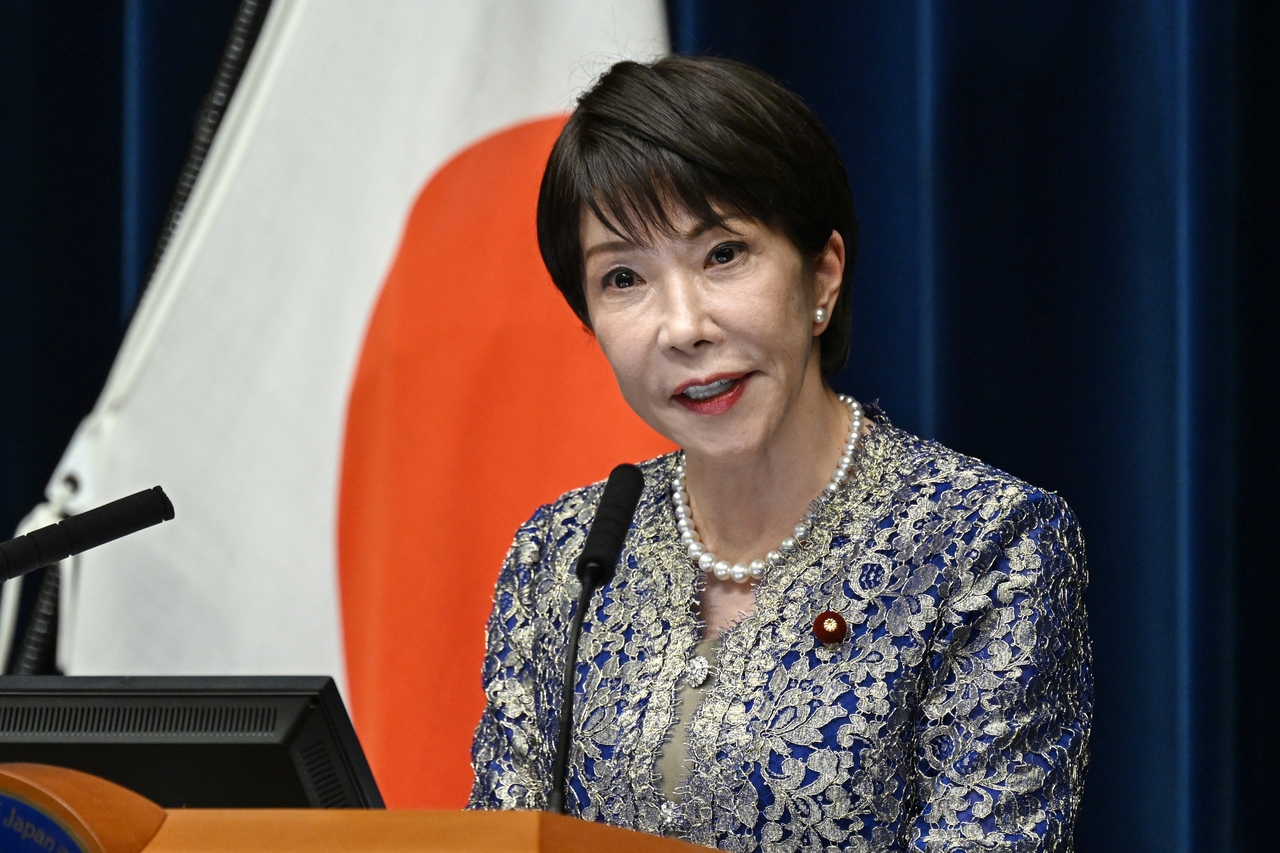
Japan is accelerating efforts to build independent defense capabilities — including domestically produced long-range missiles and a large reconnaissance satellite constellation — as the government prepares to revise its three core security documents in December. The push reflects growing concern over China's military buildup and uncertainty about the extent of future US engagement. In parallel, Tokyo is overhauling its crisis-response architecture by establishing a new disaster management agency directly under the Cabinet and restructuring its approach to cognitive warfare.
At a briefing held as part of a Korea-Japan journalist exchange program from Saturday to Thursday, Ogi Hirohito, a senior researcher at the Geoeconomics Research Institute, cited China's military expansion and doubts about US capabilities as the key drivers behind the December security document revision. "China's air force has added roughly as many combat aircraft over the past four years since 2022 as Japan's entire Air Self-Defense Force," Ogi said. With US defense resources stretched thin, Ogi warned that relying entirely on American-made equipment risked giving Washington veto power over Japan's security decisions. Japan is therefore pursuing domestic development of long-range missiles and a large-scale reconnaissance satellite network to retain final authority over its own defense, Ogi said. Ogi also outlined a target of raising defense spending from the current level of about 1.4 percent of GDP to roughly 2.5 percent — a minimum of 17.3 trillion yen ($110 billion) — over the five years from 2027.
Japan's disaster governance is also set for a sweeping overhaul. Matsumoto Iori, deputy section chief for international cooperation at the Cabinet Office's Disaster Management Bureau, said the new disaster management agency would be established Monday. The agency will be elevated from its current position under the Cabinet Office to report directly to the Cabinet, giving it authority to issue directives and recommendations to individual ministries, and its staff will grow from 220 to 350, Matsumoto said. "If we pursue proactive disaster prevention, we can reduce damage from a Nankai Trough earthquake by 80 percent," Matsumoto said, adding that the agency plans to upgrade a digital integrated platform called the "comprehensive web" and expand a "push-type support" system that pre-positions essential supplies before disasters strike.
On cognitive warfare, Kuwahara Kyoko, a researcher at the Japan Institute of International Affairs, said the December revision would update the existing concept of "information warfare" to "cognitive warfare" with more detailed provisions. Kuwahara noted, however, that while the government had taken a lead role, a broader whole-of-society approach encompassing the private sector and civil society remained insufficient.
Participants also assessed the state of Korea-Japan relations. Nishino Junya, a professor at Keio University, said President Lee Jae Myung had expressed a desire to hold shuttle diplomacy at a hot-spring resort, and that the Japanese government was giving the idea serious consideration. Nishino said sustaining trust between the two leaders was essential, and recommended that the two countries expand cooperation so that historical disputes — such as differing views on wartime forced labor — are gradually pushed to the margins rather than dominating the agenda, given that the underlying gaps in historical perception cannot be bridged quickly. Nishino also called for cooperation on shared challenges, including the security of crude oil shipping lanes through the Strait of Hormuz — on which Japan depends for 90 percent of its oil and South Korea for 70 percent — and the stability of regional supply chains. Ono Yuichi, a professor at Tohoku University, drew on lessons from the Great East Japan Earthquake, saying no country is immune from catastrophic disaster and that communicating openly with citizens — including publishing hazard maps — and preparing evacuation plans in advance are indispensable.
sunpine@heraldcorp.com




