
Seminar on Korea's Personal Information Protection Act
Experts discuss impact on companies, compliance strategies
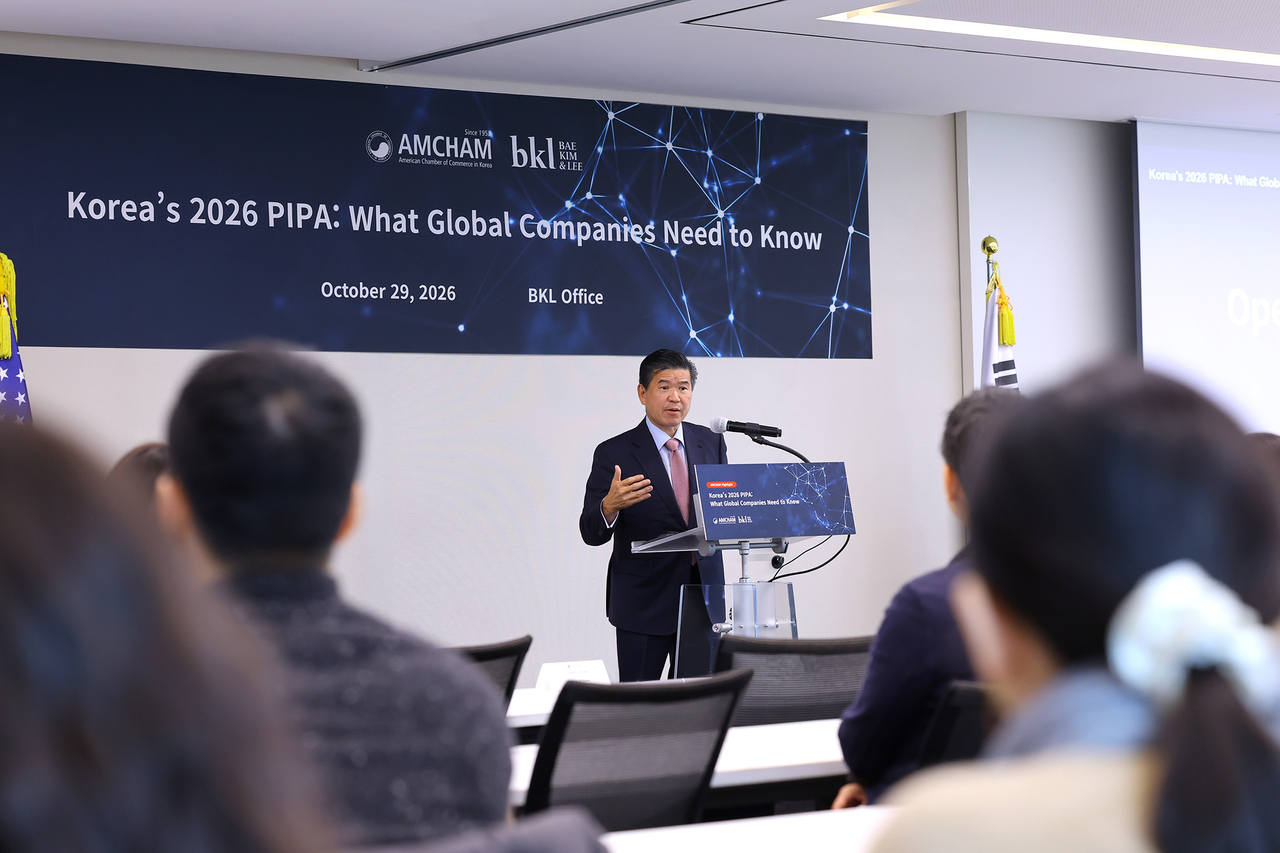
The American Chamber of Commerce in Korea and law firm Bae Kim & Lee co-hosted a seminar Thursday at the firm's headquarters in Jongno-gu, Seoul, where AmCham President and CEO James Kim said that as cross-border data flows and AI use expand, the secure management and protection of personal information is becoming increasingly critical.
"A clear and predictable regulatory environment must be in place to support companies in fulfilling their data protection obligations while conducting global business," Kim said.
The seminar, titled "Korea's Personal Information Protection Act 2026: Key Issues Global Companies Need to Know," was organized to examine major changes introduced by the amended Personal Information Protection Act, which took effect Sept. 11, and to review recent regulatory enforcement trends while helping global companies develop practical compliance strategies.
The event focused particularly on issues with direct implications for corporate management, including higher fines for personal data breaches and strengthened accountability for CEOs and chief privacy officers.
Bae Kim & Lee Managing Partner Lee Jun-ki said recent amendments to the Personal Information Protection Act have significantly raised corporate responsibility for data protection, making it a core business challenge that goes beyond simple legal compliance and is now directly tied to management strategy and risk management. "Bae Kim & Lee will continue to provide practical legal advice and actionable compliance strategies to help domestic and foreign companies proactively respond to the evolving regulatory environment," Lee said.
In the first session, Bae Kim & Lee foreign attorney Lim Seul-gi presented on the key amendments to the Personal Information Protection Act and their impact on businesses.
Lim outlined the major changes, including tougher sanctions that allow fines of up to 10 percent of total revenue for serious or repeated violations, an expanded obligation to notify affected parties of potential data breaches, strengthened accountability for CEOs and chief privacy officers, and mandatory certification under the Information Security Management System — Personal framework.
Lim also said companies need to make proactive investments in data protection and strengthen their internal management systems to prepare for the tightened regulatory environment.
In the second session, Bae Kim & Lee foreign attorney Jeong Ho-yeong analyzed recent domestic data protection enforcement cases and the direction of future reforms to the investigation framework, presenting on key sanction cases from the Personal Information Protection Commission and current investigation trends.
The session highlighted a case in which major domestic e-commerce platforms were collectively fined 624.6 billion won ($468 million), along with sanction cases from key sectors including telecommunications, retail and finance, and examined recurring violations such as inadequate access control management and delays in breach notification.
The session also introduced the Personal Information Protection Commission's plans to restructure its investigation framework around serious cases, and stressed the importance of preventive measures and stronger incident response systems for companies.
AmCham said it will continue to support member companies in navigating regulatory requirements through dialogue with sector experts and policymakers, and will work to foster a business environment in which global companies can invest and grow in Korea with confidence.
"AmCham will continue constructive dialogue with businesses and policymakers, and work to create an environment where global companies can sustain their investment and growth in Korea," Kim said.
joze@heraldcorp.com




