
Semiconductor, auto output drive surge in manufacturing
Chuseok demand, new car launches lift retail sales
Equipment investment rises; coincident index advances
South Korea's industrial production, consumption and investment all rose in September, driven by strong semiconductor output, a return to normal auto production after strikes ended, and the launch of new vehicle models — marking the first simultaneous increase across all three indicators since June.
The all-industry production index (seasonally adjusted, 2020=100) stood at 122.7 in September, up 3.0 percent from the previous month, the Ministry of Statistics said Friday. The monthly gain was the largest since March 2011, when output rose 3.4 percent.
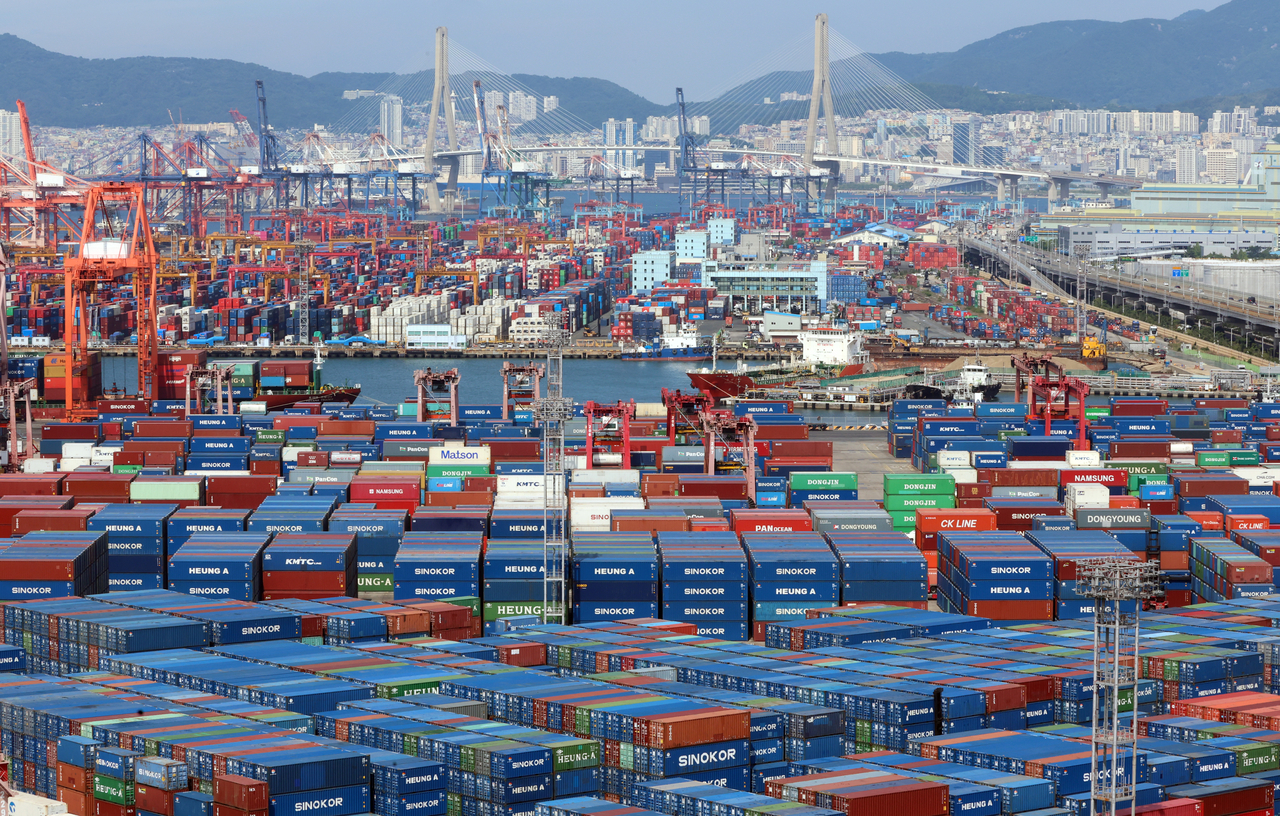
The all-industry production growth rate had slowed to 2.6 percent in June and 0.1 percent in July before contracting 1.2 percent in August, but rebounded within a month.
Mining and manufacturing output jumped 9.0 percent from the previous month, the biggest increase in 17 years and seven months since February 2009, driven by sharp gains in semiconductor production (up 19.2 percent) and automobile production (up 39.9 percent).
Semiconductor output rose at its fastest pace in seven months — the largest gain since February of this year, when it climbed 28.2 percent — as production of memory chips including DRAM and flash memory expanded. Automobile output posted its biggest monthly increase in six years and six months, surpassing the 46.6 percent gain recorded in March 2020, as factory operations normalized following the end of strikes at automakers and the conclusion of the summer vacation period.
The retail sales index, which tracks goods consumption, rose 3.6 percent from the previous month — the largest increase in three years and seven months since February 2023, when it climbed 5.1 percent.
Sales rose across all categories: durable goods such as passenger cars (up 4.4 percent), non-durable goods such as food and beverages (up 4.2 percent), and semi-durable goods such as clothing (up 0.6 percent). Passenger car retail sales swung from a 13.3 percent decline in August to an 18.3 percent increase in September. The ministry attributed the turnaround to a combination of a base effect from the prior month's decline and the impact of new model launches.
"The biggest factor behind the retail sales increase was the recovery in automobile sales," said Lee Du-won, director of economic trend statistics at the Ministry of Statistics. "Sales of non-durable goods such as food and beverages expanded on the back of increased holiday demand during the chuseok season, and large-scale discount events at supermarkets and other retailers also boosted food and beverage sales."
Services output rose 0.5 percent from the previous month, with wholesale and retail trade up 3.5 percent and transportation and warehousing up 3.6 percent.
Equipment investment increased 5.3 percent. Investment in machinery — including electrical equipment and devices — rose 4.7 percent, driven in part by expanded data center construction, while investment in transportation equipment climbed 7.4 percent as production disruptions at automakers were resolved.
The construction completion index, which measures domestic construction activity by contractors, rose 5.8 percent as both building and civil engineering work increased, reflecting growth in non-residential construction such as semiconductor factories and data centers.
The cyclical variation of the coincident composite index, which reflects current economic conditions, rose 0.5 point from the previous month. The cyclical variation of the leading composite index, which signals the future economic outlook, fell 0.1 point, weighed down by declines in Kospi and the spread between short- and long-term interest rates.
For the third quarter as a whole, all-industry production rose 1.9 percent from the previous quarter — the largest quarterly gain since the fourth quarter of 2021, when it grew 2.7 percent — supported by strong performance in semiconductors and machinery. Mining and manufacturing output also rose 3.9 percent.
Retail sales, however, fell 1.0 percent quarter-on-quarter, extending a decline for a second consecutive quarter after a 1.8 percent drop in the second quarter. Equipment investment rose 6.3 percent, driven by increased spending on semiconductor manufacturing equipment.
The Ministry of Economy and Finance said strong growth momentum continued into the third quarter, following the second quarter, supported by robust exports including semiconductors and an expansion in equipment and construction investment. The ministry projected that the underlying growth trend would continue into October, despite expected month-to-month fluctuations in indicators, citing solid consumer and business sentiment, exports, and machinery and construction orders.
However, the ministry flagged risks including financial market volatility and household cost pressures stemming from prolonged high oil prices, the global trend of interest rate increases, and uncertainty surrounding the US midterm elections.
The ministry said it would broaden the foundation for growth through three major mega-projects, seven SEED initiatives and the Korean Green Transformation program, while focusing on stabilizing living costs and core social policies covering housing, employment and financial support for lower-income households, as well as efforts to address polarization.
y2k@heraldcorp.com




