
No common ground yet on conditions for North Korea-US dialogue; shift possible around APEC summit
Military officials sidelined as Choe Son-hui leads diplomatic engagement; close talks with Wang Yi
Kim Jong-un found to have hyperlipidemia; Kim Ju-ae's succession status being consolidated
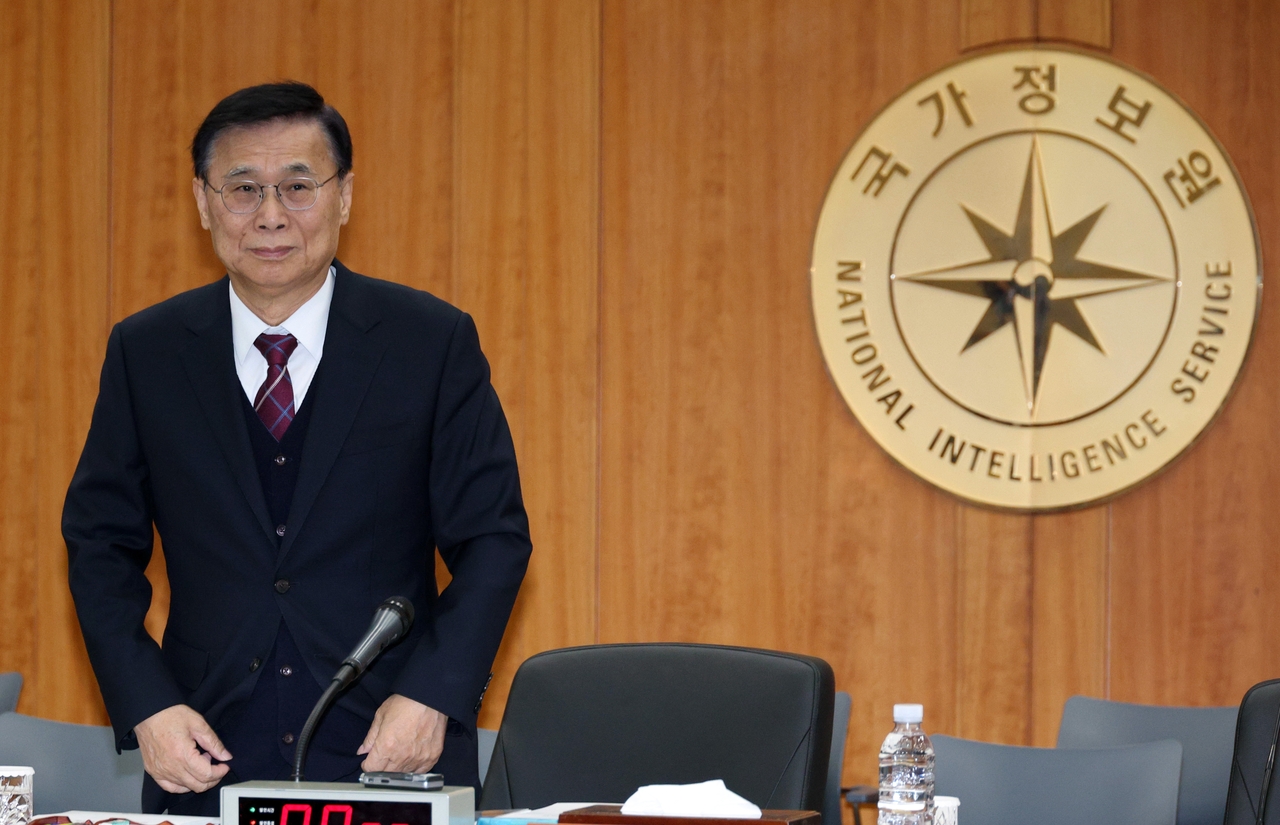
South Korea's National Intelligence Service assessed that North Korean leader Kim Jong-un's recent day trip to Dandong, China, likely served to convey Pyongyang's position on North Korea-US dialogue to Chinese leadership. While the two sides have yet to find common ground on the conditions for talks, the NIS believes both are keeping open the possibility of a shift around the Asia-Pacific Economic Cooperation summit.
The NIS delivered this assessment during a closed-door national audit by the National Assembly Intelligence Committee Thursday, according to Democratic Party of Korea lawmaker Yoon Geon-young and People Power Party lawmaker Yoo Young-ha, who lead their respective parties' sides on the committee.
The NIS noted aspects of the visit that did not fit the stated purpose of commemorating the "Resist America, Aid Korea" campaign. If highlighting that anniversary had been the goal, key military figures would have been expected to accompany Kim — yet not a single one did. Instead, the delegation was composed primarily of diplomatic officials, including Foreign Minister Choe Son-hui and Korean Workers' Party International Secretary Kim Song-nam. On the Chinese side, the reception was likewise led by diplomatic figures, including Foreign Minister Wang Yi.
"Given the nature of the anniversary, military officials should have been there, but they were absent — it was the diplomatic line that dominated," Yoon said.
The NIS also concluded that economic cooperation was unlikely to have been the primary purpose. With Xi Jinping having visited Pyongyang in June and high-level cross-visits between the two countries taking place in July, there were no pressing economic issues requiring a summit-level intervention, the agency assessed. Apart from First Vice Premier Kim Tok-hun, economic officials from either side were largely absent.
"Given Xi's visit to Pyongyang and the high-level meetings that followed, this was a trip Kim Jong-un did not need to make — yet he made it," Yoon said. "The NIS analysis is that Dandong was a visit a head of state would not ordinarily make." Yoo added: "Would Kim Jong-un have gone to Dandong just to see the completion ceremony for the New Yalu River Bridge? If the purpose were economic aid, economic officials would have been there — but they weren't."
Choe Son-hui's movements also drew attention. According to the NIS, Choe was prominently featured throughout the visit. "Choe and Wang Yi engaged in very close conversation," Yoo said. "From North Korea's perspective, the only topic that would warrant that kind of diplomatic exchange with China is North Korea-US dialogue."
A change in the Chinese reception official was also reported. The NIS found that Premier Li Qiang had originally been scheduled to receive the delegation, but was replaced at short notice by Wang Huning, chairman of the Chinese People's Political Consultative Conference, due to scheduling conflicts including the fourth plenary session of the 20th Central Committee of the Chinese Communist Party.
Wang Huning has served as a bridge between Xi and Kim Jong-un since Kim's first visit to China in 2018, and visited Pyongyang in July to meet with Kim. The NIS interpreted China's choice as a gesture of courtesy — sending an envoy Pyongyang would find acceptable. "Kim Jong-un is extremely wary of having his movements exposed, and the NIS confirmed this visit through human intelligence," Yoo said.
The NIS summarized the visit's purpose under two main headings: a direct inspection of the New Yalu River Bridge, consistent with Kim's hands-on leadership style, and the delivery of North Korea's position on US-North Korea dialogue. The agency assessed that the issue had likely also been discussed during the earlier US-China summit and Xi's visit to Pyongyang.
However, the NIS viewed China's role as limited. "China can softly relay Kim Jong-un's position to the United States, but the NIS assesses that Beijing has no intention of actively mediating," Yoo said. Yoon added: "It is fair to say that both sides are keeping open the possibility of a shift around the APEC summit."
On Kim Jong-un's health, the NIS reported that "basic health indicators have been maintained within normal ranges during recent public appearances," while also noting that Kim has been found to have hyperlipidemia. Internally, the regime is being managed stably around a core circle of close aides including Kim Yo-jong, Jo Yong-won, Choe Son-hui and Pak Jong-chon, the agency assessed.
Regarding the succession of Kim Jong-un's daughter Kim Ju-ae, the NIS assessed that Pyongyang is "gradually imprinting her status as successor." Kim Ju-ae has been building a "military leader narrative" — appearing in commemorative photographs exclusively at military events, for instance — while also being portrayed as hands-on in the nuclear and missile fields. The NIS interpreted this as a strategy to incrementally raise public acceptance among North Korean citizens.
NIS Director Lee Jong-seok confirmed that Kim Ju-ae is the daughter's real name when asked by Yoon. On the stage of succession, Lee said the agency "assesses that the designation phase is being further consolidated."
rimsclub@heraldcorp.com




