
Investors had hoped for early shareholder return announcement, but none came
Long-term supply contracts bolster earnings sustainability outlook
Analysts raise 2027, 2028 operating profit forecasts; target price set at 490,000 won
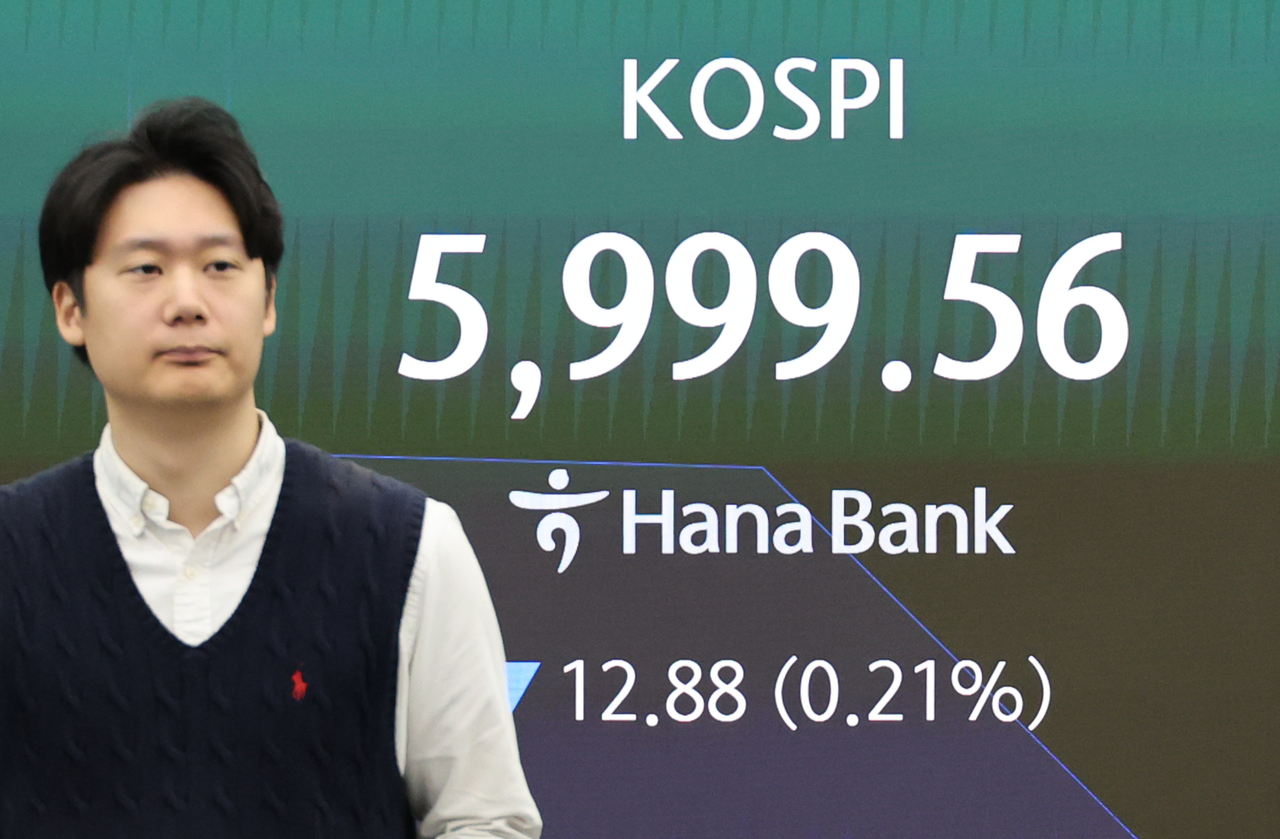
Samsung Electronics shares fell Thursday despite the company posting a record-high operating profit in line with market consensus for the third quarter. Analysts say the decline reflects a combination of factors: the absence of an early announcement on additional shareholder return measures, profit-taking after a roughly 9 percent surge on Wednesday, and concerns that preferred shares could see a larger allocation in future share buyback and cancellation programs.
Samsung Electronics opened Thursday on the Kospi down 0.41 percent, or 1,000 won, at 241,000 won ($180), before extending losses to around 4 percent in early trading.
The company's board approved a third-quarter cash dividend totaling 30 trillion won, with both common and preferred shares receiving 4,601 won per share. Losses deepened, however, as hopes faded that the announcement of a specific execution plan for remaining shareholder return funds — originally scheduled for late January next year — would be brought forward. Samsung said it would actively adjust the proportion of preferred shares in future buyback and cancellation programs, which helped limit the decline in preferred shares. Samsung Electronics preferred shares, which surged about 11 percent on Wednesday, were down roughly 2 percent in early Thursday trading.
"Samsung's announcement that it will finalize and disclose the total shareholder return amount and specific execution plan for its 2026 remaining funds at a board meeting in late January 2027 appears to have deepened market disappointment," a securities industry official said. "SK hynix also saw its share price plunge when it said at its second-quarter earnings release that it would disclose shareholder return details later — a similar situation seems to be playing out this time."
Another industry official said the earnings release contained little new information beyond what had already been disclosed in the preliminary results, suggesting that profit-taking following Wednesday's surge was the main driver. "The direction of the share price will depend on the specifics revealed during the conference call," the official added.
Samsung Electronics had already fallen into a share price slump after its preliminary third-quarter results showed a record operating profit of 107.4 trillion won ($80.4 billion), even as the figures met market consensus. Concerns over profitability pressures from rising AI investment and the drag from US technology stocks on domestic markets and large-cap semiconductor shares had weighed on the stock.
The share price is now attempting a reversal as market concerns over AI monetization ease and the sustainability of memory chip earnings becomes more visible. The extension of long-term supply contracts from five-year to 10-year terms has secured sales volumes over a longer horizon, underpinning the earnings sustainability case. Some analysts estimate that Samsung Electronics has already allocated most of its planned memory production volume for next year through long-term supply contracts.
"If ultra-long 10-year contracts become the norm, the memory industry can overcome major cyclical volatility, and improved earnings visibility could lead to a valuation re-rating," said Kim Dong-won, head of research at KB Securities. "It would mark a turning point where corporate value moves up a notch." Kim added that an estimated 70 to 80 percent of next year's planned memory production volume has already been committed under long-term supply contracts, which should strengthen Samsung's pricing power amid competition among US hyperscalers and Chinese cloud providers to secure supply.
The outlook for semiconductor earnings sustainability beyond 2027 and 2028 — a key focus for the market — also remains solid. According to financial data provider FnGuide, analyst consensus for Samsung Electronics' annual operating profit has been revised upward for both 2027 and 2028 over the past month. The 2026 consensus stands at 371.7 trillion won, down 2.43 percent from three months ago, while the 2027 figure has been raised 3.55 percent to 560.77 trillion won and the 2028 figure lifted 15.00 percent to 613.68 trillion won. Near-term earnings expectations have been trimmed due to semiconductor cycle adjustments and exchange rate fluctuations, but medium- to long-term improvement expectations have grown.
Brokerage target prices are roughly double the current share price. FnGuide's three-month average target price for Samsung Electronics, compiled from brokerage estimates, stands at 492,500 won.
SK hynix's stronger-than-expected earnings and medium- to long-term demand outlook, released Wednesday, have also been widely seen as sufficient to dispel concerns about memory industry sustainability. SK hynix on Wednesday disclosed record third-quarter earnings and confirmed that three years' worth of production volume has been secured, easing market anxiety over the durability of AI investment. Production through 2029 is effectively sold out, and long-term supply contracts account for more than 50 percent of its volume — both factors that helped restore investor confidence.
Expectations are also building that SK hynix's resumption of share buybacks will improve the supply-demand balance for semiconductor stocks and the broader Kospi. SK hynix on Wednesday announced an additional 60 trillion won ($44.9 billion) shareholder return program, bringing its total shareholder returns for the year to 100 trillion won including a recently completed 40 trillion won buyback. An additional share buyback of approximately 20 trillion won is planned from Thursday through Jan. 28 next year. "Shareholder return measures announced each quarter will reinforce downside price support and are expected to ease supply-demand concerns," said Kim Hyeong-tae, a researcher at Shinhan Securities.
Samsung Electronics' shareholder return plan is expected to be unveiled at a board meeting in January, when the remaining return amount and specific execution details will be disclosed. Securities industry estimates suggest that if the remaining funds from the three-year shareholder return program total 110 trillion won, cash dividends of 70 trillion to 80 trillion won and share buybacks and cancellations of 30 trillion to 40 trillion won would follow. A maximum shareholder return of 110 trillion won would be more than five times the company's previous record of 20.3 trillion won set in 2020, making it the largest shareholder return in the history of Korean-listed companies.
Foreign investor flows into the Kospi, which had long weighed on the index, also turned positive ahead of the earnings releases. Foreign net purchases on Wednesday, including trades on Nextrade, exceeded 1 trillion won. Foreigners were also net buyers of Samsung Electronics shares, purchasing a net 600.2 billion won over Wednesday and Thursday.
Global asset managers have also recently issued buy recommendations on domestic semiconductor stocks, citing low valuations and long-term demand. Sarah Ketterer, CEO of US asset manager Causeway Capital Management, told Bloomberg on Tuesday (local time) that Samsung Electronics faces "virtually unlimited demand" over the next two to three years, calling the current period — when memory semiconductor share prices have pulled back and valuations have fallen — "a golden opportunity to buy."
Retail investor liquidity conditions are also favorable. The decline in investor deposits — a gauge of funds waiting to enter the market — has slowed. According to the Korea Financial Investment Association, investor deposits stood at 90.1 trillion won on Wednesday, recovering above the 90 trillion won level for the first time in five trading sessions since Oct. 20. Margin loan balances, which amplify forced-liquidation risks from leveraged investing, have fallen below 30 trillion won for the first time in about two and a half months.
kacew@heraldcorp.com




