
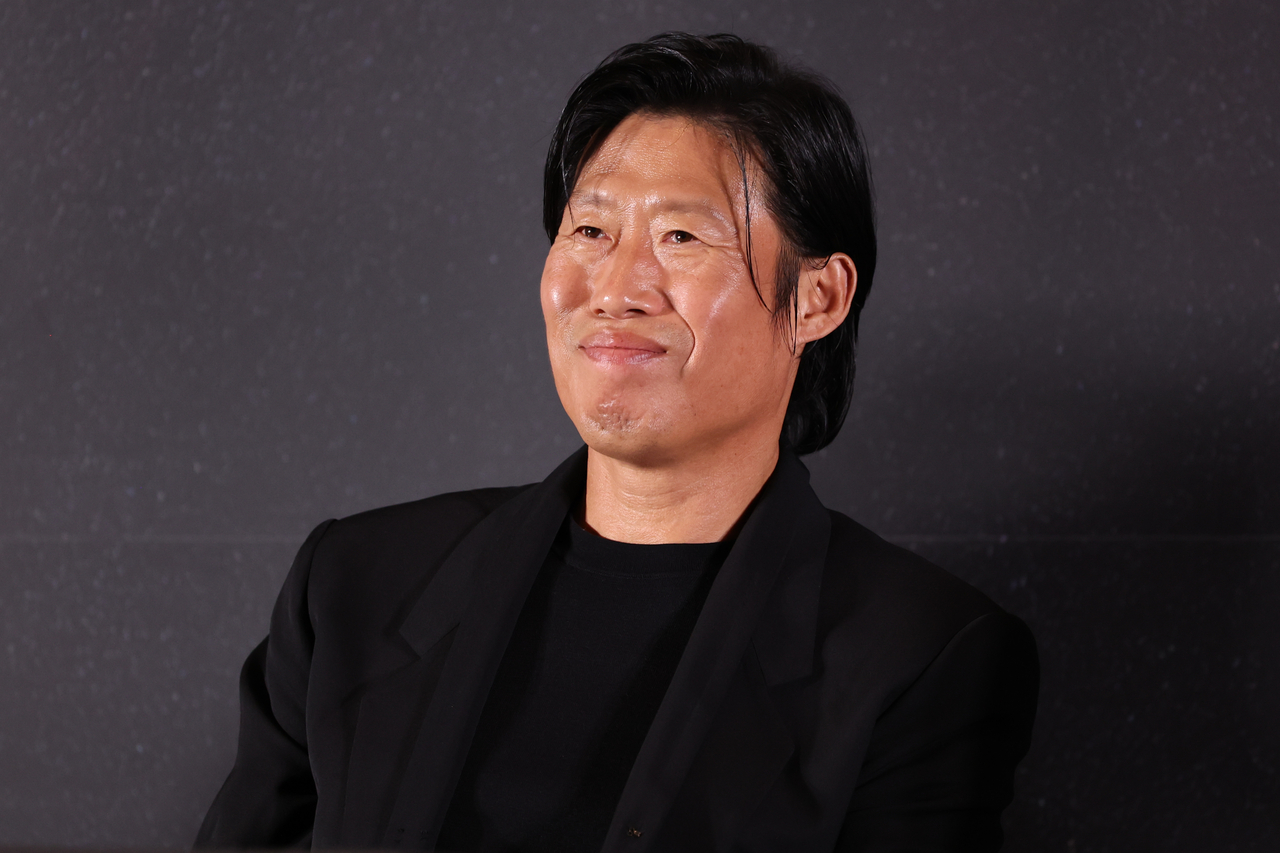
"The Assassin(s)" has surpassed its break-even point after cumulative admissions topped 3.4 million.
According to data from the Korean Film Council's integrated ticketing system, the film had recorded 3,401,825 cumulative admissions as of 7 a.m. Thursday — six weeks after its opening. The production said the film has now cleared its break-even point.
Directed by Heo Jin-ho, widely regarded as a master of melodrama, "The Assassin(s)" is inspired by the Aug. 15, 1974, Liberation Day ceremony at which first lady Yuk Young-soo was shot. Ethnic Korean resident of Japan Moon Se-gwang was arrested as the assassin and executed.
The case has long been shrouded in suspicion. More gunshots were heard at the scene than the number of bullets Moon fired, suggesting another shooter was present. The bullet that killed Yuk disappeared under unclear circumstances, making it impossible to determine exactly whose shot was the direct cause of death. While the South Korean government named the General Association of Korean Residents in Japan, known as Chongryon, and North Korea as the forces behind Moon, official documents from Japan and the United States took positions at odds with that conclusion. No investigation or punishment of the Chongryon figures named as masterminds ever took place. And despite the gravity of the attack, the investigation was widely seen as rushed, with Moon's execution carried out hastily.
Among the most persistent suspicions is that someone inside the South Korean government itself was behind Moon. The Korea Central Intelligence Agency, known as the KCIA, had been monitoring Moon as a person of interest before the attack, yet the shooting still occurred. KCIA agents arrived at the hotel where Moon had been staying and searched his room within about 10 minutes of the shooting. And despite Moon lacking the required entry pass on the day of the attack and being stopped at a checkpoint, a Cheong Wa Dae security agent waved him through.
When Japanese government documents were declassified in 2005, the suspicions drew wide public attention, covered by most major outlets including MBC's documentary series "Ije-neun Malhal Su Itda" (Now We Can Speak) and SBS's "Geugeosi Algo Sipda" (I Want to Know That). At the time, even though former President Park Geun-hye was leading the then-Grand National Party, there was no backlash over alleged historical distortion. When SBS's educational program "Kkori-e Kkori-reul Muneun Geunnal Iyagi" revisited the suspicions in 2021, it again drew no controversy.
"The Assassin(s)" draws on the suspicions explored in those programs, tracing the forces behind Moon and hinting at possible KCIA involvement. Some viewers have noted that the film handles the allegations more cautiously than the documentaries did, with one common remark being that "the film is milder than the documentaries."
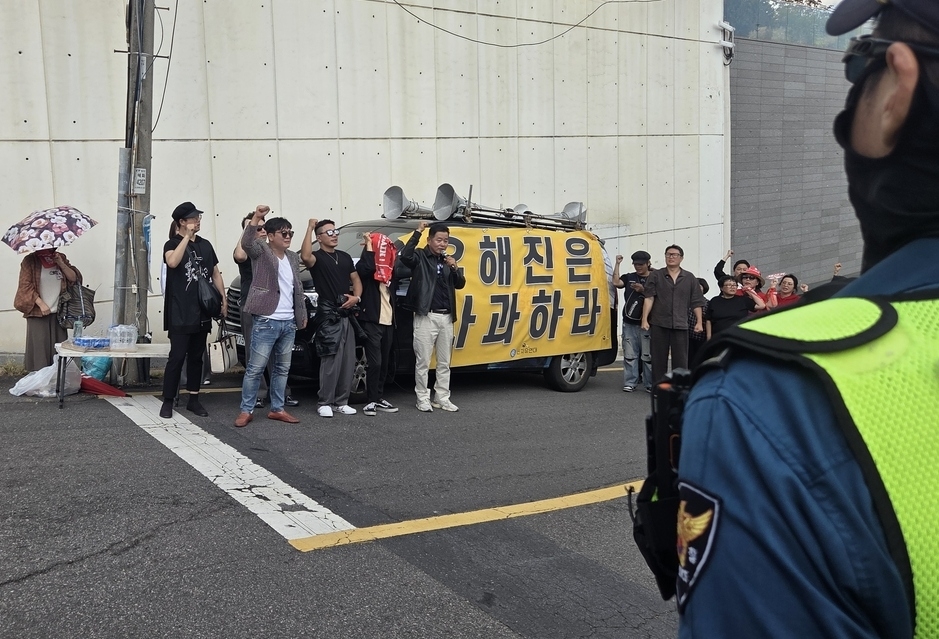
Shortly after its opening, however, the film was engulfed in controversy over claims that it depicted former President Park Chung-hee as the mastermind behind the killing of Yuk. The argument was that by pointing to the KCIA, the film was implicitly implicating Park, who wielded the agency as an instrument of his rule. Notably, the interpretation had not been raised at any point during preview screenings — neither public nor press.
Director Heo pushed back against the reading, arguing that the KCIA operated according to its own institutional interests and could not simply be equated with Park. Heo pointed to the fact that it was KCIA Director Kim Jae-gyu who assassinated Park in 1979. Others have also noted that the KCIA was not a monolithic organization with a unified agenda — different divisions could act on different interests.
Despite Heo's explanation, the "history distortion" label proved difficult to shake and dealt a serious blow to ticket sales. Many people condemned the film as distorting history without having seen it. People Power Party lawmaker Ju Jin-woo, one of the film's most vocal critics, acknowledged that he had not watched it — drawing criticism that he had passed judgment on the film's content without even a basic check of the facts.
Democratic Party of Korea lawmaker Lee Jae-jeong said the film "clearly did not place the possibility of President Park's involvement even within the realm of cinematic imagination — it was impossible to have that thought while watching it," adding that "it is the political world that distorted the film."
paq@heraldcorp.com




