
'Balance needed between support for multicultural families and sense of deprivation felt by citizens'
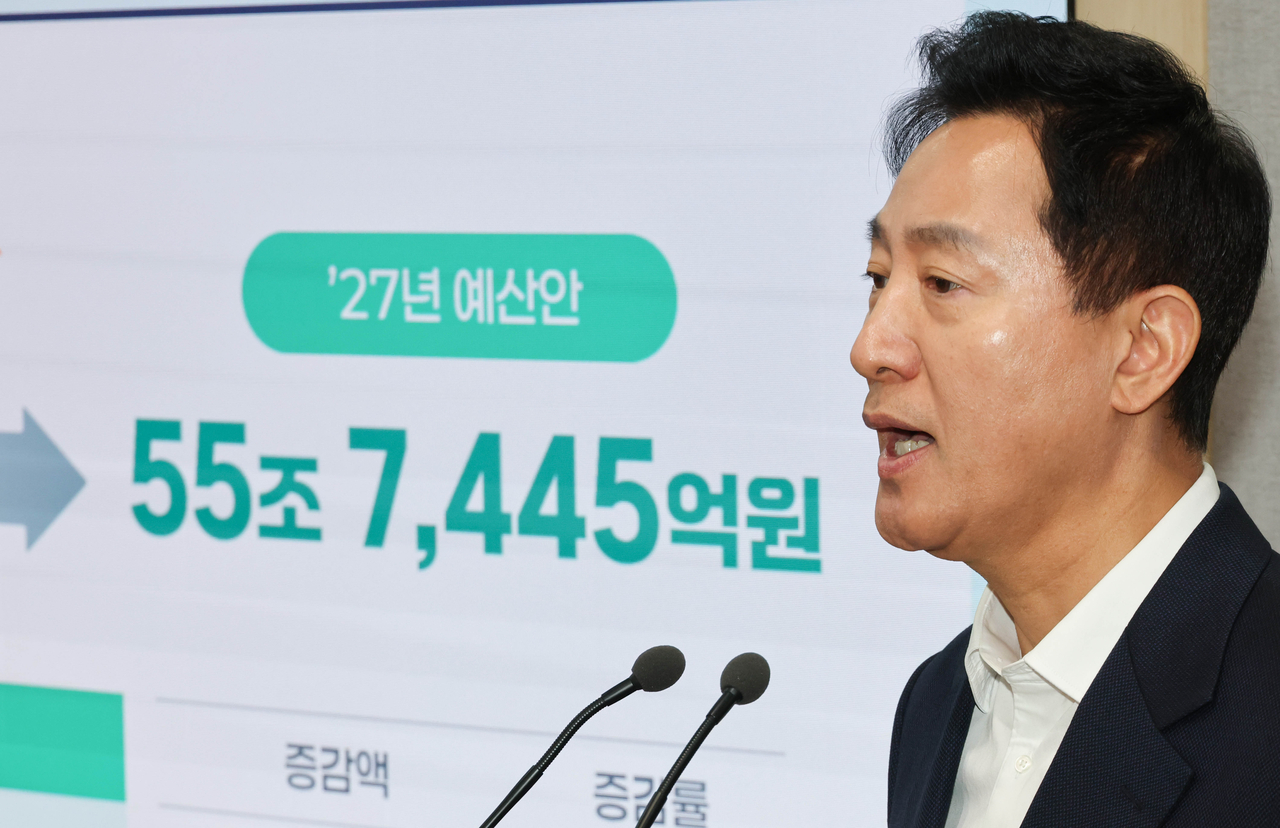
Seoul Mayor Oh Se-hoon said Thursday he has ordered a comprehensive review of preferential policies for multicultural families, seeking a balance between support for those households and the sense of relative deprivation felt by other citizens — remarks prompted by controversy over a social media post by President Lee Jae Myung on the same issue.
Speaking to reporters after announcing the city's 2027 budget proposal at City Hall, Oh said policy investment in and consideration for multicultural families is necessary. "If we do not provide sufficient care and investment during childhood — including the years of child care and education — the social costs that come back to us later will be considerable," Oh said. "Whether in terms of maintaining social order or in various aspects of welfare, there is a real risk that the social cost burden we face down the road will only grow larger. So in principle, a certain level of consideration for multicultural families is genuinely needed."
Oh added, however, that extending preferential treatment to multicultural families even in competitive selection processes for support could fuel resentment. "If multicultural families receive additional consideration even in cases where recipients are chosen through competition, our citizens may feel a sense of relative deprivation and conclude they are being put at a disadvantage," Oh said. "In those cases, the policy needs to be more refined." Oh went on to say he had directed officials to conduct a full review to strike the right balance between the two considerations. "I gave instructions that we need to refine the policy carefully so as to dispel concerns among our citizens about the relative disadvantage they feel," Oh said, adding that the work is currently underway.
The controversy began Wednesday when President Lee shared on X, formerly Twitter, a post from the online community FM Korea about reservation priority rules at Seoul's public postpartum care centers. "Local governments including Seoul have policies that give preferential treatment to multicultural families, and this is becoming a problem," Lee wrote. "I will look deeply into whether there is a strong need to go beyond protecting multicultural families from harm to actually giving them preferential treatment, and whether such preferential systems should be abolished — including through consultations with local governments and possible revisions to enforcement decrees. I am grateful for the valuable observation."
The rules allowing reduced fees and priority access for low-income and other vulnerable groups at public postpartum care centers are grounded in enforcement decrees under the Mother and Child Health Act, established in 2016. Under the provision governing user fees and priority access for low-income vulnerable groups, eligible categories include mothers from multicultural families, recipients of basic livelihood benefits and near-poverty households, and recipients of national merit awards and their bereaved families. These groups may receive priority access to public postpartum care centers or have all or some of their fees waived within the scope of postpartum care assistant support.
Seoul's own public postpartum care centers follow the same framework, designating basic livelihood recipients and near-poverty households as first-priority applicants and mothers from multicultural families, among others, as second-priority when selecting residents.
cook@heraldcorp.com




