
Swings to loss from 821.8 billion won profit a quarter earlier
Converting EV lines to ESS production
Sales recovery expected from key customers in Q4
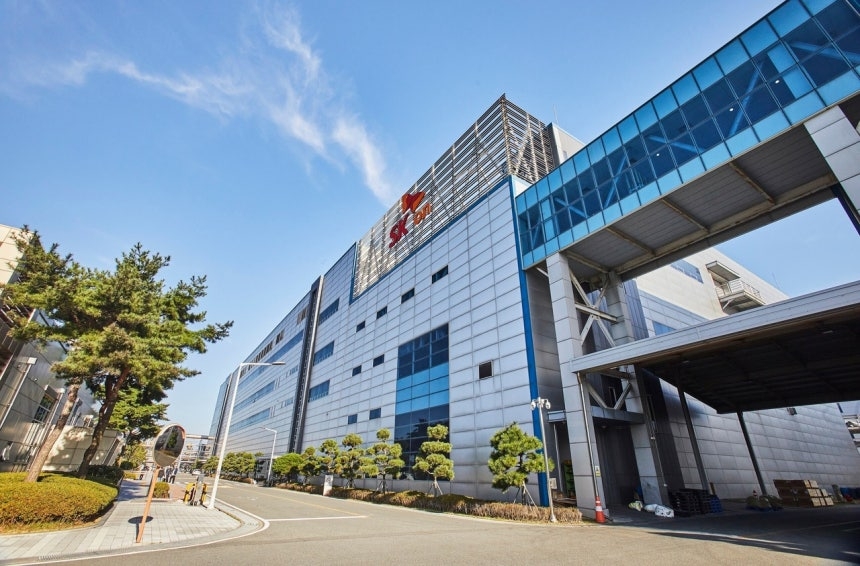
SK On swung back to a loss in the third quarter of this year, posting an operating loss of 80.5 billion won ($60.2 million), as electric vehicle battery sales declined and one-time gains recorded in the previous quarter disappeared. Underlying profitability, however, continued to improve when those one-time factors are stripped out.
According to SK Innovation's third-quarter earnings release Thursday, SK On's battery business recorded sales of 1.53 trillion won and an operating loss of 80.5 billion won in the quarter. Sales fell 1.42 trillion won, or 48.2 percent, from the previous quarter's 2.95 trillion won, and were also down 23.0 percent from 1.98 trillion won in the same period last year.
Operating profit swung from a gain of 821.8 billion won in the second quarter to a loss, as the one-time income that had boosted the prior quarter vanished and battery sales volumes declined. Still, the operating loss narrowed by 44.3 billion won compared with the 124.8 billion won loss recorded in the third quarter of last year.
SK On said cost-structure improvements are continuing despite the contraction in revenue. Kim Young-gwang, head of SK On's financial management division, said on a conference call Thursday that the quarter-on-quarter earnings decline reflected the absence of one-time income recognized in the prior quarter, while underlying profitability — excluding those one-time factors — continued on an improving trend.
Kim added that efforts to streamline fixed costs are translating into tangible earnings improvements, and said SK On would pursue further financial restructuring through portfolio rebalancing and asset optimization.
SK On is working to broaden its business beyond EV batteries into the energy storage system market. The company plans to convert existing EV battery production lines to ESS use, reducing the burden of new capital investment while improving factory utilization rates and asset efficiency.
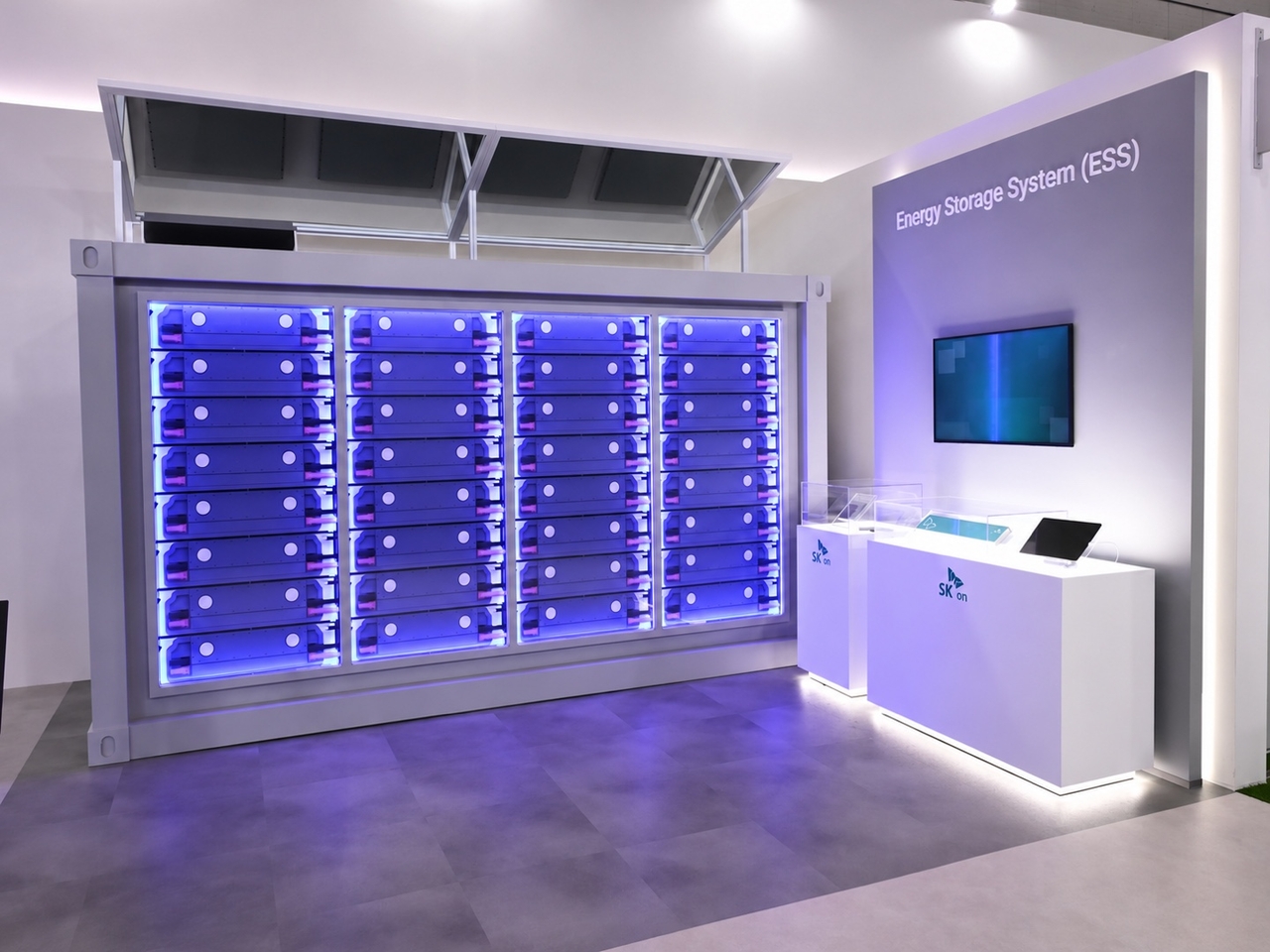
SK On has already secured concrete results in North America. The company signed a contract with US-based NeoVolta to supply lithium iron phosphate battery cells for ESS use totaling 9 gigawatt-hours over five years starting in 2027. Alongside that deal, SK On signed LFP cathode material supply agreements with L&F and Posco Future M to secure its materials procurement base. LFP batteries are widely used in the ESS market because they offer stronger price competitiveness than ternary batteries.
SK On is also pursuing additional orders, currently in talks with customers in North America and South Korea on further contracts. Kim said the company is fielding a wide range of customer inquiries and business opportunities in North America, backed by its non-Chinese supply chain and local production capabilities. On the question of an annual ESS order target for next year, Kim said details would be shared once they are finalized.
To meet growing ESS demand, SK On is converting existing EV battery production lines. Kim said the company is prioritizing the conversion of existing EV lines to ESS use over building new capacity, with lines in South Korea and parts of North America being converted in stages. Production capacity will be allocated flexibly in line with confirmed order volumes and customer delivery schedules, Kim said.
Decisions on further line conversions will be made after a comprehensive review of confirmed orders, future order prospects and EV battery demand trends, as well as regional policy requirements and investment efficiency. The strategy is to minimize new capital expenditure by leveraging existing facilities while improving factory utilization and asset efficiency.
For the EV battery business, SK On expects a partial recovery in sales volumes starting in the fourth quarter. In North America, the company sees the possibility of a gradual increase in battery supply volumes, supported by vehicle sales trends at key customers and policy support in some markets. In Europe, EV support policies across individual countries and growing preference for locally produced products are also expected to provide a tailwind.
Kim said that while market uncertainty may persist in the fourth quarter, SK On will focus on optimizing production and supply operations in line with customer demand, cutting costs across the company and securing ESS orders to sustain the earnings improvement trend and strengthen the foundation for a medium- to long-term turnaround.
kwater@heraldcorp.com




