
Lifting to take effect 5 days after Central Urban Planning Committee approval; ground-breaking targeted by 2030, move-in possible as early as 2033
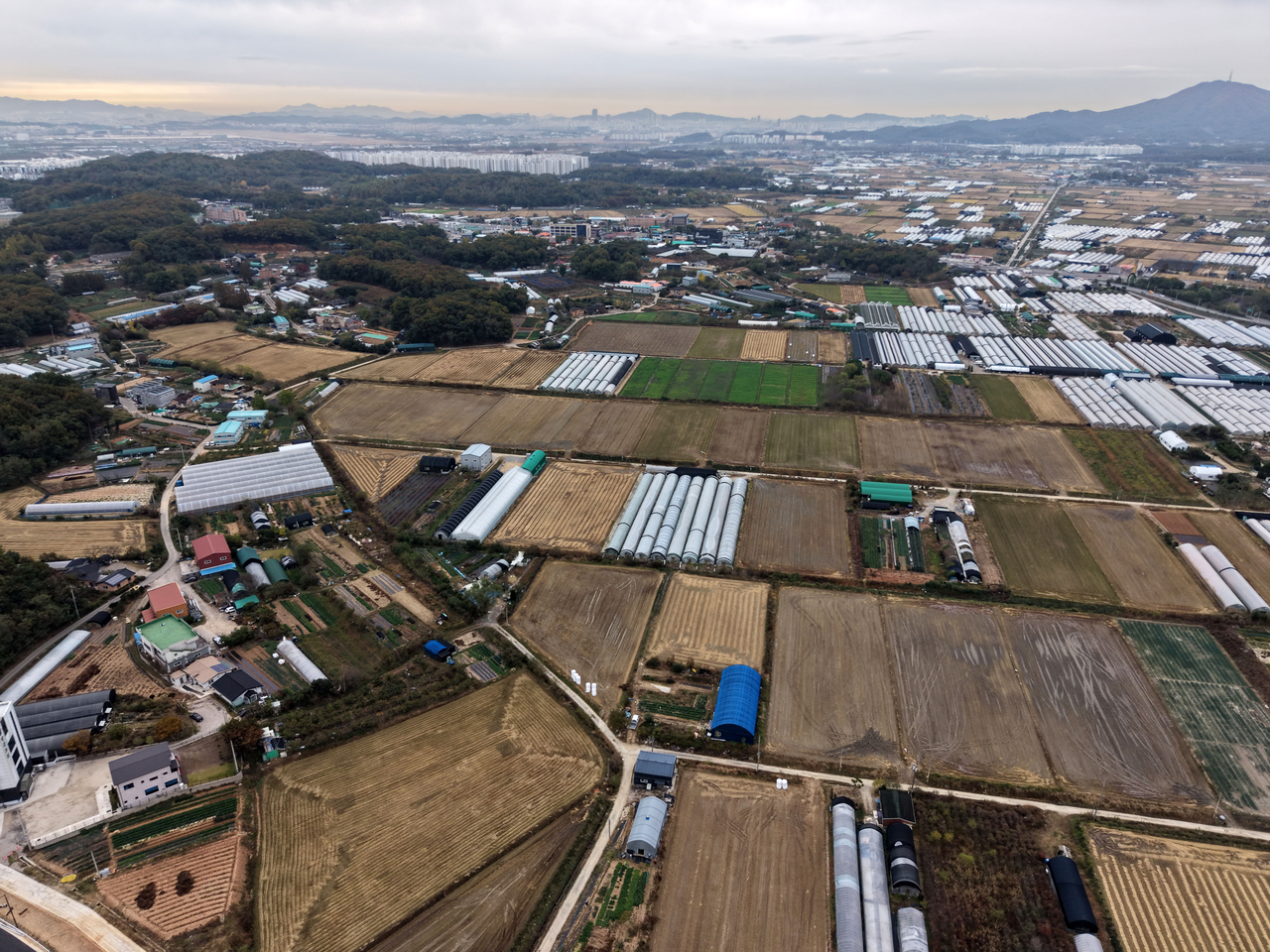
As the government announced plans to release greenbelt land in Gyeonggi Province to supply 76,700 public housing units, land-transaction permit requirements covering greenbelt areas outside the six new housing site candidates will be lifted starting Tuesday. The move is intended to minimize infringement on private property rights. However, some greenbelt areas in Seoul — including parts of Songpa-gu that border the new candidate sites — are expected to remain under the land-transaction permit zone designation.
The Ministry of Land, Infrastructure and Transport said Thursday at a question-and-answer session following its second regular housing supply briefing at Government Complex Seoul.
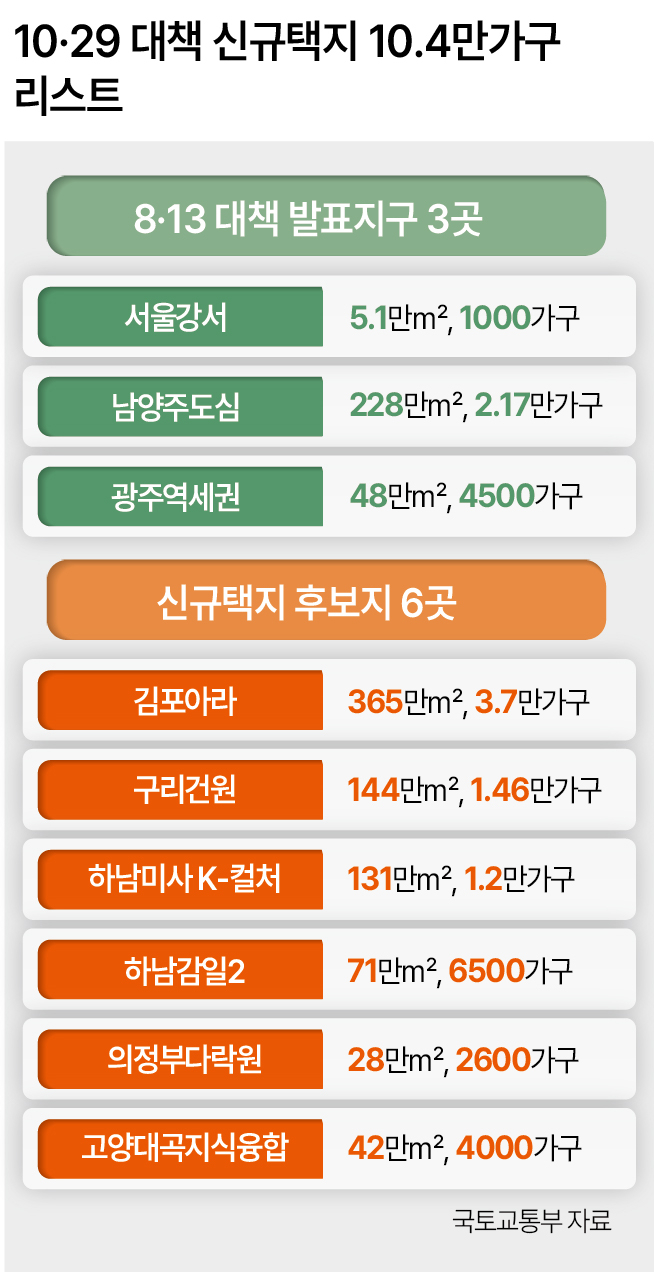
At the briefing, the government outlined plans to release six greenbelt zones to supply 76,700 units: 37,000 units at Gimpo Ara, 14,600 at Guri Geonwon, 12,000 at Hanam Misa K-Culture, 6,500 at Hanam Gamil 2, 2,600 at Uijeongbu Darakwon and 4,000 at Goyang Daegok Knowledge Convergence. Combined with the 27,200 units from the Aug. 13 new housing site measures, the government aims to develop a total of 104,000 units.
The government also plans to lift land-transaction permit requirements on greenbelt areas in Seoul and Gyeonggi Province that fall outside the influence zones of the six new housing site candidates. When the Aug. 13 measures were announced, the government had designated greenbelt land across all of Seoul and adjacent areas of the metropolitan region as land-transaction permit zones to curb speculation. With the candidate sites now confirmed, the government is moving to selectively lift the designation in areas unaffected by development.
Jeong Woo-jin, head of the Ministry of Land, Infrastructure and Transport's Housing Supply Promotion Headquarters, said the proposed adjustment to the land-transaction permit zone "will go through a vote by the Central Urban Planning Committee on Thursday." Jeong added that "once the public notice is issued, the lifting will take effect five days later, on Nov. 3."
Although all six new housing site candidates are located in Gyeonggi Province, some greenbelt areas within Seoul that border those sites — including parts of Songpa-gu — are expected to be excluded from the lifting.
"It cannot be said that land-transaction permit requirements will be lifted across all of Seoul's greenbelt," Jeong said. "Because the Hanam Gamil 2 district is adjacent to Songpa-gu, regulations will continue in some areas."
With the ground-breaking target set firmly within 2030, move-in is expected to be possible as early as 2033.
"At this stage, it is difficult to give a specific number of how many of the 76,700 units will break ground by 2030," Jeong said. "The volume to break ground by 2030 will be estimated during the district designation process, and we expect move-in to be possible as early as 2033."
The Ministry of Land, Infrastructure and Transport also said it would actively address concerns about traffic congestion and project delays stemming from the new housing developments. Minister Hong Ji-seon said the road and transit network across the Gimpo area as a whole — not just the Gimpo Ara site — is seriously strained, and the ministry is working with local governments to prioritize transportation solutions ahead of construction. "We will apply a ground-breaking acceleration model to advance the timeline as much as possible," Hong said.
The ministry also said it would continue talks with the Seoul Metropolitan Government over the absence of any Seoul candidate sites from the 76,700-unit plan.
"We announced candidate sites where agreements with local governments had already been reached first," Hong said. "As I told Seoul Mayor Oh Se-hoon, there is much to cooperate on with Seoul." Hong added that, setting aside matters requiring broader public deliberation such as Yongsan Park, working-level consultations with Seoul are ongoing on areas where cooperation can be achieved in the short term, and the ministry is awaiting Seoul's response.
hwshin@heraldcorp.com




